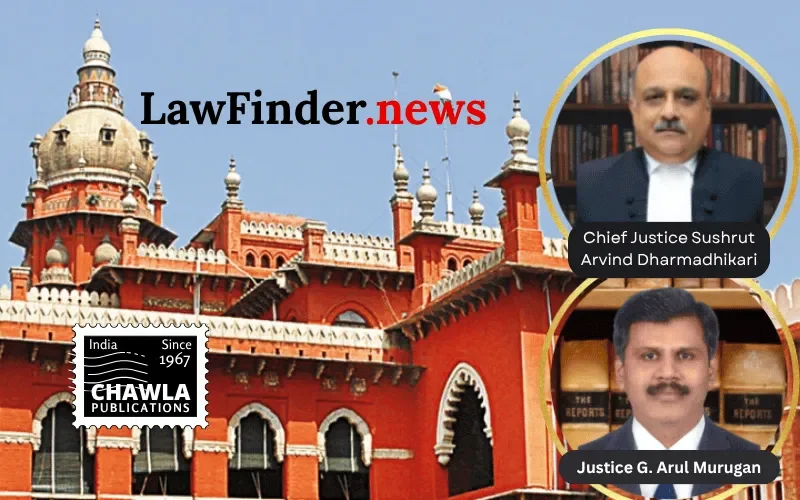
Bench rules that Speaker's role in accepting resignations requires only satisfaction of voluntariness and genuineness, separate from disqualification trials; mandates Speaker to decide pending disqualification petitions within two months.
In a landmark judgment delivered on October 13, 2026, the Madras High Court (Division Bench) in a batch of writ petitions led by Agri S.S. Krishnamurthy versus the Speaker of the Tamil Nadu Legislative Assembly, clarified the constitutional scope of the Speaker's powers relating to acceptance of resignations from Members of the Legislative Assembly (MLAs) amid pending disqualification proceedings under the Tenth Schedule of the Indian Constitution.
The controversy arose following the 2026 Tamil Nadu Assembly elections that resulted in a fractured mandate. The newly formed government by the Tamizhaga Vettri Kazhagam (TVK) was challenged by defections from the rival All India Anna Dravida Munnetra Kazhagam (AIADMK). Twenty-five AIADMK MLAs defied the party whip in a confidence motion vote, triggering disqualification petitions filed before the Speaker under the Anti-Defection Law. Subsequently, six MLAs tendered resignations which were accepted by the Speaker, who then notified their assembly seats as vacant, allowing them to join TVK.
The AIADMK official whip challenged the acceptance of these resignations in multiple writ petitions, contending that the Speaker should have conducted a detailed inquiry into the genuineness and voluntariness of the resignations, especially since disqualification proceedings were pending. They argued that acceptance of resignations during such proceedings amounted to "placing the cart before the horse," effectively allowing MLAs to circumvent anti-defection penalties. The petitioners also alleged horse-trading and financial inducements behind the mass resignations.
The High Court, however, upheld the Speaker's acceptance of the resignations, relying heavily on the constitutional amendment (33rd Amendment) to Article 190(3)(b) which mandates that resignations must be "voluntary" and "genuine" and accepted by the Speaker. The Court emphasized that the Speaker's enquiry is limited to verifying the voluntariness and genuineness of the resignation and does not extend to probing political motives or conducting a roving inquiry into allegations of coercion or inducement. The Court noted the MLAs had personally appeared before the Speaker, tendered signed resignation letters, and there was no evidence of forgery or impersonation.
Importantly, the Court distinguished the processes of resignation and disqualification as constitutionally separate. Acceptance of resignation under Article 190(3)(b) operates independently of disqualification proceedings under the Tenth Schedule, where the Speaker acts as a quasi-judicial tribunal. The Court held that the pendency of disqualification proceedings does not bar the Speaker from accepting resignations, nor does acceptance render the disqualification petitions infructuous. The disqualification process carries significant consequences including political stigma and disqualification from ministerial posts, and hence must continue to be adjudicated.
While the Court dismissed writ petitions that challenged acceptance of resignations in cases where no fresh disqualification proceedings were shown to be pending, it partly allowed petitions where disqualification proceedings were pending but remained undecided for over four months. The Court issued a writ of mandamus directing the Speaker to frame a timetable within 7 days and conclude all pending disqualification proceedings within 2 months. The Speaker was also directed to adhere to principles of natural justice, avoid unnecessary adjournments, and ensure transparency by making the timetable public.
This ruling reaffirms the constitutional role of the Speaker as a sentinel entrusted with safeguarding constitutional morality and the anti-defection law's objectives. It also underscores judicial willingness to intervene when constitutional processes are unduly delayed but respects the Speaker's primary adjudicatory authority.
Bottom Line:
Constitution of India - Article 190(3)(b) and Tenth Schedule - Speaker can accept resignation of MLAs during pendency of disqualification proceedings if resignation is voluntary and genuine - Speaker is not required to conduct roving enquiry into political motives behind resignation - Acceptance of resignation does not render pending disqualification proceedings infructuous - High Court can direct Speaker to decide disqualification petitions within fixed time.
Statutory provision(s):
Constitution of India, Article 190(3)(b), Article 191(2), Article 164(1-B), Article 361-B; Tenth Schedule Paras 2 and 6; Tamil Nadu Legislative Assembly Rules 21 to 24



