Court Emphasizes Informed Consent, Societal Customs of Matrilineal Khasi Community, and Welfare of Children; Directs Provision of Government Benefits to Survivor and Children
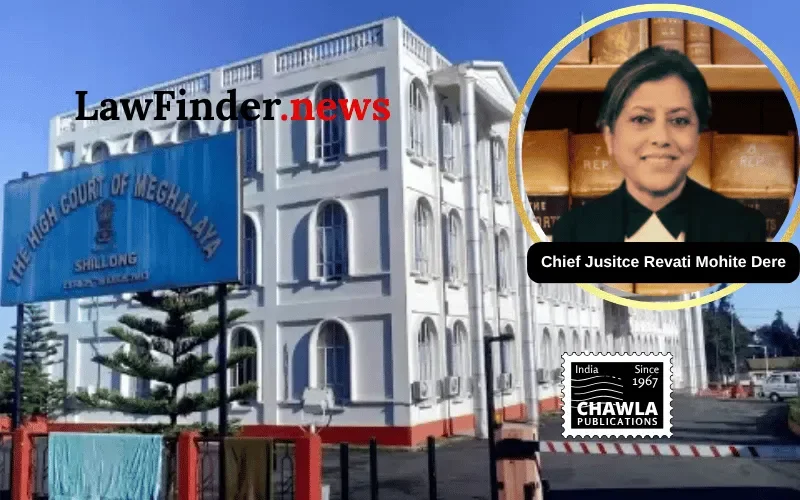
In a landmark judgment dated October 28, 2026, the Meghalaya High Court, led by Chief Justice Mrs. Revati Mohite Dere, quashed a First Information Report (FIR) registered under the Protection of Children from Sexual Offences (POCSO) Act, recognizing the consensual nature of the relationship between the petitioners and the unique socio-cultural context of Meghalaya's matrilineal Khasi community.
The case involved petitioner No. 1, a 24-year-old man, and petitioner No. 2, a 19-year-old woman, who were living together as husband and wife with the consent of their families and had two children aged four and one year. The FIR was registered by the mother of petitioner No. 2. Both petitioners jointly sought quashing of the FIR and the pending trial before the Special Judge (POCSO), West Khasi Hills District, Nongstoin.
The court took cognizance of the report submitted by the Secretary of the High Court Legal Services Committee, which confirmed the consensual relationship and the absence of any coercion. The report highlighted that petitioner No. 2 became pregnant at 16 and later gave birth to two children. It further revealed that the family was not receiving any government benefits, and the mother of petitioner No. 2 had no objection to quashing the case.
Significantly, the judgment referenced the court's earlier ruling in Shri Shalenbor Wahlang v. State of Meghalaya (April 2026), which acknowledged the distinctive matrilineal societal structure of Meghalaya's Khasi tribe. The court noted that in this society, lineage and inheritance pass through women, who enjoy greater independence, including freedom to select partners and remarry without stigma. The judgment emphasized that such customs must be balanced against the enforcement of POCSO to ensure justice is tempered with fairness and empathy.
The court observed that while POCSO is a special statute intended to protect children, the quashing of FIRs under Section 528 of the Bharatiya Nagarik Suraksha Sanhita, 2023 (earlier Section 482 Cr.P.C.) is permissible in exceptional cases involving informed consent and social realities. Here, since the parties were living as husband and wife and raising children, with no objection from the survivor or her family, criminal proceedings would cause greater injustice than quashing the case.
The High Court ordered that petitioner No. 2 and her children be enrolled in various State and Central Government schemes, including the Nirbhaya Fund's care and support scheme for POCSO victims, Mission Vatsalya, Beti Bachao Beti Padhao, Meghalaya Victim Compensation Scheme, Ayushman Bharat, and vocational training programs in farming or tailoring. The District Child Protection Officer (DCPO) and the Secretary of the District Legal Services Authority (DLSA) were directed to ensure these benefits were extended and to submit reports on their implementation.
This judgment highlights the judiciary's careful balancing of legal provisions, cultural context, and the welfare of individuals, especially in cases involving adolescent consensual relationships in Meghalaya's unique matrilineal society. It also underscores the importance of informed consent and the protection of children's rights without undermining social realities.
Bottom Line:
Quashing of POCSO case allowed where parties, despite age differences, are in a consensual relationship, living as husband and wife, and raising children, with no objection from the victim or her family.
Statutory provision(s):
Bharatiya Nagarik Suraksha Sanhita, 2023 Section 528 (earlier Section 482 Cr.P.C.), Protection of Children from Sexual Offences (POCSO) Act, Sections 4 and 6.
Kiewphrang Sangriang v. State of Meghalaya, (Meghalaya) : Law Finder Doc Id # 3019139