New Delhi, Aug 19 Observing that there is a need to institutionalise the reforms in the National Testing Agency, the Supreme Court on Wednesday directed the Centre to inform it about the steps taken to implement recommendations of the Radhakrishnan panel and the Nandan Nilekani committee.
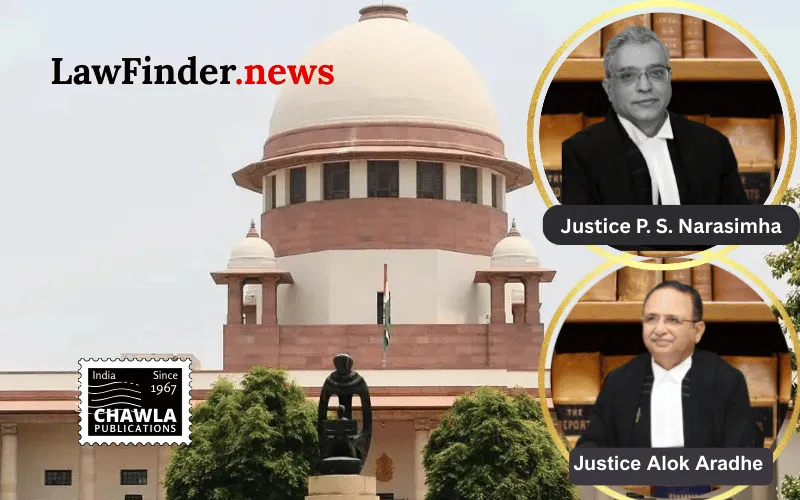
A bench of Justices PS Narasimha and Alok Aradhe said reforms in the National Testing Agency (NTA) must be institutionalised and technological changes are needed for conduct of smooth entrance examinations.
The seven-member Radhakrishnan Committee was set up by the Ministry of Education in the wake of the NEET-UG paper leak to make recommendations on reforms in the examination process, improvement in data security protocols and the structure and functioning of the NTA.
The government had also set up a high powered task force led by Infosys co-founder Nilekani for structural reforms in competitive examinations.
"The Radhakrishnan Committee has correctly said it is a systemic problem which needs institutionalisation, which is the most important part of it. This process on paper everything is good. But then one exam happens and by the time the second exam happens it is a new picture all together," the bench said.
The top court said the NTA should be equipped with all necessary infrastructure, manpower and other technological capabilities.
"We are informed that the committee which has been constituted has considered various recommendations for reforms, focusing on leveraging advance technology like AI and blockchain to strengthen the security and integrity of the examination.
"We direct the Secretary to file an affidavit indicating and detailing the steps that have been taken to implement the suggestions made by the Radhakrishnan committee as reflected and nuanced by the Nandan Nilekani committee. Affidavit with the indicative timelines to be filed within three weeks," the bench said.
At the outset, Solicitor General Tushar Mehta told the court the process adopted with safeguards right from printing the NEET question paper till the students get it.
The law officer asserted that the system in place for the NEET exams is foolproof and difficult to breach.
He said several moderators are asked to prepare question bank and they are not aware which will be part of the question paper.
"Several moderators are asked to prepare a question bank of say, 500 questions for a subject so that one person is not deciding which 100 questions come in the question paper," he said.
Explaining the elaborate safeguards, Mehta said the exam papers are sent to separate identified printers under CCTV cameras and surveillance of the CISF.
He submitted that the question papers are transported under police escort and GPS tracking and stored in separate bank strong rooms.
Mehta said on the day of examination, one set of question paper is selected, transported to examination centres under security and opened in the presence of officials and students, with the process being videographed.
At this juncture, the apex court pointed out that the safeguards being described by Mehta had already been considered by the Radhakrishnan Committee.
The court stressed that there was a need to ensure that the NTA functions as a vibrant institution.
"Our duty is to ensure that there is a vibrant institution that the country can be proud of. If you don’t institutionalise, experienced people get transferred and the entire experience is lost. There are a lot of technological changes that have to be brought about," the bench said.
The bench also cited the example of the Union Public Service Commission (UPSC) to explain how an examination-conducting body develops institutional expertise over time.
"Over a period of time regularly they (UPSC) were conducting exam after exam and they have collected institutional memory and expertise because it happened over a period of time.The body which is entrusted in conducting the exam, ensures that it also upgrades itself and becomes a vibrant institution like that," the bench observed.
The apex court was hearing a batch of petitions, including the one filed by advocated Tanvi Dubey on behalf of the Federation of All India Medical Association (FAIMA).
One of the pleas sought a direction to replace or restructure the NTA, which is responsible for conducting NEET-UG, with a robust and autonomous body to conduct the medical entrance examination.
The paper leak allegations are under investigation by the Central Bureau of Investigation.
After questions of NEET-UG were allegedly leaked in 2024, the top court had refused to cancel the test, but passed various directions aimed at tackling paper leaks and also a criterion for cancelling public exams.