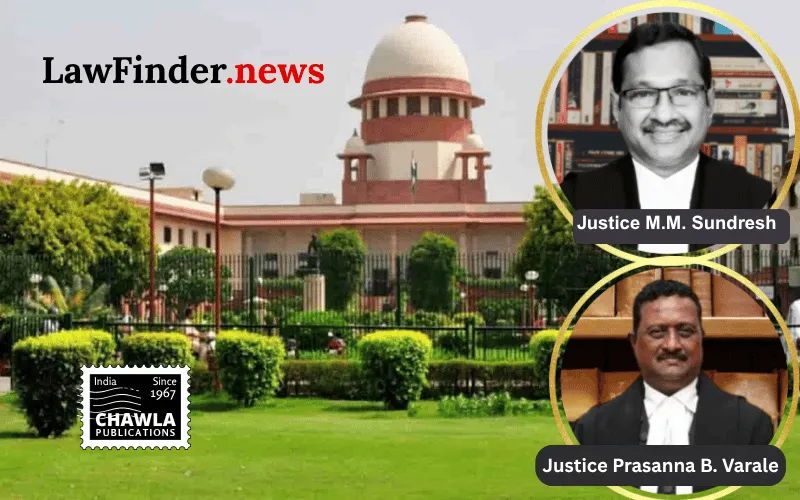
Supreme Court Nullifies Externment Order for Breach of Natural Justice - Externment order quashed due to lack of notice and hearing, emphasizing procedural safeguards under Chhattisgarh Rajya Suraksha Adhiniyam, 1990
In a significant judgment, the Supreme Court of India, on August 31, 2026, quashed an externment order against Vijay Kumar Rajpoot alias Vijju, citing violations of statutory requirements and principles of natural justice. The order, initially passed by the District Magistrate of Raigarh, had directed Rajpoot to remove himself from Raigarh district and its contiguous areas for a year. The Supreme Court's decision underscores the importance of procedural safeguards in externment proceedings under the Chhattisgarh Rajya Suraksha Adhiniyam, 1990.
The externment order was originally issued without providing Rajpoot an opportunity to respond to the allegations against him, a clear breach of Section 8 of the Adhiniyam. This section mandates that a person proposed to be externed must be informed of the general nature of allegations and given a reasonable opportunity to tender an explanation.
The Supreme Court noted that the externment order was passed during a time when Rajpoot was in judicial custody, without any prior notice or chance for him to be heard. Furthermore, the Court found that the grounds for his externment did not satisfy the conditions under Section 5(b) of the Adhiniyam, as the alleged offenses did not involve force or violence, nor did they fall within the specified categories of offenses.
Rajpoot, represented by Mr. Pallav Mongia, argued that the externment order was a violation of the principles of natural justice and lacked jurisdictional basis, as the District Magistrate had no power to review or reopen a closed case without statutory authority. The Supreme Court agreed, stating that the High Court erred in relegating Rajpoot to the statutory appeal process under Section 9 of the Adhiniyam without addressing these fundamental issues.
The judgment reaffirms that externment orders, which restrict fundamental rights, must be supported by clear and cogent reasons, demonstrating a nexus between the alleged conduct and the apprehended threat to public order. The Supreme Court's decision not only quashes the externment order but also highlights the judiciary's role in upholding the rule of law and ensuring that administrative actions comply with legal and constitutional mandates.
Statutory provision(s):
Chhattisgarh Rajya Suraksha Adhiniyam, 1990 Sections 5, 8; Article 226 of the Constitution of India
Vijay Kumar Rajpoot alias Vijju v. State of Chhattisgarh, (SC) : Law Finder Doc id # 2970190