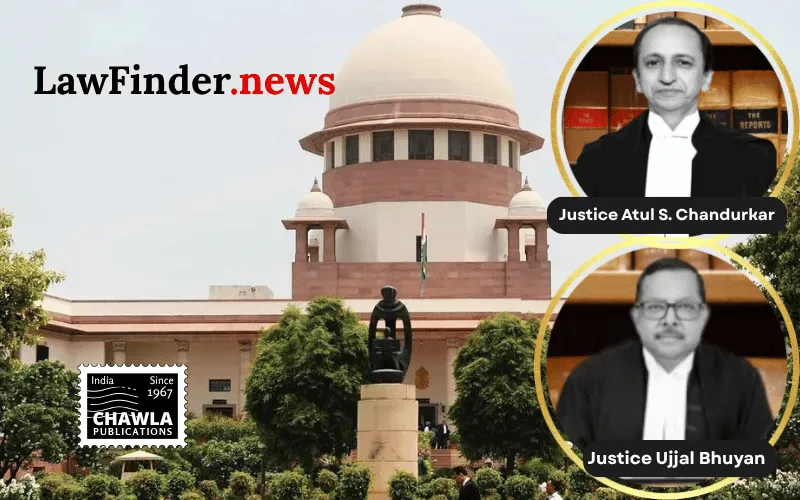
Supreme Court Upholds Delhi High Court's Decision: Membership Dispute in Co-operative Housing Society Resolved - High Court's certiorari jurisdiction justified in overturning Arbitrator and Tribunal's findings; original claimant's membership deemed invalid.
In a significant ruling, the Supreme Court of India upheld the Delhi High Court's decision to overturn the concurrent findings of the Arbitrator and the Delhi Co-operative Tribunal in a long-standing membership dispute involving the Burmah Shell Co-operative Housing Society. The case, which traces its roots back to the early 1950s, involved the claim of the late Prakash Narain Sharma, whose legal representatives argued for entitlement to a plot based on alleged membership in the society.
The dispute arose when Mr. S.N. Sharma, the original claimant, contended he was a rightful member of the society and was unjustly denied a plot allocation. However, the society countered that Sharma had resigned his membership in 1951, and his subsequent application in 1952 for membership was never accepted. The Arbitrator and the Tribunal had initially ruled in favor of Sharma, presuming continuous membership and entitlement to a plot.
The High Court, in its certiorari jurisdiction, found the decisions of the Arbitrator and Tribunal to be flawed, noting they ignored critical documentary evidence, including Sharma's resignation and the society's rejection of his membership application. The Supreme Court concurred with the High Court, emphasizing that decisions based on no evidence or erroneous presumptions constitute legal errors warranting correction.
The judgment highlights the judiciary's role in ensuring justice through certiorari jurisdiction, correcting errors manifest in subordinate authorities' decisions. The ruling also underscores the importance of equitable considerations, as the High Court noted the existence of prior claimants with legitimate claims to plot allocations, thereby invalidating Sharma's claim.
The Supreme Court's affirmation of the High Court's decision concludes the protracted legal battle, reinforcing the principle that legal entitlements must be supported by substantive evidence and equitable considerations.
Statutory provision(s): Delhi Co-operative Societies Act, 1972 - Sections 61 and 76; Constitution of India - Articles 226 and 227