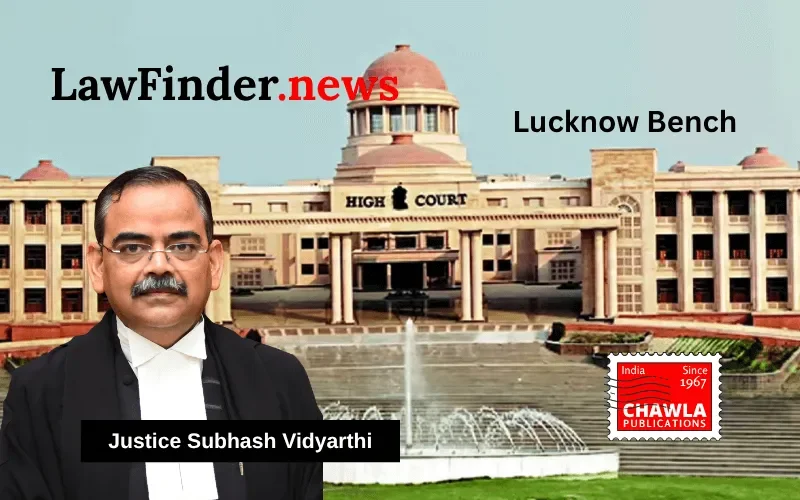
Lucknow, Nov 23 The Lucknow bench of the Allahabad High Court strongly disapproved of a lawyer who relied on an article downloaded from Google to support his client's case, observing that an article written by an advocate does not constitute law and is not binding on any court, particularly a high court.
Justice Subhash Vidyarthi, while hearing a criminal revision petition on Friday, also reprimanded the counsel for incorrectly citing a Supreme Court judgment that went against his own case, describing the move as an "own goal".
Expressing concern over the quality of legal assistance being provided by advocates, the single-judge bench urged members of the Bar to appear before courts after proper preparation and cite relevant statutory provisions and judicial precedents.
It observed that inadequate legal assistance from advocates was hampering the process of speedy justice.
The case arose from a criminal revision petition challenging a magistrate's order rejecting an application seeking directions for registration of an FIR under section 173(4) of the Bharatiya Nagarik Suraksha Sanhita (BNSS).
The petitioner alleged that he had sold his immovable property for Rs 35 lakh, but the buyer had failed to pay the entire sale consideration.
During the hearing, the petitioner's counsel relied on an article from Google to argue that criminal proceedings could be initiated for recovery of the outstanding amount.
The court found that the article merely contained bullet-point observations and did not refer to any statutory provision or Supreme Court judgment.
Moreover, the copy produced before the court was not even legible.
The bench observed that the counsel's lack of awareness about the website from which the article had been obtained, coupled with his reliance on it without any legal foundation, reflected an unprofessional approach.
The court also expressed serious displeasure over the counsel's incorrect interpretation and citation of a Supreme Court judgment.
Examining the sale deed dated December 12, 2019, and a subsequent rectification deed dated March 13, 2023, the court noted that the documents recorded payment of Rs 29.15 lakh through RTGS, Rs 5 lakh by cheque and the remaining Rs 85,000 also through cheque.
The bench observed that if the cheque for Rs 85,000 had been dishonoured, the petitioner had the remedy of filing a complaint under section 138 of the Negotiable Instruments Act.
Finding no illegality in the magistrate's order, the high court dismissed the criminal revision petition.