Plaintiffs Lacked Legal Authority to Represent Deity and Community, Finds Court
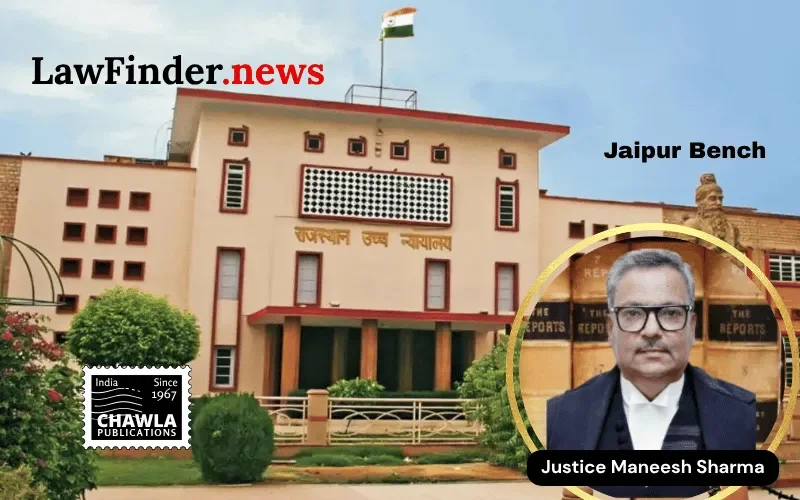
In a significant judgment, the Rajasthan High Court, Jaipur Bench, upheld the dismissal of a civil suit filed by appellants Ramrakh Chhipa and others against the Municipal Council, Ajmer. The suit sought compensation and a mandatory injunction related to temple property management. The court ruled that the plaintiffs lacked locus standi as they were not authorized to represent the deity or the community involved.
The case revolved around the temple of Shri Laxman Ji Maharaj in Ajmer, purportedly established by the Chhipa community. The appellants claimed that municipal tax receipts were wrongly issued in the name of Agrawal Panchayat Ghaseti Dhara, instead of the temple. Despite objections and requests for correction, the Nagar Parishad, Ajmer, did not amend the records, prompting the lawsuit.
However, the trial court and the first appellate court both dismissed the suit, a decision now affirmed by the High Court. Justice Maneesh Sharma observed that the plaintiffs failed to provide any resolution or legal authorization from the temple trust or community, thereby lacking the necessary legal standing to file the suit. Furthermore, the court noted that the issuance of a tax receipt does not confer ownership or legal rights over property.
The court also highlighted that the dispute over the temple's management and trusteeship is under consideration by the Devasthan Department, reinforcing that the appellants could not claim compensation for mental agony without demonstrating a violation of a legal right.
This decision underscores the necessity for proper legal authorization when instituting suits on behalf of a community or deity, emphasizing the judiciary's role in maintaining procedural integrity.
Bottom Line :
A civil suit for compensation and mandatory injunction cannot be maintained by individuals who lack locus standi or legal authority to represent a community or deity in the absence of appropriate authorization.
Statutory provision(s): Civil Procedure Code, 1908 Section 100
Ramrakh Chhipa v. Municipal Council, Ajmer, (Rajasthan)(Jaipur Bench) : Law Finder Doc id # 2963398