Supreme Court Upholds Resignation Validity, Denies Reinstatement for Former University Official, The Supreme Court ruled that ratification by a competent authority validates prior acceptance of resignation, precluding reinstatement.
In a significant ruling, the Supreme Court of India has clarified the legal standing of employee resignations and the doctrine of ratification, impacting the employment sector's procedural norms. The case involved Delhi Technological University (DTU) and B.S. Rawat, a former Assistant Registrar (Legal), whose resignation acceptance had come under scrutiny due to procedural irregularities.
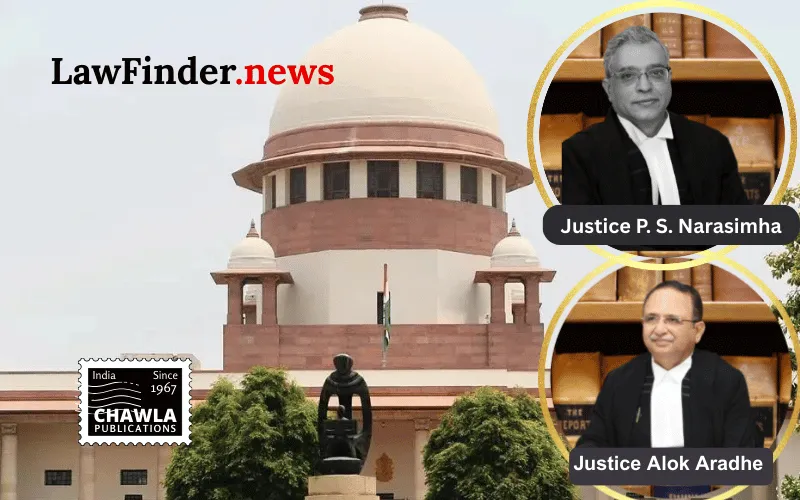
The bench, comprising Justices Pamidighantam Sri Narasimha and Alok Aradhe, addressed appeals stemming from decisions by the High Courts of Delhi and Kerala. The crux of the matter pertained to whether a resignation accepted by an officer without the requisite authority could be validated through subsequent ratification by the competent authority.
B.S. Rawat tendered his resignation in May 2016, which was accepted by an acting Vice-Chancellor lacking statutory authority. However, the acceptance was later ratified by the Board of Management (BOM) of DTU. Despite this, Rawat sought to withdraw his resignation months later, a move both the Delhi High Court and subsequently, the Supreme Court, rejected.
The Supreme Court emphasized the doctrine of ratification, underscoring that such ratification operates retrospectively, rendering the resignation valid from its original acceptance date. The court further noted that Rawat had acted upon his resignation, having received a no-dues certificate and secured new employment, thus estopping him from disputing its validity.
In parallel proceedings involving the National Institute of Technology, Calicut (NITC), the court upheld similar principles, dismissing Rawat's appeals against resignation acceptance and rejection of withdrawal requests. The court highlighted that resignation effectiveness, as per NITC's statutory provisions, did not require prior communication to the employee.
This ruling delineates the boundaries of resignation processes within Indian employment law, emphasizing the legal weight of ratification and an employee's conduct post-resignation. By reinforcing that ratification by a competent authority cures procedural defects and operates retrospectively, the court has set a significant precedent for employment-related jurisprudence.
Bottom Line:
Employment and Resignation - Employee's resignation accepted by an authority not competent as per the governing statute - Subsequent ratification of resignation by the competent authority cures the defect and makes the resignation effective from the date of its original acceptance. Employee cannot challenge resignation after acting upon it and accepting its consequences.
Statutory provision(s): Delhi Technological University Act, 2009; NIT First Statutes, 2009; Doctrine of Ratification
Delhi Technological University v. B.S. Rawat, (SC) : Law Finder Doc id # 2953617