Supreme Court mandates integration of technology to ensure compliance with motor vehicle insurance laws, enhancing road safety and expediting motor accident claims.
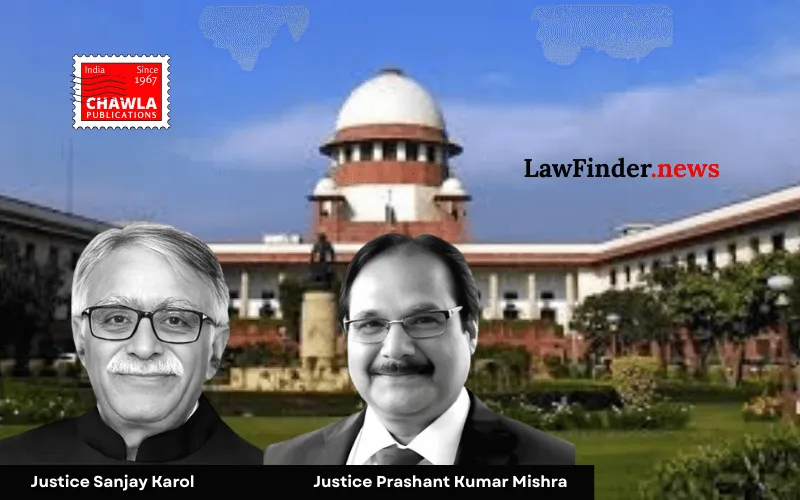
In a landmark judgment, the Supreme Court of India has reinforced the necessity of mandatory motor vehicle insurance, emphasizing the integration of technology to ensure compliance. The judgment, delivered by the bench comprising Justices Sanjay Karol and Prashant Kumar Mishra, addresses the alarming issue of uninsured vehicles on Indian roads and its implications on victims of road accidents.
The case, National Insurance Co. Ltd. v. Smt. Thungala Dhana Laxmi, revolved around the compliance with Section 146 of the Motor Vehicles Act, 1988, which mandates third-party insurance for all vehicles. The court highlighted the distressing statistic that 56% of vehicles in India are uninsured, leading to significant challenges in compensating accident victims.
The court has directed the Ministry of Road Transport and Highways (MoRTH) and the Insurance Regulatory and Development Authority (IRDA) to implement technological solutions such as Automatic Number Plate Recognition (ANPR) cameras and handheld devices to monitor insurance compliance in real-time. These measures aim to streamline enforcement and reduce the burden on accident victims seeking compensation.
Furthermore, the court has mandated a uniform policy structure for motor vehicle insurance, including optional covers for occupants and personal accident coverage. The IRDA has been tasked with drafting uniform policy wordings and ensuring consumer awareness through information sheets provided at the time of vehicle purchase.
The judgment also addresses the backlog of motor accident claims, directing state police to file Detailed Accident Reports (DAR) promptly and ensure the speedy disposal of cases. The court has recognized the need for a comprehensive framework to enhance consumer awareness and facilitate efficient insurance claims processing.
The Supreme Court's decision reiterates the constitutional obligation to safeguard the right to life, as enshrined in Article 21, by ensuring a safe and insured environment for road users. The judgment not only aims to protect accident victims but also seeks to reduce the number of uninsured vehicles on Indian roads, thus enhancing overall road safety.
This significant ruling is expected to bring about substantial changes in the motor insurance landscape in India, ensuring better protection for road users and swift compensation for accident victims.
Bottom Line:
Compliance with Section 146 regarding mandatory third-party insurance for vehicles - Integration of enforcement mechanisms with technology - Uniform policy structure for motor vehicle insurance to ensure coverage for all vehicle occupants, third-party risks, and owner liability.
Statutory provision(s): Motor Vehicles Act, 1988 Sections 146, 159, 166, 196; Insurance Regulatory and Development Authority Act, 1999 Sections 14, 26.
National Insurance Co. Ltd. v. Smt. Thungala Dhana Laxmi, (SC) : Law Finder Doc id # 2953464