Court says basis of 2003 Javed ruling has weakened as India’s fertility rate falls below replacement level; flags concerns over women’s rights, political representation and reproductive autonomy
In a significant ruling with implications for local body elections across India, the Supreme Court has referred to a larger Bench the question of whether laws disqualifying candidates with more than two children from contesting Panchayat elections remain constitutionally valid in present-day circumstances.
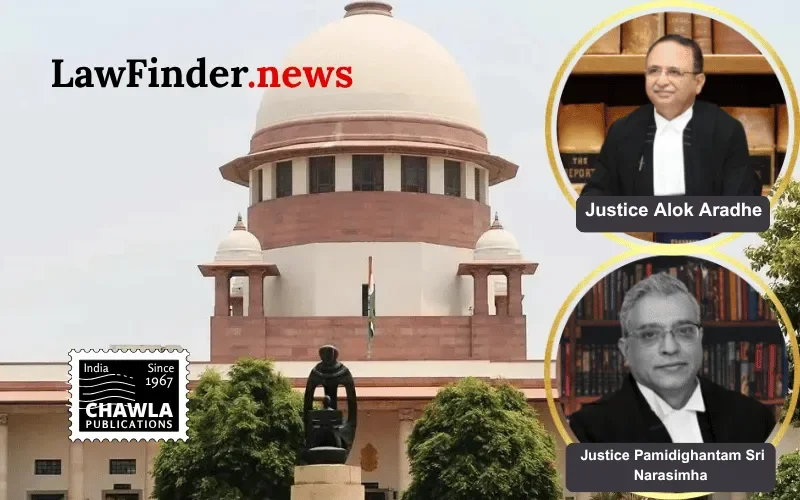
A Bench of Justices Pamidighantam Sri Narasimha and Alok Aradhe passed the order in an appeal filed by Mangala Bhimrao Ingle, whose election as Sarpanch of Kakoda Gram Panchayat in Maharashtra had been set aside under Section 14(1)(j-1) of the Maharashtra Village Panchayats Act, 1959. The provision disqualifies a person from contesting Panchayat elections if they have more than two children.
The appellant had given birth to a third child in 2014 but was elected Sarpanch in the 2022 elections. The Court noted that, on facts, the disqualification issue arose squarely against her. However, instead of limiting itself to the factual dispute, the Bench examined whether the legal and constitutional basis of such two-child norm laws still survives.
The Court said it was “of the strong opinion” that laws penalising people for having more than two children have “lost their relevance.” It observed that when the Supreme Court upheld a similar law in Javed v. State of Haryana in 2003, the decision was based on the then-prevailing fear of “population explosion.” According to the present judgment, that demographic premise has materially changed.
Relying on official data, the Bench recorded that India’s Total Fertility Rate has fallen from 3.0 in 2003 to 1.9 in 2024, which is below the replacement level of 2.1. The Court warned that India is now moving toward a demographic transition marked by an ageing population and a shrinking proportion of working-age people. In that backdrop, it said laws meant to curb population growth may now be counterproductive.
The judgment stressed that courts cannot ignore social and factual changes while assessing the continued validity of legal restrictions. Referring to the doctrine of “temporal reasonableness,” the Bench said a law that was once reasonable may, over time, become arbitrary and unconstitutional if the circumstances justifying it no longer exist.
The Court also raised broader constitutional concerns with the two-child norm. It said such restrictions exclude a class of citizens from political representation on grounds that have little rational connection with their ability to hold public office. The Bench found it troubling that such measures are imposed mainly at the Panchayati Raj level, effectively burdening rural and marginalised communities with restrictions not applied to higher levels of electoral politics.
On women’s rights, the Court rejected the assumption that the law affects men and women equally. It noted that in a patriarchal social structure, women often bear the consequences of reproductive decisions not fully within their control. The Bench referred to studies documenting forced abortions, desertion of pregnant wives and denial of paternity to escape electoral disqualification, and said the two-child norm weakens rather than empowers women.
The judgment further held that reproductive autonomy is part of the right to life and personal liberty under Article 21 of the Constitution. The choice of whether, when and how many children to have, it said, belongs to the individual and cannot be indirectly controlled by the State through adverse civil or political consequences. According to the Court, disqualifying a person on the birth of a third child forces an impermissible choice between reproductive freedom and democratic participation.
Although the constitutional validity of the Maharashtra provision itself was not directly under challenge in this case, the Bench said it was justified in examining whether the foundation of the earlier precedent in Javed had eroded. It concluded that the issue now requires reconsideration by a larger Bench.
Accordingly, the Supreme Court directed the Registry to place the matter before the Chief Justice of India for constitution of an appropriate larger Bench. Till the appeal is finally decided, the interim order staying the High Court’s judgment will continue, allowing Mangala Bhimrao Ingle to remain in office as elected Sarpanch.
The ruling is likely to trigger wider debate on two-child norm laws in local governance and their compatibility with constitutional values in contemporary India.
Statutory provision(s): Section 14(1)(j-1) of the Maharashtra Village Panchayats Act, 1959, Articles 14, 15, 21, 243 of the Constitution of India