All Sub-Judice Claims Stand Extinguished After Resolution Plan Approval, Ensuring No Further Liabilities for Tata Steel
In a landmark judgment, the Supreme Court of India has upheld the clean slate principle in insolvency proceedings, ruling that all sub-judice claims against Tata Steel Ltd., now a successful resolution applicant, are extinguished following the approval of its resolution plan. The judgment arises from appeals filed by Tata Steel challenging Bombay High Court orders that allowed recovery suits and arbitration proceedings to continue despite the insolvency resolution process.
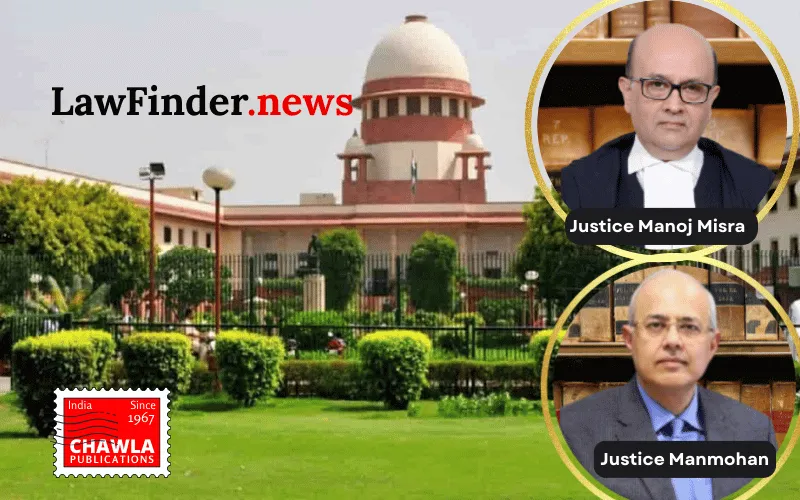
The bench comprising Justices Manoj Misra and Manmohan emphasized the finality of an approved resolution plan under Section 31(1) of the Insolvency and Bankruptcy Code (IBC), 2016. Once a resolution plan is sanctioned, all claims not included within the plan are considered extinguished, aligning with the legislative intent to provide a fresh start for the resolution applicant.
The appeals stemmed from the initiation of Corporate Insolvency Resolution Process (CIRP) against Bhushan Steel Limited, where operational creditors Varsha and Masyc Projects Pvt. Ltd. sought recovery of dues through civil suits and arbitration. The Supreme Court ruled that these proceedings, which had not culminated in crystallized claims by the date of resolution plan approval, stand abated.
The resolution plan, approved by the National Company Law Tribunal (NCLT) on May 15, 2018, included an Operational Creditors Settlement Amount of Rs. 12,00,00,00,000, of which Rs. 2,00,00,00,000 was allocated for distribution among operational creditors with crystallized claims. The court clarified that the resolution plan did not provide an express carve-out for sub-judice claims, affirming the extinguishment of all pending proceedings.
Senior counsel for Tata Steel argued that the clean slate doctrine is essential to prevent unforeseen liabilities that could jeopardize the revival of the corporate debtor. The judgment underscores the non-justiciable nature of the commercial wisdom exercised by the Committee of Creditors, which determines the treatment of claims under the resolution plan.
The court also observed the impact of the IBC on small operational creditors, such as MSMEs, noting their disenfranchisement under the current framework. The judgment suggests legislative interventions to ensure a fair repayment mechanism for such entities.
With this ruling, Tata Steel is relieved from pending legal claims, marking a significant step towards its operational stability post-insolvency. The judgment is expected to reinforce the clean slate principle in future insolvency proceedings, ensuring clarity and certainty for resolution applicants.
Statutory provision(s): Insolvency and Bankruptcy Code, 2016 Sections 18, 25, 30, 31, 60; CIRP Regulations Regulation 12(2)
M/s Tata Steel Ltd. v. Varsha, (SC) : Law Finder Doc id # 2942349