Court directs State Government to operationalize Technical Institutions Fee Regulatory Committee in compliance with Supreme Court mandate within one month
The Tripura High Court, in a recent judgment dated September 2, 2026, dismissed the writ appeal filed by Justice (Retired) Alok Baran Pal seeking remuneration for his tenure as Chairman of the Fee Structure Regulatory Committee for private technical institutions in Tripura. The committee, constituted by the State Government in June 2010 pursuant to the Supreme Court’s direction in Islamic Academy of Education v. State of Karnataka (2003), had remained non-functional, and no fees were fixed or regulated during the period.
Justice Pal, a retired High Court Judge, was appointed Chairman of the committee on June 10, 2010. He claimed remuneration retrospectively from December 1, 2018, after he ceased holding another office. The State Government denied the claim, citing lack of operational work and absence of any terms of appointment guaranteeing remuneration. The Single Judge had earlier held that the appointment was honorary and that the committee never functioned effectively.
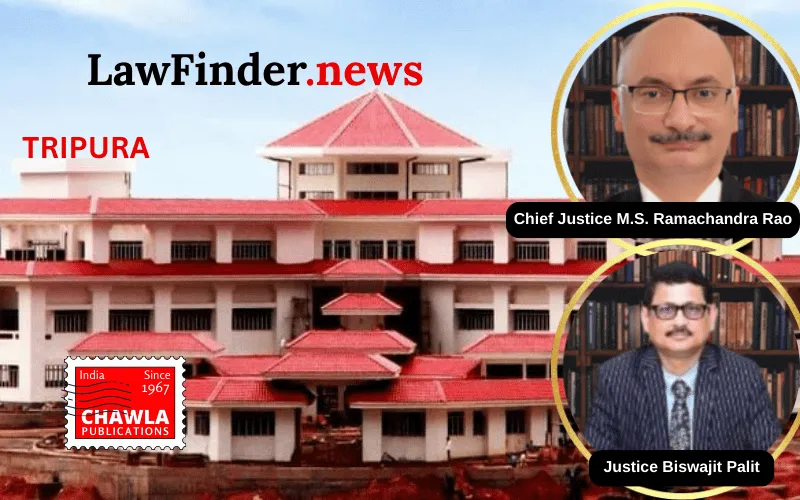
The Division Bench, comprising Chief Justice M.S. Ramachandra Rao and Justice Biswajit Palit, upheld the dismissal. The court noted that the appellant had not undertaken any activities related to fee determination for private technical institutions during his tenure, and mere appointment without functional work does not entitle one to remuneration. Furthermore, the court clarified that the committee was not reconstituted by any formal notification despite the willingness of Justice Jayanta Kumar Biswas to replace the appellant in 2016, thereby negating claims of continued tenure or remuneration.
However, the court expressed deep concern over the State Government’s casual approach towards implementing the Supreme Court’s 2003 mandate, which required constituting a permanent fee regulatory committee headed by a retired High Court Judge, with adequate infrastructure, staff, and remuneration provisions. The bench emphasized that the absence of an operational committee has allowed private technical institutions in Tripura to fix fees arbitrarily, undermining regulatory oversight.
The court directed the State Government to immediately constitute and operationalize the Technical Institutions Fee Regulatory Committee as per the Supreme Court’s guidelines within one month. The government was instructed to fix the remuneration, service conditions, provide necessary staff and infrastructure to ensure the committee’s effective functioning. The judgment reiterated the Supreme Court’s directions that such committees are essential to ensure fair, transparent fee structures, and to prevent profiteering in professional education institutions.
The judgment serves as a reminder of the critical role of regulatory bodies in higher education and the obligation of state authorities to implement Supreme Court directives in letter and spirit to protect the interests of students and maintain educational standards.
Bottom Line:
Appointment to a statutory committee - Retired High Court Judge appointed as Chairman of the Fee Structure Regulatory Committee for private technical institutions - No remuneration claimable in absence of work performed or terms of appointment stipulating remuneration.
Statutory provision(s):
Article 142 of the Constitution of India
Justice (Retired) Alok Baran Pal v. State of Tripura, (Tripura)(DB) : Law Finder Doc Id # 2975969