Court Remands Case to Competent Authority Under Endowments Act for Comprehensive Adjudication
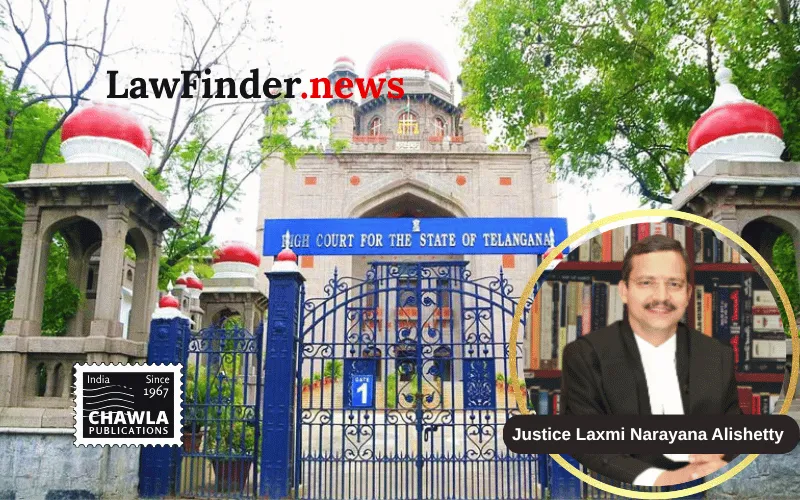
The Telangana High Court, presided over by Justice Laxmi Narayana Alishetty, has directed a detailed inquiry into the allegations of mismanagement at the Sri Kanyaka Parameshwari Devasthanam temple in Secunderabad. The court's decision comes in response to a writ petition filed by Nagilla Srinivas, who alleged illegal demolition and reconstruction activities at the temple without necessary permissions, leading to a violation of the religious sentiments of the Arya Vysya community.
The petitioner, represented by senior counsel L. Ravi Chander, argued that the temple committee had collected substantial donations amounting to Rs.16 crores for unauthorized construction and relocated the deity without performing essential religious rituals. The petitioner sought a writ of mandamus against the temple committees for non-compliance with statutory obligations under the Telangana Charitable and Hindu Religious Institutions and Endowments Act, 1987.
The court noted that the temple committees, although registered as societies, perform public functions under the Endowments Act and are, therefore, subject to writ jurisdiction. Justice Alishetty emphasized the High Court's discretionary power to issue writs in matters involving public and religious interests, as established in various Supreme Court judgments.
The court remanded the matter to the competent authority under the Endowments Act for a comprehensive inquiry. The authority is tasked with investigating the alleged misuse of funds, failure to submit budgets, and whether the necessary religious rituals were conducted during the deity's translocation. The court directed both parties to present relevant evidence and documents, ensuring a fair hearing.
The judgment underscores the High Court's role in balancing statutory compliance with religious sentiments, highlighting the need for transparency and accountability in managing religious institutions.
Bottom line:-
Writ of Mandamus is maintainable against religious institutions if they perform statutory duties or public functions as envisaged under the Endowments Act.
Statutory provision(s): Article 226 of the Constitution of India, Telangana Charitable and Hindu Religious Institutions and Endowments Act, 1987
Nagilla Srinivas v. State of Telangana, (Telangana) : Law Finder Doc id # 2932479