Mother-in-law sentenced to life imprisonment for the murder of pregnant daughter-in-law based on compelling dying declarations and corroborative evidence.
In a landmark judgment, the Tripura High Court has upheld the conviction and life sentence of Parul Barman, accused of the heinous murder of her pregnant daughter-in-law, Iti Saha, by setting her ablaze after pouring kerosene over her. The court dismissed the appeal filed by Barman, affirming the judgment of the Additional Sessions Judge, Sepahijala district, Bishalgarh, which had found her guilty under Section 302 of the Indian Penal Code.
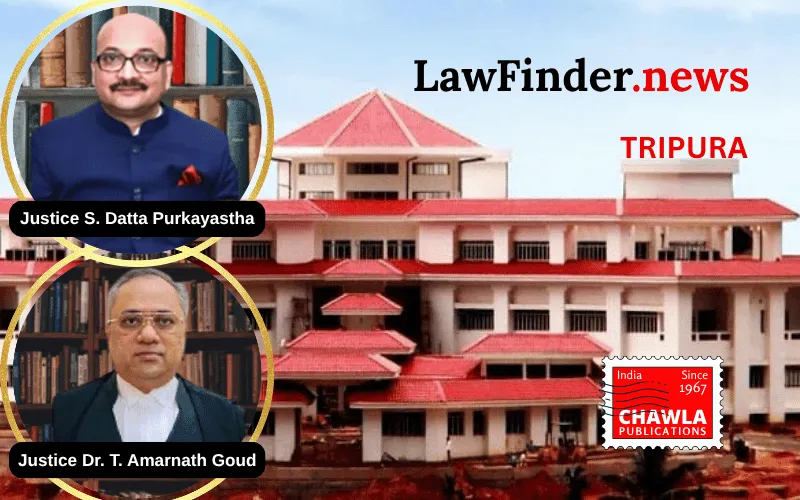
The bench, comprising Dr. T. Amarnath Goud and S. Datta Purkayastha, JJ., emphasized the reliability of both written and oral dying declarations, which played a pivotal role in the conviction. The court noted that the dying declarations were consistent, voluntary, and trustworthy, thereby sustaining the conviction solely on their basis. The judgment highlighted that the absence of independent witnesses in matrimonial home offences is not detrimental, as the testimony of the victim's relatives can suffice when corroborated by circumstances and evidence.
The case dates back to May 21, 2015, when Iti Saha, who was nine months pregnant, suffered 97% burn injuries leading to her death. According to the prosecution, Barman tied Saha's mouth with a cloth and set her on fire. The court found substantial evidence supporting this claim, including a post-mortem report indicating unburnt areas on the face and neck, consistent with the victim's mouth being gagged.
The defense's argument of an accidental fire while cooking was rejected, as the investigation revealed no kerosene oven at the scene, only a gas stove. The court found the defense's narrative implausible, given the compelling evidence presented.
Moreover, the court reiterated the legal principle that dying declarations, if found credible, can form the sole basis of conviction. In this case, the dying declaration recorded by an Executive Magistrate, with medical certification of the victim's fitness, was deemed sufficient for upholding the conviction.
The court also addressed procedural aspects, noting that the declarant was in a fit state of mind when the statement was made, as corroborated by medical evidence. The judgment serves as a poignant reminder of the judicial system's role in addressing crimes within the domestic sphere, particularly those involving matrimonial cruelty and violence.
In conclusion, the Tripura High Court's decision reinforces the importance of dying declarations in criminal proceedings and underscores the judiciary's commitment to delivering justice in cases of domestic violence and bride burning.
Bottom Line :
Murder - Bride burning - Conviction of mother-in-law under Section 302 IPC upheld on basis of reliable written and oral dying declarations - Mere absence of independent witnesses in matrimonial home offences not fatal - Where victim was fit to make statement and declaration was voluntary and consistent, dying declaration alone can sustain conviction.
Statutory provision(s):
- Indian Penal Code, 1860, Section 302
- Evidence Act, 1872, Sections 32(1) and 106
- Criminal Procedure Code, 1973, Section 313
Smti. Parul Barman v. State of Tripura, (Tripura)(DB) : Law Finder Doc id # 2989407