Apex Court Mandates Judicial Oversight and Strengthened Measures Against Black Money in Elections
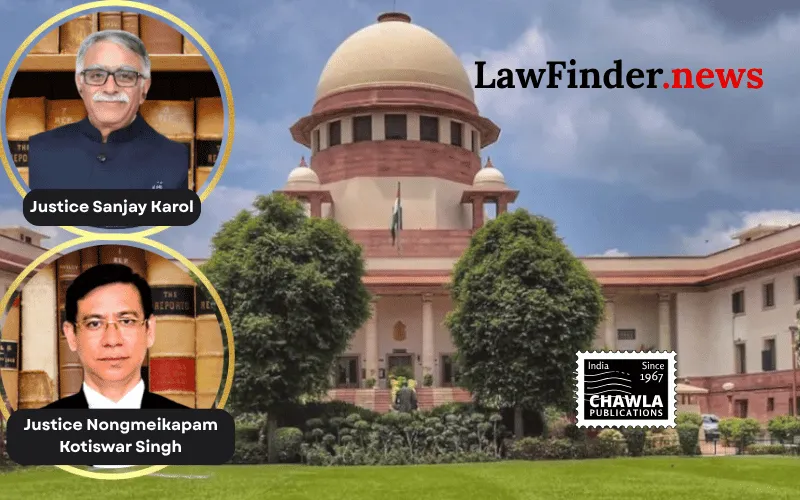
In a landmark judgment, the Supreme Court of India has issued comprehensive guidelines aimed at curbing the use of black money and other inducements in the electoral process, thereby reinforcing the integrity of democratic elections. The judgment, delivered by a bench comprising Justices Sanjay Karol and Nongmeikapam Kotiswar Singh, underscores the inherent link between democracy, the rule of law, and free and fair elections. It emphasizes that the deployment of illicit funds and inducements during elections undermines democratic processes and calls for stringent measures to ensure accountability.
The court recognized the endemic nature of electoral malpractices, including the use of black money, which compromise electoral integrity. In response, it has mandated the Election Commission of India (ECI) to implement real-time tracking of electoral offenses, establish special courts for expeditious trials, and ensure that withdrawal of cases against candidates requires High Court approval to prevent misuse of power.
The judgment further directs that all cash seizures exceeding Rs. 10 lakhs be immediately reported to income tax authorities, and that investigations into electoral offenses be concluded within a year, with quarterly updates submitted to the ECI. The court has set a precedent by involving judicial oversight in the withdrawal of prosecution cases, thereby ensuring decisions are made in the interest of justice and public policy, rather than political expediency.
Highlighting global practices, the judgment provides a comparative analysis of different jurisdictions, advocating for a structured enforcement mechanism that combines legal, institutional, and procedural safeguards. This approach aims to prevent electoral malpractices and foster a transparent and accountable electoral process.
The Supreme Court's decision is a significant step towards enhancing the transparency and fairness of elections in India, aligning with international standards and reinforcing the democratic fabric of the nation. State governments and the ECI are required to submit compliance reports by November 18, 2026, detailing the implementation of these directives.
Bottom Line:
Use of black money and other inducements during elections undermines the essence of democracy and compromises its integrity. Supreme Court issues guidelines to curb such practices and strengthen accountability in electoral processes.
Statutory provision(s): Representation of the People Act, 1951, Article 324 of the Constitution of India, Indian Penal Code, 1860 Sections 171B and 171E, Criminal Procedure Code, 1973 Section 321, Bharatiya Nyaya Sanhita, 2023 (Sections 170 and 173)
State of Karnataka v. Prathik Parasrampuria, (SC) : Law Finder Doc id # 2961751