Court Rules Major Penalty Without Proper Oral Inquiry and Non-Disclosure of Documents Violates Principles of Natural Justice; Directs Lawful Determination of Service Benefits for Deceased Officer's Heirs
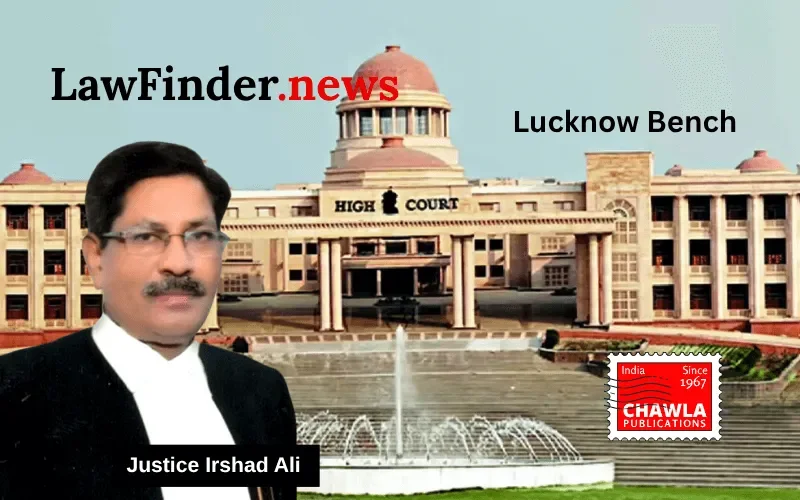
In a landmark judgment delivered on October 24, 2026, the Allahabad High Court (Lucknow Bench) under Justice Irshad Ali struck down the dismissal order of Mr. Raghuraj Singh, a former Subordinate Agriculture Service officer, citing grave procedural irregularities and violations of natural justice in the departmental disciplinary proceedings.
The petitioner, Raghuraj Singh, who was dismissed from service by the Director of Agriculture, Uttar Pradesh, in February 2001, challenged his termination on grounds that the departmental inquiry was conducted without affording him a proper oral hearing, without examination of witnesses, and without supply or inspection of crucial documents relied upon by the department. The Court found that these procedural defects rendered the inquiry and consequent dismissal legally unsustainable.
Background:
Raghuraj Singh was appointed in 1968 and served in various capacities in the Uttar Pradesh Agriculture Department. In 1990-91, a departmental investigation was initiated following alleged shortages in government stock at a seed store under his charge. A criminal case under Sections 409, 467, 468, and 420 IPC was also registered against him. Singh was suspended but later reinstated by a court order.
Key Findings of the Court:
1. Absence of Proper Oral Inquiry: The Court emphasized that for imposing a major penalty such as dismissal, the inquiry must be conducted in strict compliance with service rules, including recording oral evidence of departmental witnesses in the presence of the employee and allowing cross-examination. The inquiry report in Singh's case was based solely on his written reply and unexamined documents, which the Court held is insufficient and vitiates the inquiry.
2. Non-Supply and Non-Inspection of Documents: Singh repeatedly requested copies and inspection of documents underpinning the charges, including those held by the criminal court. The Court noted the department's failure to provide complete access to these materials deprived him of a meaningful opportunity to defend himself, thus breaching natural justice.
3. Judicial Review Scope: While courts do not normally reappraise evidence in disciplinary cases, they must intervene where mandatory procedural safeguards and principles of natural justice are violated. The Court found such violations in Singh's case, justifying interference.
4. Relationship Between Criminal and Disciplinary Proceedings: The Court clarified that the existence or pendency of criminal proceedings does not automatically suspend or validate departmental inquiries. Each must independently establish charges in accordance with law.
5. Consequential Relief Post Death of Employee: Mr. Singh passed away during the pendency of the writ petition. The Court held that while reinstatement is personal and cannot be granted posthumously, the quashing of dismissal affects his service record, recovery of alleged loss, suspension period, and retirement benefits. It directed the competent authority to determine these consequential benefits for Singh's lawful heirs within four months.
Legal Precedents Cited:
The judgment drew extensively on Supreme Court rulings, including Satyendra Singh v. State of U.P. (2024) and State of U.P. v. Saroj Kumar Sinha (2010), which underscore the necessity of oral evidence and complete disclosure in major penalty inquiries.
Conclusion:
The Allahabad High Court's decision reinforces the fundamental principle that disciplinary action, especially major penalties like dismissal, must be grounded in a procedurally fair inquiry. Mere issuance of charge sheets or consideration of written replies does not satisfy the requirement of a fair hearing. This judgment serves as a crucial reminder to government departments to adhere strictly to procedural norms and natural justice, ensuring employees' rights are protected even amid serious allegations.
Bottom Line:
Service Law - Dismissal order passed in departmental proceedings quashed as major penalty was imposed without proper oral inquiry, without examination of witnesses and despite non-supply/non-inspection of material documents relied upon by department - Mere submission of reply by delinquent or issuance of show-cause notice cannot cure violation of principles of natural justice - After death of employee, consequential service/retiral benefits to be determined for lawful heirs in accordance with law.
Statutory provision(s):
Article 226 of the Constitution of India, Indian Penal Code Sections 409, 467, 468, 420, Rule 7 of the 1999 Rules governing disciplinary inquiries