Razzak's appeal dismissed; court finds grave errors in original sentencing but refrains from altering due to absence of state appeal.
The Allahabad High Court, in a detailed judgment dated July 15, 2026, dismissed the criminal appeal filed by Razzak, who was convicted for pouring acid on his father, resulting in fatal injuries. The court upheld the three-year rigorous imprisonment sentence under Section 326 of the Indian Penal Code (IPC), while strongly criticizing the trial court for its lenient handling of the case and failure to apply correct legal principles.
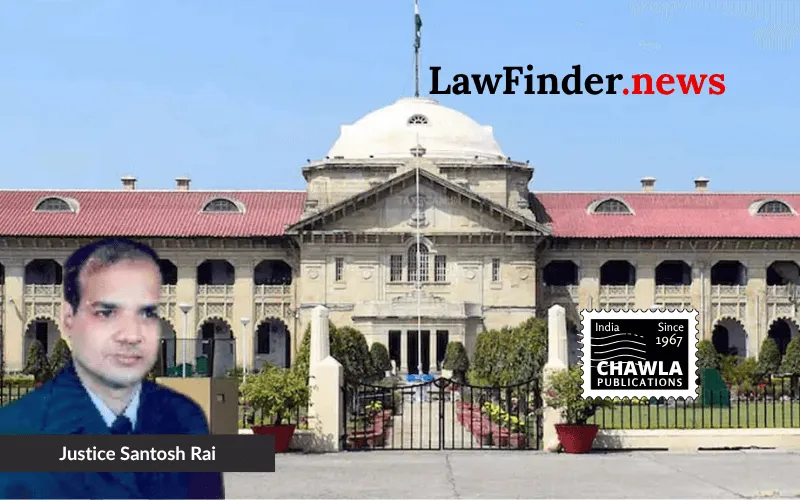
Justice Santosh Rai, delivering the judgment, underscored the trial court's misappreciation of evidence and its failure to impose a mandatory fine under Section 326 IPC. The court expressed deep concern over the trial court's decision to convict the accused under Section 326 IPC instead of Section 302 or Section 304 IPC, despite evidence indicating culpable homicide or murder.
The case dates back to September 5, 1981, when Razzak allegedly poured acid on his father, Gulam Husain, during a quarrel at their residence in Bichhia village. The father sustained 60% acid burns, leading to his death after prolonged medical treatment due to septicaemia and exhaustion from the injuries. The appellant's own injuries were superficial, pointing to his role as the aggressor in the incident.
Despite the gravity of the offense, the trial court convicted Razzak under Section 326 IPC, which pertains to voluntarily causing grievous hurt by dangerous weapons or means, and sentenced him to three years' imprisonment. Justice Rai criticized this undue leniency and underscored the mandatory nature of imposing a fine alongside imprisonment as per the statutory provisions of Section 326 IPC.
The High Court also took exception to the trial court's omission to impose the statutory fine, noting that such lapses could erode public confidence in the administration of criminal justice. The judgment serves as a reminder to judicial officers to exercise the highest degree of care, legal acumen, and judicial discipline while recording findings on guilt and imposing sentences.
While acknowledging the trial court's errors, the High Court refrained from altering the conviction to a higher provision or enhancing the sentence due to the absence of any appeal or revision from the State for enhancement. The court maintained its stance in line with the well-settled principle that an appellate court should not enhance a sentence or otherwise alter a finding to the prejudice of the accused on an appeal preferred by the accused alone.
In conclusion, the High Court dismissed Razzak's appeal, upheld his conviction under Section 326 IPC, and directed him to surrender within two weeks to serve out the remainder of his sentence. The judgment also instructed the trial court to adopt coercive measures, including issuing a non-bailable warrant, if the appellant fails to surrender within the stipulated period.
The judgment highlights the importance of adhering to statutory provisions and evidentiary standards in criminal proceedings, reinforcing the judiciary's role in ensuring justice and maintaining public confidence in the legal system.
Bottom line:-
The court criticized the trial court for misappreciation of evidence and failing to apply correct legal principles while convicting the accused under Section 326 IPC instead of Section 302 or 304 IPC, despite clear evidence indicating culpable homicide or murder. The trial court's failure to impose a mandatory fine under Section 326 IPC was noted as a legal error.
Statutory provision(s): Section 326 IPC, Section 302 IPC, Section 304 IPC, Section 32(1) Indian Evidence Act, Section 161 Cr.P.C., Section 313 Cr.P.C.
Razzak v. State of U.P., (Allahabad) : Law Finder Doc id # 2941265