Court affirms executing court's authority to rectify clerical errors to ensure proper implementation of decrees, preventing denial of justice to decree-holders.
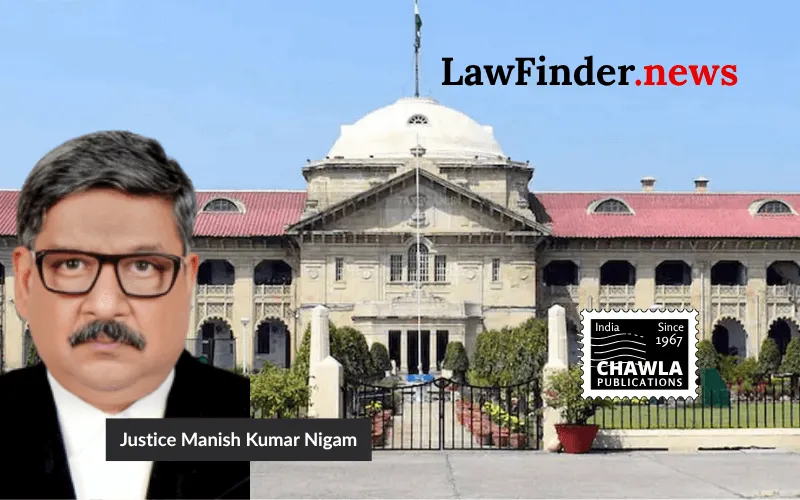
In a landmark ruling, the Allahabad High Court, led by Justice Manish Kumar Nigam, has upheld the authority of executing courts to correct clerical or typographical errors in legal decrees. The decision came in response to petitions filed under Article 227 challenging previous orders related to the execution of a decree concerning a property sale.
The case's origins trace back to a suit for specific performance of a sale agreement dated December 31, 1967, initiated by Pooran Lal against Maya Devi. The matter saw various appeals and revisions over the decades, culminating in execution proceedings. The crux of the dispute in the execution stage revolved around the clerical error in the decree, which misdescribed the property's location as "Mohalla Gulab Nagar" instead of "Mohalla Siklapur."
Justice Nigam's judgment emphasized the wide and comprehensive scope of Section 47 of the Civil Procedure Code (CPC), which empowers executing courts to address all questions related to the execution, discharge, or satisfaction of a decree. He underscored that the executing court is vested with the authority to correct such errors to prevent unnecessary litigation and ensure justice.
The court noted that the identity of the disputed property was clear to all parties, and the error was a mere typographical mistake. This misdescription did not affect the substantive rights of the parties involved. The judgment drew on precedents, including the Supreme Court's ruling in Pratibha Singh v. Shanti Devi Prasad, which supports the correcting of such errors to uphold the integrity of decrees and prevent the deprivation of their fruits.
Justice Nigam dismissed the petitions challenging the executing court's authority, reinforcing the principle that courts should focus on delivering substantive justice rather than being hindered by technicalities. This decision reaffirms the judiciary's commitment to ensuring that procedural errors do not obstruct the rightful claims of litigants.
Bottom line:-
Executing court has the power to correct clerical or typographical errors in a decree to ensure proper execution and to prevent denial of the fruits of the decree to the decree-holder.
Statutory provision(s):
Sections 47, 151, 152, 153 of the Civil Procedure Code, 1908
Santosh v. Asha Rani, (Allahabad) : Law Finder Doc id # 2934296