Special Court’s authority to scrutinize adequacy and timeliness of victim compensation affirmed; State directed to investigate repeated financial relief claims by appellant and family
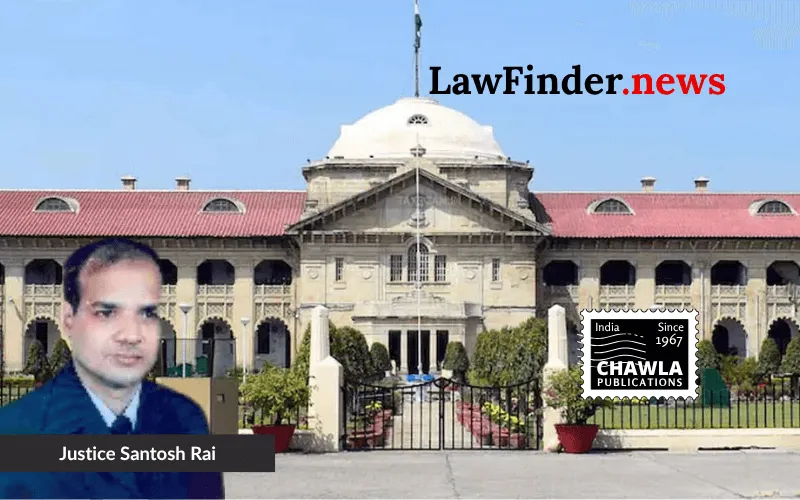
In a landmark judgment delivered on August 11, 2026, the Allahabad High Court reinforced the critical role of Special Courts under the Scheduled Castes and Scheduled Tribes (Prevention of Atrocities) Act, 1989 and its Rules, 1995, in ensuring the timely and adequate payment of relief to victims of atrocities. The Court set aside orders of the Special Judge, SC/ST Act, Jhansi, which had rejected applications seeking balance financial relief to victims, clarifying that Special Courts possess express jurisdiction under Rule 12(7) of the Rules to actively scrutinize and direct payment of compensation if relief is found insufficient or delayed.
The appeals arose from cases registered under multiple sections of the Indian Penal Code and the SC/ST Act, including offences related to intentional insult and intimidation based on caste, as well as offences under the Information Technology Act. The victims, represented by appellants Arvind Kumar, Atul Raj, and Santosh Kumar Dohrey, sought the release of the balance 37.5% of relief amounts due under the statutory Schedule, totaling Rs. 75,000 each. However, the District Social Welfare Officer had restricted payments to 37.5% of the total relief, citing a reassessment of admissible compensation.
Rejecting the Special Judge’s view that it was impermissible for the court to determine or enhance relief amounts, the High Court emphasized that Rule 12(7) explicitly empowers the Special Court to verify whether relief has been paid timely and adequately, and to order additional payments if necessary. The Court underscored that the Special Court is not a mere passive recipient of administrative reports but a statutory authority entrusted with safeguarding victims’ rights under the Act.
Importantly, the Court also highlighted concerns raised by the State regarding possible misuse of the relief scheme. It was revealed that appellant Santosh Kumar Dohrey and his family members had cumulatively received over Rs. 23 lakh in relief across multiple criminal cases, with 10 to 12 further cases pending for financial assistance. While recognizing the benevolent purpose of the relief scheme, the Court directed the District Magistrate and Senior Superintendent of Police, Jhansi, to conduct a thorough, fair, and time-bound enquiry within three months to examine the nature of these claims and to ascertain any misuse.
The judgment further directed that the Special Judge reconsider the quantum of compensation strictly in accordance with the statutory Schedule linked to the specific offences proved in the cases, rather than relying mechanically on charge-sheeted sections. The District Welfare Committee was instructed to issue reasoned orders clearly stating the basis for granting or denying relief amounts.
The Court stressed that all District administrations in Uttar Pradesh must comply diligently with Rule 12(7), ensuring timely forwarding of relief reports to Special Courts and maintaining strict oversight to prevent abuse of the scheme. It called for the establishment of effective regulatory and supervisory mechanisms across the State to monitor relief disbursal, particularly where repeated claims by the same individuals or families occur.
This ruling affirms the judiciary’s proactive role in the implementation of the SC/ST (Prevention of Atrocities) Act’s protective and rehabilitative measures, balancing the need to extend genuine relief to victims while curbing exploitation of the relief provisions.
Bottom Line:
Scheduled Castes and Scheduled Tribes (Prevention of Atrocities) Act, 1989 and Rules, 1995 - Special Court's jurisdiction under Rule 12(7) of the Rules expressly enables judicial scrutiny of relief and compensation payment adequacy, timeliness, or partial disbursal. Special Court cannot abdicate this responsibility.
Statutory provision(s):
Scheduled Castes and Scheduled Tribes (Prevention of Atrocities) Act, 1989; Scheduled Castes and Scheduled Tribes (Prevention of Atrocities) Rules, 1995 (Rule 12(4), Rule 12(7)); Indian Penal Code (Sections 170, 323, 504, 506); Information Technology Act (Section 67)
Arvind Kumar v. State of U.P., (Allahabad) : Law Finder Doc Id # 2963017