Court holds that an employee has no right to challenge another's Annual Confidential Reports unless directly prejudiced; petition dismissed for delay and lack of merit in Dr. Mukesh Surya vs. State of Himachal Pradesh
Shimla, August 5, 2026 — The Himachal Pradesh High Court, in a significant judgment, has dismissed the petition filed by Dr. Mukesh Surya challenging the upgradation of Annual Confidential Reports (ACRs) of his colleague Dr. Shikha Sood, and the consequent promotion that led to his supersession. The court ruled that a co-employee lacks locus standi to question the ACRs of another employee unless adverse remarks expunged from the ACRs directly prejudice their promotional prospects.
Dr. Surya, a senior medical officer in the Department of Radiology, had contested the upgrading of Dr. Sood’s ACR gradings from "Good" and "Very Good" to "Outstanding" by the Accepting Authority, which he alleged to be irregular and illegal. He contended that this upgradation facilitated Dr. Sood’s promotion to Assistant Professor, superseding him despite his seniority.
The petitioner sought quashing of the ACRs and the minutes of the Departmental Promotion Committee (DPC) meeting dated November 28, 2015, which recommended Dr. Sood’s promotion. He also requested directions for a review DPC and an inquiry into the circumstances under which the Accepting Authority, the Director of Medical Education, personally heard and accepted representations from Dr. Sood.
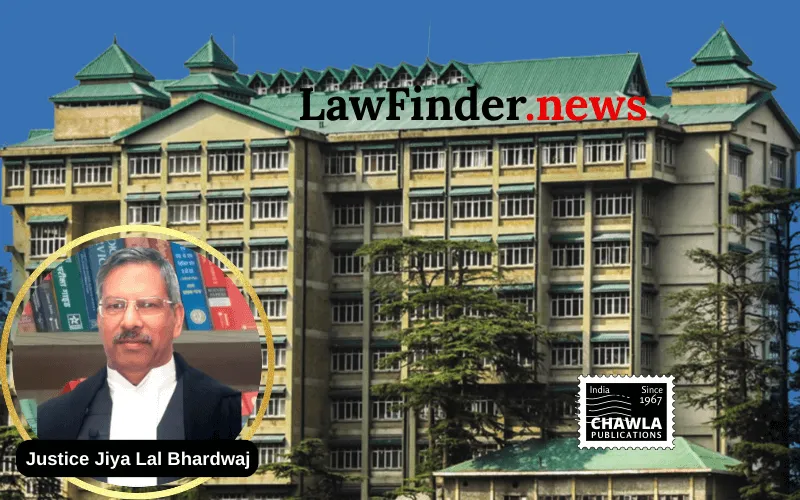
In its detailed judgment, Justice Jiya Lal Bhardwaj emphasized the principle that ACRs are essentially a matter between the employer and the concerned employee. The court referred to the Supreme Court precedent in Lakhi Ram v. State of Haryana (1981), clarifying that while a co-employee may have locus standi to challenge expungement of adverse remarks in a colleague’s ACR if it prejudices their own promotion chances, mere disagreement with grading does not confer such standing.
The court found that Dr. Sood’s ACRs were graded "Very Good" by the reporting and reviewing authorities and subsequently upgraded to "Outstanding" by the Accepting Authority with proper justifications such as paper presentations, topping examinations, and conference participation. No credible evidence was found to support allegations of connivance between Dr. Sood and the Accepting Authority.
Further, the court noted that Dr. Surya had knowledge of the promotion and related ACR gradings since 2017 but delayed filing the petition until 2020 without reasonable explanation, invoking the doctrine of delay and laches.
The court also upheld the validity of the DPC’s recommendation and observed that judicial interference in promotion decisions or ACR gradings is limited to cases of perversity or material non-consideration. Since Dr. Surya did not demonstrate such grounds, the petition was dismissed.
This judgment underscores the limited scope for employees to challenge the performance appraisals of colleagues and highlights the importance of timely legal action in service matters. It also reaffirms that the Accepting Authority’s role includes a discretionary power to upgrade ACR gradings based on documented achievements.
Background and Legal Context:
The petitioner, Dr. Mukesh Surya, who completed his MBBS in 1997 and later a Master’s in Radiology in 2006, was promoted to Assistant Professor in Radiology after serving as a Senior Resident. Dr. Shikha Sood, a colleague, had her ACRs upgraded from "Good" to "Outstanding" over several years by the Accepting Authority, resulting in her promotion ahead of Dr. Surya despite his seniority.
The petitioner argued that the Accepting Authority violated the procedural mandates under the Handbook on Personnel Matters by upgrading Dr. Sood’s ACRs without lawful authority or proper reasons, and alleged collusion. He sought judicial intervention to quash these gradings and the resultant promotion.
Respondents contended that grading of ACRs is a subjective exercise involving the Reporting, Reviewing, and Accepting Authorities, and that the Accepting Authority properly exercised discretion supported by documented achievements. They further argued that the petitioner had no locus standi to challenge another employee’s ACRs and that the petition was barred by delay and laches.
Key Legal Findings:
- The Court reiterated that ACRs reflect both subjective and objective assessments by designated officers, and typically only the concerned employee has the right to challenge entries in their ACRs.
- Based on Supreme Court precedents, a co-employee can challenge modification or expungement of adverse remarks in a colleague’s ACR only if it directly affects their own promotional prospects. Mere dissatisfaction with another’s grading does not confer locus standi.
- The Accepting Authority’s upgrade of Dr. Sood’s ACRs was accompanied by reasons such as academic excellence and research contributions, fulfilling the criteria under Clause 19.8.5 of the Handbook.
- Allegations of collusion were unsubstantiated; no material evidence was produced to support claims of wrongdoing by the Accepting Authority.
- The delay in filing the petition, despite knowledge of the promotion since 2017, was unjustified and barred relief under the principle of delay and laches.
- Judicial interference in departmental promotions is limited and should only occur where recommendations are perverse or ignore material facts. No such grounds existed here.
Implications:
This judgment clarifies the scope of legal challenge available to employees regarding the performance evaluations of their colleagues. It emphasizes procedural propriety in handling ACRs and the limited role courts play in second-guessing administrative discretion in promotions. It also stresses the importance of timely legal recourse in service-related disputes.
Bottom Line:
A co-employee has no locus standi to challenge the ACRs (Annual Confidential Reports) of a colleague unless adverse remarks expunged from the ACRs directly prejudice their promotional prospects.
Statutory provision(s):
Handbook on Personnel Matters Volume-II, Chapter 19, Clause 19.8.5; Article 226 of the Constitution of India
Dr. Mukesh Surya v. State of Himachal Pradesh, (Himachal Pradesh) : Law Finder Doc Id # 2954811