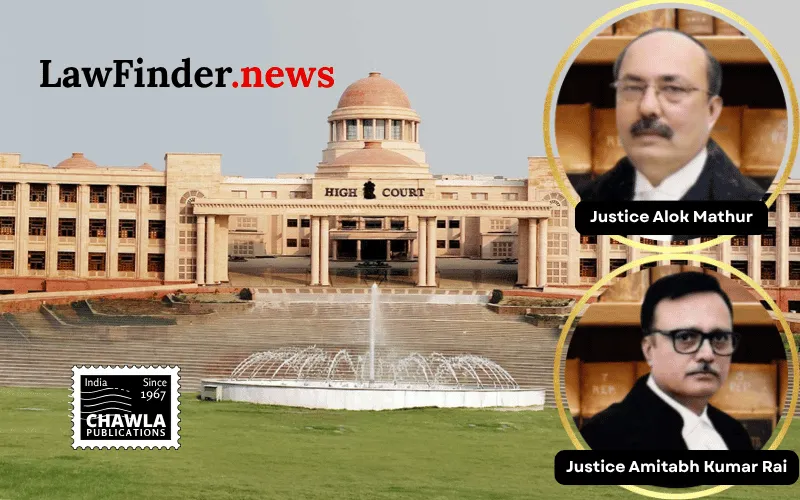
Court Dismisses Petition Challenging RWA Decisions on Gate Closures and Parking Regulations
In a significant judgment, the Allahabad High Court has reinforced the authority of Resident Welfare Associations (RWAs) in managing the affairs of apartment societies, dismissing a writ petition filed by four residents challenging the decisions of the Sarvoday Sulabh Apartment Residents Welfare Association in Lucknow. The court's decision, delivered by the bench comprising Justices Alok Mathur and Amitabh Kumar Rai, underscores the collective responsibility and legal empowerment of RWAs under the Uttar Pradesh Apartment (Promotion of Construction, Ownership and Maintenance) Act, 2010.
The petitioners had contested several decisions by the RWA, including the closure of six out of ten gates and the imposition of parking fees, claiming these actions violated their fundamental rights to free movement under Article 19(1)(d) of the Constitution. The court, however, held that such restrictions were reasonable and aimed at ensuring the security and convenience of the majority of residents. It emphasized that RWAs are empowered to enforce rules and manage common areas, including parking regulations, under Sections 14 and 22 of the Act, 2010.
The judgment clarified that individual grievances against RWA decisions should be resolved internally within the association, which functions as a democratic body. It also highlighted the lack of an express remedy under the Act, 2010 for grievances like excessive parking fees and traffic congestion, suggesting the need for a grievance redressal mechanism to be considered by the State Government.
The court's ruling affirms the legal status and powers of RWAs, reinforcing their role in maintaining order and security within apartment complexes. This decision provides clarity on the scope of RWA authority and the limits of judicial intervention in disputes arising from their actions.
Bottom line:-
Resident Welfare Association (RWA) - Powers and responsibilities under Uttar Pradesh Apartment (Promotion of Construction, Ownership and Maintenance) Act, 2010 - RWA empowered to manage common areas, enforce parking rules, and take legal action against violations. Individual disputes with RWA decisions cannot be raised in writ petition under Article 226 of the Constitution of India.
Statutory provision(s): Article 19(1)(d), Article 19(5) of the Constitution of India, Sections 5(5), 14, 22, 27(1) of the Uttar Pradesh Apartment (Promotion of Construction, Ownership and Maintenance) Act, 2010
Sunil Kumar Jain v. State Of U.P., (Allahabad)(Lucknow)(DB) : Law Finder Doc id # 2941275