Court Emphasizes Endeavour to Dispose Within 30 Days and Advises Constitutional Courts to Avoid Time-Bound Directions Except in Exceptional Cases
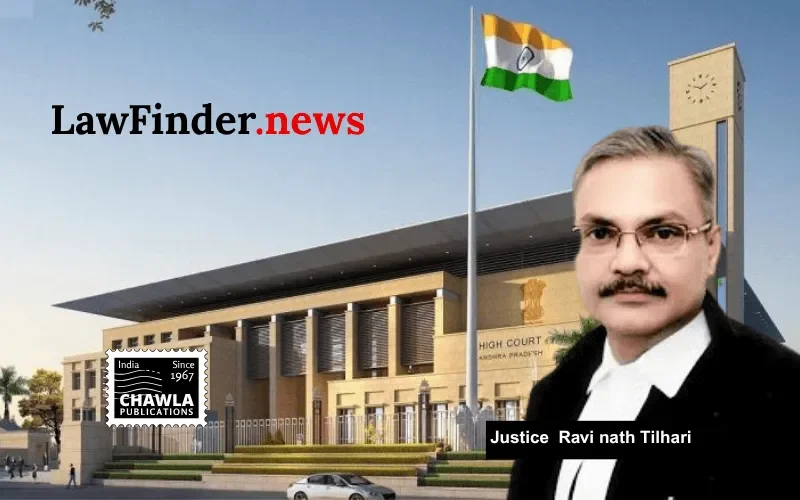
In a significant judgment dated November 6, 2026, the Andhra Pradesh High Court, presided over by Justice Ravi Nath Tilhari, clarified the procedural mandate regarding the disposal of injunction applications under Order 39, Rule 3A of the Civil Procedure Code, 1908 (CPC). The Court ruled that although the provision requires courts to make an endeavour to dispose of injunction applications within 30 days of granting an ad-interim ex parte injunction, this timeline is not mandatory. Instead, courts must record reasons if unable to meet this timeframe.
The case arose from a civil revision petition filed by Vardhanapu Priskilamma (Petitioner) challenging the non-disposal of an injunction application (I.A.No.743 of 2025) filed in O.S.No.74 of 2025. The petitioner sought a direction from the High Court for expeditious disposal by the trial court of the temporary injunction application granted ex parte on September 12, 2025. The respondent, Kambattula Suryakantham, was the plaintiff in the suit for permanent injunction restraining interference with possession of the disputed property.
The learned counsel for the petitioner argued that the trial court had repeatedly adjourned the matter to file replies and that the statutory 30-day limit under Order 39, Rule 3A CPC mandated swift disposal. Citing precedents such as Nama Ramaprasad v. Kristam Reddy Raju (2022 SCC Online AP 3240) and Tirumala Sundara J.C.Nath v. Kottam Ayyanna (APHC, 2026), the petitioner urged the High Court to direct the trial court to conclude the injunction application promptly.
Justice Tilhari examined the statutory provision which states:
"Where an injunction has been granted without giving notice to the opposite party, the Court shall make an endeavour to finally dispose of the application within thirty days from the date on which the injunction was granted; and where it is unable so to do, it shall record its reasons for such inability."
The Court observed that the language "shall make an endeavour" clearly implies an expectation, not an absolute mandate. The Court noted that docket entries demonstrated the trial court was actively managing the case by granting time to file replies, reflecting efforts to dispose of the injunction application within a reasonable time. Therefore, the Court concluded that failure to strictly adhere to the 30-day period does not constitute legal fault provided reasons for delay are recorded.
Significantly, the High Court reiterated a broader principle from the landmark Supreme Court decision in High Court Bar Association, Allahabad v. State of Uttar Pradesh (2024) 6 SCC 267, which cautions constitutional courts against issuing routine, time-bound directions for case disposal in ordinary matters. Such directives should be reserved for exceptional circumstances only. The High Court emphasized that prioritization of case disposal ordinarily lies within the discretion of the trial courts.
Further reliance was placed on the Supreme Court's recent ruling in Sangram Sadashiv Suryavanshi v. State of Maharashtra (2024 SCC Online SC 3526), which condemned the routine issuance of time-bound directions by High Courts without considering constitutional jurisprudence.
In light of these principles, the Andhra Pradesh High Court declined to interfere with the trial court's conduct of the injunction application in the absence of exceptional circumstances. The petitioner was permitted to approach the trial court directly for expeditious disposal.
The Civil Revision Petition was disposed of without any cost order, affirming the trial court's discretion and procedural autonomy while underscoring the importance of sincere efforts to comply with procedural timelines.
This judgment reinforces the balanced approach towards procedural timelines in civil litigation, highlighting the need for courts to strive for timely justice without rigidly enforcing statutory periods that could undermine judicial flexibility. It also serves as a reminder to litigants that constitutional courts generally do not impose blanket deadlines on subordinate courts except where truly warranted.
Bottom Line:
Civil Procedure Code, 1908 - Order 39, Rule 3A - Disposal of injunction application - Time limit of 30 days for disposal of an injunction application after granting an ad-interim ex parte injunction is not mandatory; the Court should make an endeavour to dispose of the application within the stipulated time or record reasons for its inability to do so. No direction for time-bound disposal of cases should be issued by Constitutional Courts except in exceptional circumstances.
Statutory provision(s):
Civil Procedure Code, 1908 - Order 39, Rule 3A