Court identifies multiple suspicious circumstances including belated spot panchnama, absence of blood at scene, and forensic discrepancies; orders CBI to register FIR and conduct thorough probe under Bharatiya Nagarik Suraksha Sanhita, 2023
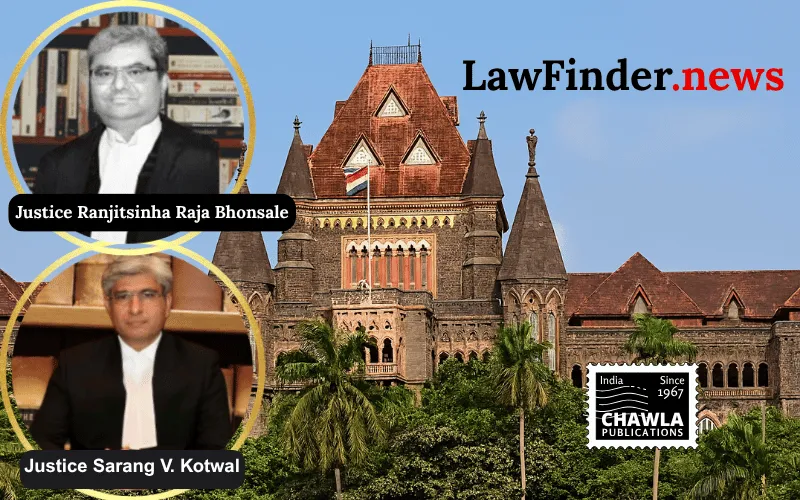
In a significant decision addressing investigative procedures in cases of unnatural death, the Bombay High Court (Division Bench of Justices Sarang V. Kotwal and Ranjitsinha Raja Bhonsale) has directed the Central Bureau of Investigation (CBI) to take over and investigate the death of a young woman who was associated with actor Sushant Singh Rajput. The judgment, delivered on September 2, 2026, establishes crucial legal precedents regarding the scope and limitations of police investigations under Section 174 of the Code of Criminal Procedure, 1973.
Background and Petitioner's Grievance
The petition was filed by an anguished father seeking a CBI investigation into his daughter's death, which occurred under disputed circumstances on June 8-9, 2020. The petitioner alleged that the death was not a suicide but resulted from a deep-rooted conspiracy involving powerful individuals. According to the petitioner, his daughter had discovered objectionable activities and communicated this information to Sushant Singh Rajput, which eventually reached the alleged perpetrators. The petitioner further alleged that his daughter was subjected to gang rape before being murdered, with authorities subsequently fabricating a suicide narrative claiming she jumped from the 12th floor of her fiancé's apartment.
Critical Legal Framework
The court made a pivotal distinction between investigations conducted under Section 174 of the CrPC (inquiry into cause of death) and substantive investigations under Sections 154-173 of the CrPC (investigation of cognizable offences). The judgment emphasizes that Section 174 investigations are strictly limited to ascertaining the apparent cause of death through examination of wounds and injuries, with the report submitted to executive magistrates rather than judicial officers empowered to take cognizance of offences.
Justice Kotwal noted that the investigation under Section 174 "cannot be equated with the investigation in a cognizable offence," as it does not address questions regarding perpetrators, circumstances of assault, or criminal liability. The court referenced the Supreme Court judgment in Pedda Narayana (1975), which established that investigations under Section 174 are merely meant to determine whether death was unnatural and its apparent cause—not to investigate criminal responsibility.
Inadequacy of Police Investigation
A critical finding was the six-year duration of the police investigation conducted in two phases. The court observed that such prolonged investigations are inconsistent with the purpose of Section 174 inquiries and raised concerns about evidence destruction and deterioration over time. The police's failure to register an FIR despite allegedly conducting a thorough investigation was deemed procedurally deficient.
Suspicious Circumstances Identified
The court identified numerous glaring discrepancies that necessitated substantive investigation:
1. Belated Spot Panchnama: The spot inspection was conducted between 9:40-9:45 a.m. on June 9, more than nine hours after the incident at approximately 2:25 a.m. Police were present at the building from around 1:00 a.m., yet no panchnama was conducted during their initial visit.
2. Absence of Blood: Despite eyewitness accounts of significant bleeding, the spot panchnama did not recover any blood-stained earth. Two witnesses recorded statements in August 2020 describing the deceased falling on her face with blood oozing from her head, yet no blood was seized from the scene.
3. Discrepancies in Postmortem Injuries: Only one injury (1x1x1 cm on the chin) was noted despite a fall from the 12th floor. Notably, no facial bone fractures were recorded—unusual given the expected trauma from such a fall. The mandible and nasal bone remained intact despite medical expectations.
4. Chemical Analyzer's Concern: The Forensic Science Laboratory's Assistant Chemical Analyzer raised significant questions in a letter dated September 15, 2020, noting that despite the case involving a jump from the 12th floor, there was "less blood" on the seized articles than expected. The police subsequently sought medical opinions explaining this discrepancy.
5. Inconsistent Forensic Reports: The postmortem notes mentioned vaginal and anal "swabs" were taken, but the FSL received vaginal and anal "smears on slides." When queried by FSL through a letter dated August 20, 2020, the Medical Officer clarified that only smears—not swabs—were taken, and the form was inadvertently mislabeled. No male DNA was detected in these samples.
6. Timing Anomalies in ADR: The Accidental Death Report registered at 3:07 a.m. on June 9, 2020, contained references to statements from the deceased's parents, yet the father's statement—recorded in the ADR—indicates he received police notification at approximately 3:00 a.m. and reached the hospital at 4:00 a.m., creating a temporal impossibility.
7. CCTV Footage Evidence: CCTV footage showed police presence in the 12th-floor flat at 1:33 a.m., 12:59 a.m., and 2:14 a.m. on June 9, yet no explanation was provided regarding their presence, investigations conducted, or the officers involved.
8. Door Damage: Eyewitness accounts mentioned the deceased locked herself in the bedroom and that someone forcefully opened the door, yet the spot panchnama contained no reference to door damage.
9. Electronic Evidence: The deceased's laptop and mobile phone—critical evidence—were seized only on June 17, 2020, nearly nine days after the incident and not during the initial spot panchnama conducted on June 9.
10. Unexplained Medical Query: Police sent a letter dated August 12, 2020, to the postmortem doctor questioning why the body was found nude, despite the police themselves having conducted a seizure panchnama of the clothing, creating inconsistency in the investigation narrative.
Legal Precedents Applied
The court relied heavily on Kishwar Jahan v. State of West Bengal (2008), which clarified that after concluding an inquest under Section 174, no further enquiry or investigation is contemplated without registering an FIR. The judgment established that when suspicious circumstances exist, substantive investigation under Sections 154-173 of the CrPC becomes mandatory.
The court also referenced the Supreme Court's judgment in Param Bir Singh v. State of Maharashtra (2021), emphasizing that while magistrates can theoretically direct police investigations, they lack authority to direct CBI investigations, necessitating High Court intervention in appropriate cases.
Rejection of Alternate Remedies
The respondent state and an intervener argued the petitioner should approach the magistrate's court under Section 175(3) of the Bharatiya Nagarik Suraksha Sanhita (BNSS), seeking police investigation. The court rejected this argument, noting that: (1) the six-year history of police investigations without FIR registration demonstrated that asking the petitioner to return to magistrate courts would be futile; (2) magistrates lack authority to direct CBI investigations; and (3) the petitioner had exhausted reasonable alternatives.
CBI's Expanded Investigative Powers
The judgment confirms that CBI, being empowered to exercise police powers under Chapter XII of the CrPC (corresponding provisions under BNSS), can investigate cognizable offences. The investigating officer will have discretion to add or delete offences as evidence emerges during investigation.
Protections Against Abuse
Recognizing concerns raised by an intervener regarding potential malafide prosecution, the court established safeguards: (1) no person shall be treated as accused unless reasonable suspicion exists based on collected evidence; (2) if investigation reveals no offence, appropriate summary shall be filed, with the petitioner having recourse to file a Protest Petition; and (3) the investigating agency must treat the victim's family sensitively while ensuring innocent persons are not harassed.
Implementation Directives
The court directed:
- A senior CBI officer to be appointed as Investigating Officer
- Recording of the petitioner's statement and registration of FIR
- Investigation under BNSS provisions (replacing lapsed CrPC provisions)
- Transfer of all papers and materials from Malvani police station to CBI
- The CBI officer retained full discretionary authority regarding offence provisions based on investigation findings
Procedural Significance
The judgment reinforces that investigations under Section 174 CrPC, though useful for determining cause of death, cannot substitute for substantive criminal investigations when cognizable offences are suspected. The court emphasized that prolonged Section 174 investigations without subsequent FIR registration and substantive investigation may constitute procedural violation and warrant High Court intervention.
Justice Kotwal clarified that no observations were made against specific individuals, emphasizing that investigative findings would determine criminal liability. The court demonstrated that while respecting investigative agency autonomy, High Courts retain inherent powers to ensure procedural compliance and access to justice when police investigations become demonstrably inadequate.
This judgment establishes important precedent: when multiple suspicious circumstances surround an unnatural death and police investigations remain limited to Section 174 inquiries despite apparent cognizable offences, High Courts may direct independent agency investigations without relegating petitioners to exhausted magistrate court remedies.
Bottom Line:
Investigation under Section 174 of Cr.P.C. for unnatural death deemed inadequate - Court directs CBI investigation into suspicious circumstances surrounding the death.
Statutory Provisions
Section 154 Bharatiya Nagarik Surksha Sanhita 2023, Section 173; Code of Criminal Procedure 1973, Section 175
Satish Salian v. State of Maharashtra, (Bombay)(DB) : Law Finder Doc Id # 2971943