Court emphasizes that litigants should not suffer due to counsel's negligence; restores dismissed case of poor and illiterate applicants.
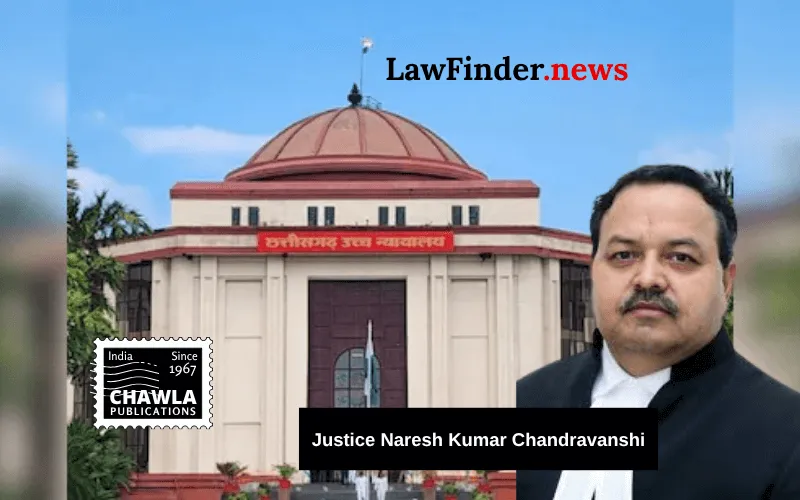
In a significant ruling, the Chhattisgarh High Court has condoned a staggering delay of 3558 days in filing a restoration application under Section 5 of the Limitation Act, highlighting the court's commitment to ensuring justice for litigants who face challenges beyond their control. This decision was pronounced by Justice Naresh Kumar Chandravanshi, who presided over the case of Smt. Lalmuni Yadav and Others versus Punnulal Upadhyay and Others.
The applicants, who had initially filed for compensation under Section 166 of the Motor Vehicles Act, found their case dismissed due to non-compliance with a peremptory order. The dismissal occurred when the applicants, described as poor and illiterate, failed to remove procedural defaults within the stipulated timeframe. Their counsel, who was supposed to guide them through the legal process, did not inform them about the dismissal, leaving them unaware of the status of their case for an extended period.
The court considered the explanation provided by the applicants, supported by an affidavit, which detailed their reliance on their legal counsel due to their lack of formal education and understanding of court procedures. It was only after consulting another lawyer that the applicants learned about the dismissal of their case.
Justice Chandravanshi referred to several Supreme Court precedents, emphasizing that the discretion to condone delays must be exercised judiciously, considering the specifics of each case. In particular, the court noted the importance of not penalizing litigants for the failings of their legal representatives. Citing the Supreme Court's stance in cases like Rafiq v. Munshilal and Basawaraj and Anr. vs. Special Land Acquisition Officer, the judgment underscored that litigants should not bear the brunt of their counsel's negligence or inaction.
In his order, Justice Chandravanshi remarked that the applicants' circumstances presented a sufficient cause for condoning the delay, aligning with the principle that courts should prioritize substantial justice over procedural technicalities. The court's decision to restore the dismissed case to its original number serves as a reminder of the judiciary's role in safeguarding access to justice, particularly for vulnerable individuals.
This ruling not only reinstates the applicants' pursuit of compensation but also reinforces the judiciary's dedication to equitable treatment for all, irrespective of socio-economic and educational disparities.
Bottom line:-
Delay of 3558 days in filing a restoration application under Section 5 of the Limitation Act was condoned by the Court, considering that the applicants were poor, illiterate, and dependent upon their counsel. The principle that litigants should not suffer for the fault or negligence of their counsel was reiterated.
Statutory provision(s): Section 5 of the Limitation Act, 1963
Smt. Lalmuni Yadav v. Punnulal Upadhyay, (Chhattisgarh) : Law Finder Doc id # 2931868