Court Dismisses Petitions Challenging Voidance of 2021-22 Limited Departmental Competitive Exams; Directs Fresh Recruitment to Ensure Fairness
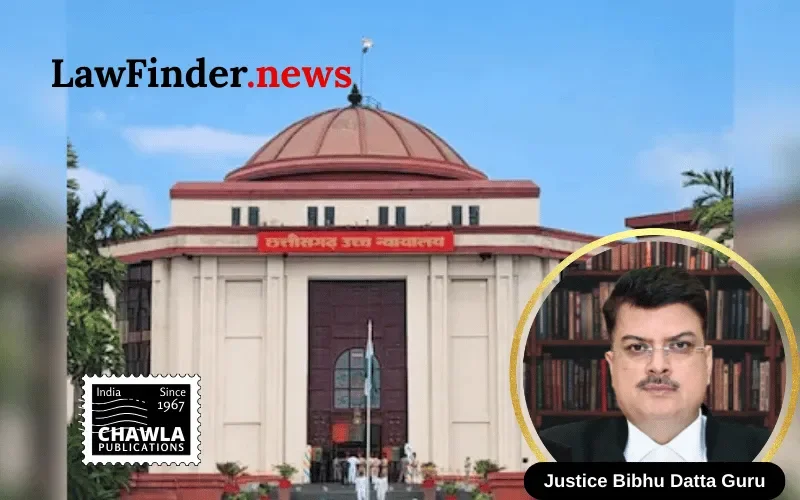
In a significant judgment dated November 2, 2026, the Chhattisgarh High Court, presided over by Justice Bibhu Datta Guru, upheld the State Government's decision to cancel the Limited Departmental Competitive Examinations (LDCE) held in 2021 and 2022 for the promotion to the post of State Tax Inspector in the Commercial Tax Department. The Court dismissed multiple writ petitions filed by candidates whose appointments were annulled following an enquiry that exposed rampant procedural irregularities and malpractice in the recruitment process.
The petitioners, initially appointed as Assistant Grade III employees, had appeared for the departmental examinations in 2021 and 2022 and were promoted to the post of State Tax Inspector. Some had even cleared additional departmental tests conducted by the Department of Home and were confirmed in their posts. However, the respondent State authorities, acting on complaints from unsuccessful candidates, constituted a five-member enquiry committee that conducted a thorough investigation into the conduct of the examinations.
The enquiry report, submitted on July 3, 2026, revealed serious systemic flaws including defective handling of answer sheets, absence of proper coding and sealing procedures, unauthorized re-evaluation of answer scripts by the selection committee itself, manual tampering with marks using red ink, violations of the statutory reservation roster, and leakage of model answers that were found verbatim in some candidates' answer sheets. The enquiry further highlighted administrative lapses such as non-maintenance of invigilator records, use of excess answer sheets beyond sanctioned numbers without proper accounting, and absence of official nomination orders for evaluators.
Given the pervasive nature of the irregularities, the State Government issued an order dated September 11, 2026, cancelling the entire examination process along with consequential appointment orders, and directed the affected candidates to revert to their earlier posts.
The petitioners challenged this order on grounds of violation of natural justice, contending that no show-cause notices or enquiry reports were furnished to them before cancellation, and their substantive service rights after confirmation could not be disregarded without due process.
Rejecting these contentions, the High Court held that where the entire selection process is found to be tainted by large-scale fraud and irregularities, it is neither feasible nor necessary to issue individual notices to each selected candidate. The Court relied on Supreme Court precedents emphasizing that appointments made through a corrupt process are void ab initio, and the principle of "fraud unravels everything" applies, disallowing protection of tainted appointments merely because candidates had served for some years.
The Court further observed that the Government had three options: (i) let the flawed process continue, (ii) cancel the entire process and start afresh, or (iii) try to segregate tainted candidates from the innocent and proceed with the latter. Given that over 500 candidates had appeared and irregularities were all-pervasive, segregation was impracticable and would unfairly affect innocent candidates. Thus, cancellation was a proportionate and justified response to restore sanctity and fairness in public recruitment.
While dismissing the writ petitions, the Court directed the State authorities to initiate a fresh recruitment process strictly adhering to applicable rules, ensuring transparency and impartiality, and conclude it expeditiously to safeguard the service prospects of all eligible candidates.
This landmark judgment reinforces the principle that integrity in public employment selection processes is paramount and that the State has a duty to act decisively against systemic corruption to uphold constitutional mandates of equality and fairness under Articles 14 and 16.
Bottom Line:
Service Law - Cancellation of entire limited departmental competitive examination for post of State Tax Inspector upheld where enquiry revealed large-scale, all-pervasive irregularities including defective handling of answer sheets, unauthorized re-evaluation, tampering of marks, violation of reservation roster and leakage of model answers - In such case, individual show-cause notice to each selected candidate not necessary and whole selection can be cancelled.
Statutory provision(s):
Article 14 of the Constitution of India, Article 16 of the Constitution of India, Article 226 of the Constitution of India, Article 311 of the Constitution of India, Chhattisgarh Civil Services (Classification, Control and Appeal) Rules, 1966
Amit Humane v. State of Chhattisgarh, (Chhattisgarh) : Law Finder Doc Id # 3009179