Court Rules Private Intermediary Not Performing Public Function, Advises Civil Remedy Instead
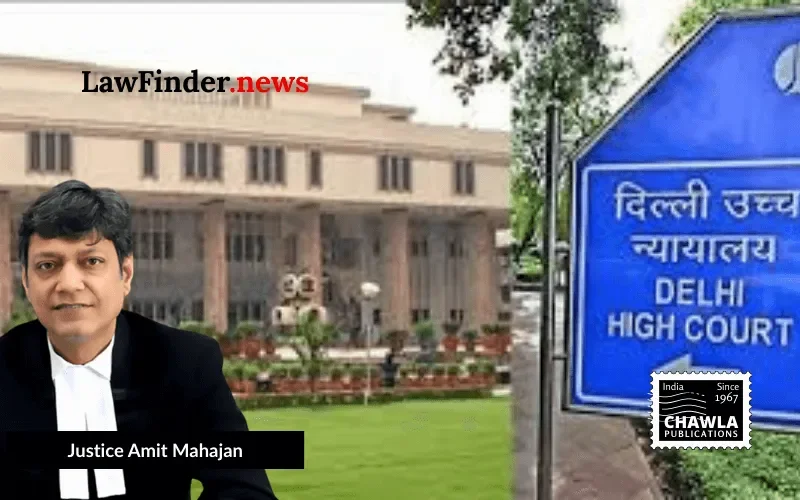
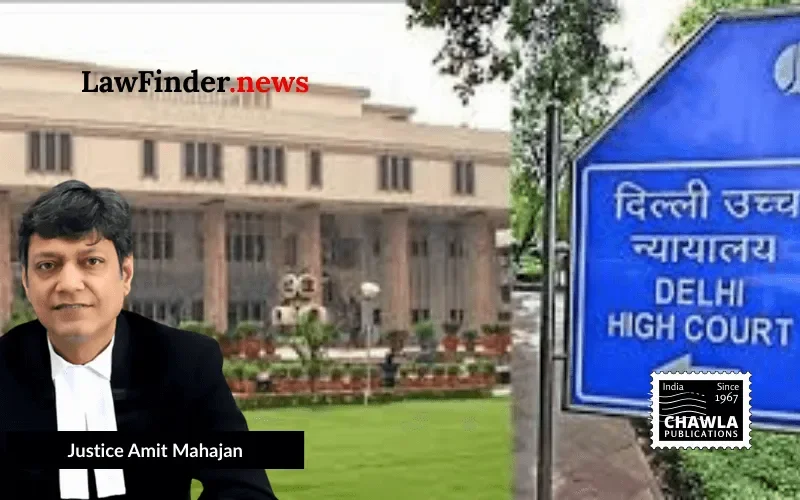
In a significant judgment delivered on November 2, 2026, the Delhi High Court, presided over by Justice Amit Mahajan, dismissed a writ petition filed by Mayank Jain challenging the restriction imposed on his LinkedIn account. The petitioner had contended that LinkedIn, a private professional networking platform, restricted his account without prior notice, failed to specify the alleged policy violations, and continuously issued generic responses without a reasoned order. Despite repeated appeals and requests for manual review, the restriction, initially termed temporary, reportedly continued indefinitely.
The petitioner sought relief against LinkedIn Technology Information Private Limited (Respondent No. 2), a private entity, and its resident grievance officer (Respondent No. 3), alongside the Union of India. However, the Court noted that no specific prayers were made against the Union of India. The core legal question was whether a writ petition under Article 226 of the Indian Constitution is maintainable against a private company and its grievance officer.
Relying on settled legal principles, the Court held that writ jurisdiction under Article 226 extends to private bodies only when such bodies perform public functions or discharge public duties akin to the State's responsibilities. The Court reiterated that for a writ to be maintainable against a private entity, three conditions must be met: the entity must perform a public duty or function; the activity should be linked to public interest or State obligation; and the function should be integral to State functions or arise from powers vested by law.
The Court found that LinkedIn's role as an online professional networking platform, while influential in information dissemination and public discourse, does not constitute the performance of a governmental function or public duty. The platform operates voluntarily and is not mandated by law to provide its services. Consequently, LinkedIn and its grievance officer are private actors and not amenable to writ jurisdiction.
Justice Mahajan observed that the petitioner's grievance is more appropriately addressed through civil proceedings, including claims for damages, if any. The Court also noted that the petitioner had already filed an appeal before the Grievance Appellate Committee under Rule 3A(3) of the Information Technology (Intermediary Guidelines and Digital Media Ethics Code) Rules, 2021, which provides an alternative remedy.
In conclusion, the Delhi High Court dismissed the writ petition as not maintainable, underscoring the limitations of judicial intervention against private intermediaries and emphasizing the availability of statutory remedies under the IT Rules.
Bottom Line:
Constitution of India, Article 226 - Writ petition against LinkedIn and its resident grievance officer held not maintainable - Private intermediary operating a professional networking platform does not perform a public function or discharge a public duty merely by providing a platform for communication and expression - Appropriate remedy, if any, lies in civil proceedings; petitioner had also already availed appeal before Grievance Appellate Committee.
Statutory provision(s): Constitution of India, Article 226; Information Technology (Intermediary Guidelines and Digital Media Ethics Code) Rules, 2021, Rule 3A(3)
Mayank Jain v. Union of India, (Delhi) : Law Finder Doc Id # 3009172