Court Rules Marital Status Cannot Disqualify Daughters from Compassionate Appointments
In a landmark judgment, the Chhattisgarh High Court has ruled that compassionate appointments cannot be denied to daughters solely on the basis of their marital status. This decision came in response to writ appeals filed by Sheena David and Ankita Mishra, whose applications for compassionate appointments were rejected by the Chhattisgarh Rajya Gramin Bank due to their status as married daughters.
The case revolved around the interpretation of the bank's policy on compassionate appointments, which included "wholly dependent daughters" without distinguishing between married and unmarried daughters. The bank had argued that married daughters were not considered dependent family members, a stance the court found arbitrary and in violation of Articles 14 and 15 of the Indian Constitution, which guarantee equality and non-discrimination.
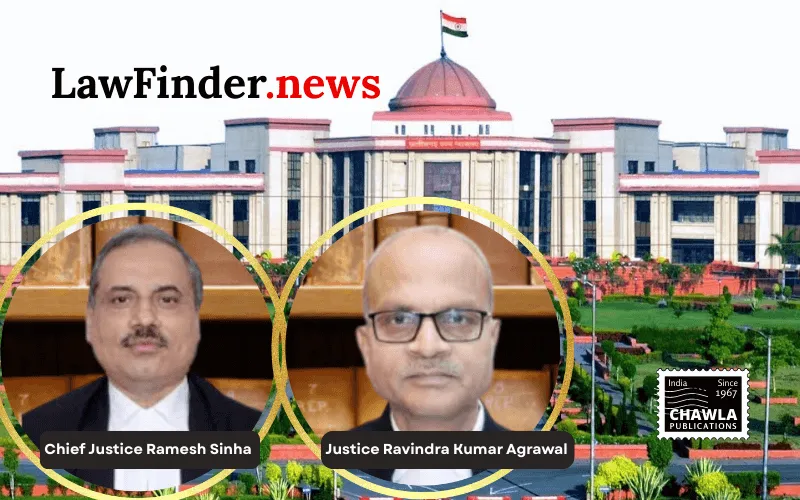
The Division Bench, comprising Chief Justice Ramesh Sinha and Justice Ravindra Kumar Agrawal, emphasized that dependency should be determined based on facts rather than assumptions tied to marital status. The court noted that the same compassionate appointment scheme did not distinguish between married and unmarried sons, highlighting a discriminatory practice against daughters.
The court further pointed out that the compassionate appointment policy was retrospectively applied to employees who died in harness from 2014 onwards, and the rejection of claims based on events during a period when no scheme existed was unjust. The court directed the bank to grant compassionate appointments to the appellants within 90 days, without considering marital status as a disqualification.
The judgment is hailed as a significant step towards gender equality, ensuring that administrative decisions align with constitutional principles of equality and non-discrimination.
Bottom Line :
Compassionate appointment cannot be denied solely on the basis of marital status of a daughter, as the scheme explicitly defines "dependent family member" to include wholly dependent daughters without distinguishing between married and unmarried daughters.
Statutory provision(s): Articles 14 and 15 of the Constitution of India.
Sheena David v. Chhattisgarh Rajya Gramin Bank, (Chhattisgarh)(DB) : Law Finder Doc id # 2967106