Court Emphasizes Practical Dependency and Standardized Principles from Sarla Verma and Pranay Sethi Judgments, Rejecting Loss of Estate Method for Non-Dependent Claimants
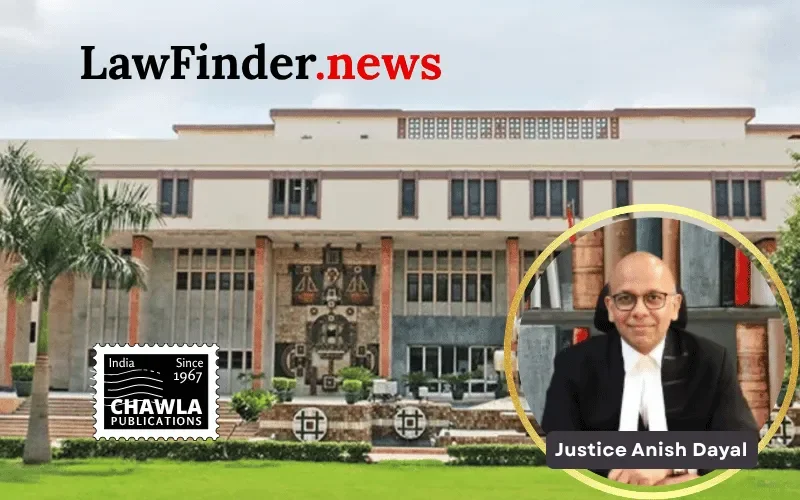
In a significant judgment delivered on November 6, 2026, the Delhi High Court, presided over by Justice Anish Dayal, addressed key issues concerning claims for compensation under Section 166 of the Motor Vehicles Act, 1988. The cross-appeals arose from a motor accident that tragically took the lives of Meenu and Chamanlal. Savita, the claimant and sister/daughter of the deceased respectively, had claimed compensation for the deaths of both family members.
The Insurance Company challenged the compensation awarded by the Motor Accident Claims Tribunal (MACT), contending that the claimant, being married and earning independently, was not entitled to compensation as a dependent. The Tribunal had relied on a decision in Keith Rowe v. Prashant Sagar, awarding compensation based on a "loss of estate" approach, where a portion of the deceased's income was considered as savings to the claimant.
Rejecting the Insurance Company's submissions, the Delhi High Court clarified that under Section 166 of the Motor Vehicles Act, legal representatives of the deceased are entitled to maintain claims for compensation irrespective of their financial dependency on the deceased. The Court emphasized that dependency is not the sole criterion for entitlement; rather, it is a factor relevant to quantifying the amount of compensation.
The Court undertook an extensive analysis of the principles governing dependency, compensation, and apportionment by referring to landmark Supreme Court judgments including Sarla Verma v. Delhi Transport Corporation and Pranay Sethi v. Bal Mukund Sahni. It held that the assessment of compensation must follow the standardized and uniform principles laid down in these cases to ensure consistency and fairness.
Key highlights from the judgment include:
1. Legal Representatives' Right to Claim: The Court recognized that the term "legal representative" must be understood broadly, encompassing persons who represent the estate of the deceased, not limited to legal heirs or dependents. This aligns with the definition under Section 2(11) of the Code of Civil Procedure, 1908.
2. Practical Dependency vs. Financial Dependency: While financial dependency is relevant for determining the quantum of compensation, the Court observed that claimants such as married and earning children or siblings cannot be excluded merely because they reside separately or earn their own income. The practical reality of Indian family structures demands a nuanced approach.
3. Rejection of "Loss of Estate" Approach: The Court rejected the method applied by the MACT based on Keith Rowe, which calculated compensation as a fraction of the deceased's income to reflect savings. Instead, it reiterated that compensation must be determined by applying the multiplicand-multiplier method with deductions for personal expenses, as standardized in Sarla Verma and affirmed in Pranay Sethi.
4. Standardized Deductions and Multipliers: The Court upheld the principle of deducting personal and living expenses from the deceased's income based on the number of dependents, but stressed this deduction is not inflexible and must be adjusted based on the actual circumstances of the family.
5. Apportionment of Compensation: The judgment elaborates that the compensation awarded must be apportioned according to the nature and degree of dependency of each claimant. Fully dependent claimants such as minor children or a spouse may receive a larger share, whereas partially dependent or non-dependent legal representatives may receive a proportionate share.
Applying these principles, the Court enhanced the compensation awarded to the claimant Savita. For the death of Meenu, the compensation was revised from Rs. 9,27,100 to Rs. 14,38,054, and for Chamanlal's death, from Rs. 13,15,600 to Rs. 20,20,871.50. The Court ordered the Insurance Company to deposit the enhanced amounts along with interest at 9% per annum, to be disbursed to the claimant in a structured manner including Fixed Deposit Receipts.
This judgment marks an important affirmation of the rights of legal representatives under the Motor Vehicles Act to claim compensation beyond the narrow confines of financial dependency. It also underscores the need for Tribunals and Courts to apply standardized principles while exercising discretion to account for the practical realities of familial dependency.
The decision provides valuable guidance to stakeholders in motor accident claims, ensuring uniformity, fairness, and justice in the assessment and apportionment of compensation.
Bottom Line:
Motor Vehicles Act, 1988 - Legal representatives can file a claim under Section 166 of the Act even if they are not financially dependent on the deceased. The assessment of compensation must consider the practical dependency of the claimants and follow standardized principles laid down in Sarla Verma and Pranay Sethi.
Statutory provision(s):
Motor Vehicles Act, 1988 Section 166, Section 168; Code of Civil Procedure, 1908 Section 2(11)
United India Insurance Co Ltd v. Savita, (Delhi) : Law Finder Doc Id # 3015247