Court emphasizes constitutional protection under Article 21 amid delays in trial, highlighting the need for a case-specific bail evaluation even under stringent UAPA provisions.
In a significant decision, the Delhi High Court has granted bail to Naim @ Mohd. Naeem, accused in a case under the Unlawful Activities (Prevention) Act (UAPA), citing prolonged incarceration and a delayed trial process. The appellant, who has been in custody since January 3, 2019, faced charges related to terrorism and conspiracy but was granted relief based on the constitutional right to a speedy trial under Article 21 of the Indian Constitution.
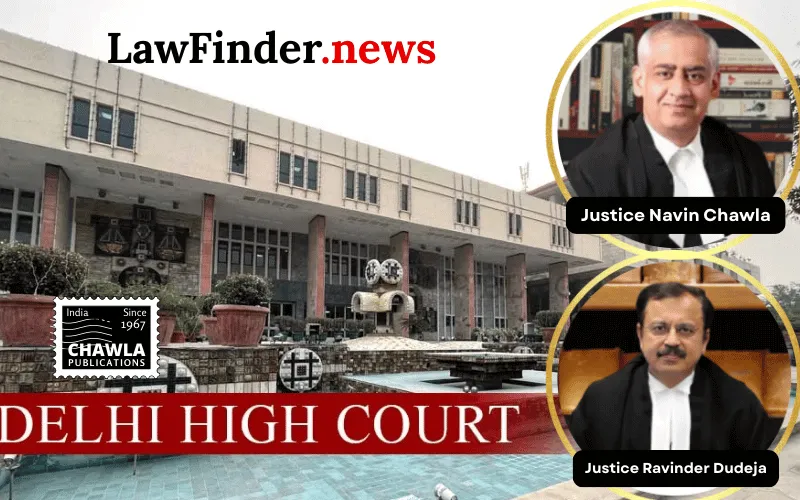
The court, consisting of Justices Navin Chawla and Ravinder Dudeja, observed that Naim had been in detention for over 7½ years, and the trial, which began in 2022, showed little progress with only 42 out of 112 witnesses examined. This prolonged delay prompted the court to prioritize constitutional safeguards over statutory restrictions under Section 43D(5) of the UAPA, which traditionally imposes stringent conditions on granting bail.
The case against Naim involved allegations of facilitating the procurement of arms for terrorist activities, based on witness testimonies and CDR (Call Detail Record) analysis. However, the court noted that key witnesses had already been examined, reducing the risk of trial interference by the appellant.
In its detailed judgment, the court underscored the need for an accused-specific inquiry, emphasizing that collective allegations of conspiracy must be substantiated by a clear nexus to terrorist activities. The court acknowledged that while statutory provisions are crucial, they should not overshadow constitutional rights, especially when trials are indefinitely delayed.
Furthermore, the court set stringent conditions for Naim's bail, including restrictions on travel, mandatory reporting to the NIA, and prohibitions on influencing witnesses or tampering with evidence. The decision aligns with the Supreme Court's stance in similar cases, where prolonged incarceration without trial completion justifies bail, balancing individual liberty with national security concerns.
The judgment reflects ongoing judicial discourse on the interplay between constitutional rights and anti-terror legislation, highlighting the judiciary's role in safeguarding personal liberty against the backdrop of national security imperatives.
Bottom Line :
UAPA - Bail granted on ground of prolonged incarceration of more than 7½ years and no likelihood of early conclusion of trial - Even in UAPA cases, Section 43D(5) does not eclipse constitutional protection under Article 21 - Role attributed to accused in arranging arms required accused-specific evaluation and, after examination of key witnesses, continued detention was held unjustified.
Statutory provision(s): Article 21 of the Constitution of India, Section 43D(5) of the Unlawful Activities (Prevention) Act, 1967, National Investigation Agency Act, 2008 Section 21(4).
Naim @ Mohd. Naeem v. National Investigation Agency, (Delhi)(DB) : Law Finder Doc id # 2989243