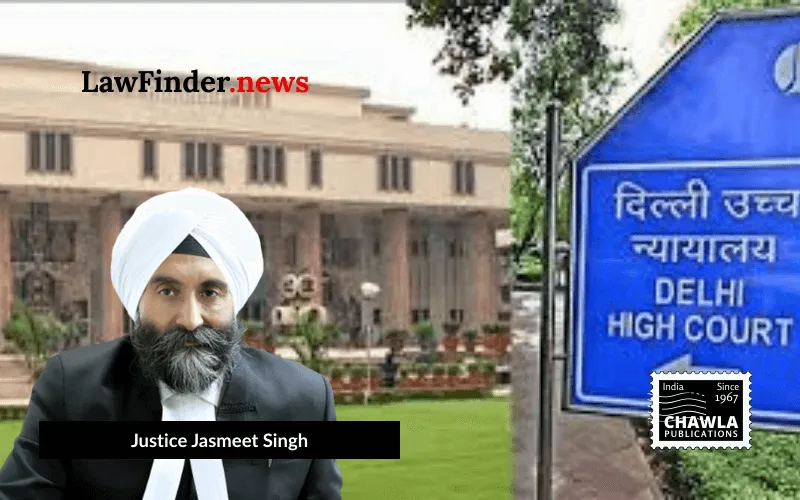
Court holds rustication order violative of natural justice as no prior hearing or show cause notice was given; directs student's reinstatement pending inquiry
In a significant judgment delivered on September 30, 2026, the Delhi High Court set aside the rustication order issued against Priyanka Rawat, a student enrolled in the Certificate Course in Bakery and Confectionery at the University of Delhi's Centre of Innovative Skill Based Courses (CISBC). The court found that the university authorities violated the fundamental principles of natural justice by rusticated the student without issuing a show cause notice or providing any opportunity for a hearing before taking the disciplinary action.
The petitioner, Priyanka Rawat, had lodged complaints regarding serious hygiene and food safety concerns at the CISBC, including the use of corroded ovens, unclean equipment, and expired raw materials. Subsequent to an inspection, the university authorities identified her as the complainant and, without following due process, issued a rustication order on September 10, 2026. The order alleged misconduct on her part, including loud, rude, and disrespectful behavior, but these allegations were never communicated to her prior to the order, nor was she given a chance to respond.
Challenging the order under Article 226 of the Constitution of India, Ms. Rawat contended that the rustication was illegal, arbitrary, and in breach of natural justice principles. The court agreed, observing that the prior hearing is not a mere formality but a constitutional mandate especially in cases involving serious penalties like rustication. The learned single judge, Mr. Jasmeet Singh, J., emphasized that the rule of audi alteram partem (hear the other side) requires that the affected person must be informed of the allegations and given a meaningful opportunity to present their version before any adverse decision is made. The court highlighted that post-decisional hearings cannot substitute the mandatory pre-decisional hearing.
The court further clarified that while educational institutions possess the autonomy to maintain discipline and take appropriate action against misconduct, such powers are not unfettered or arbitrary. Disciplinary actions must be exercised within the confines of law, fairness, and adherence to natural justice. The manner in which the university issued the rustication order was described as dictatorial, lacking transparency and fairness.
Consequently, the Court stayed the rustication order and directed the university to permit Priyanka Rawat to continue her course pending a fresh disciplinary inquiry conducted in accordance with due process. The university was also directed to file a counter-affidavit explaining the basis of the rustication within four weeks. The matter is listed for further hearing on January 13, 2027.
This judgment reiterates the judiciary's firm stance that educational institutions must uphold procedural fairness and natural justice in disciplinary proceedings, reinforcing that institutional autonomy cannot override fundamental rights.
Bottom Line:
Education Law - Student rusticated from university course without issuance of show cause notice or grant of hearing - Rustication order held prima facie in complete violation of principles of natural justice - Hearing must precede disciplinary decision and cannot ordinarily be substituted by post-decisional opportunity - Impugned rustication order stayed and student permitted to continue course pending further hearing.
Statutory provision(s):
Article 226, Constitution of India, 1950
Priyanka Rawat v. University of Delhi, (Delhi) : Law Finder Doc Id # 2990508