Court affirms demand, acceptance, and recovery of bribe money by public servant under J&K Prevention of Corruption Act; corroboration through direct and circumstantial evidence deemed sufficient
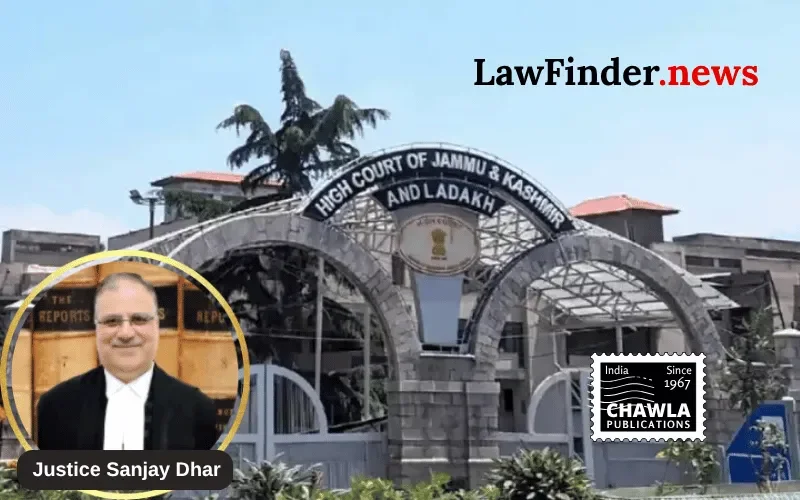
In a significant judgment delivered on November 5, 2026, the Jammu and Kashmir High Court upheld the conviction of Daleep Kumar Bhat, the former Manager of Jammu Rural Bank, Pargwal, for offences under Section 5(1)(d) read with Section 5(2) of the Jammu & Kashmir Prevention of Corruption Act (P.C. Act) and Section 161 of the Ranbir Penal Code (RPC). The Court confirmed that the prosecution had successfully proven the essential elements of bribery-demand, acceptance, and recovery of illegal gratification-through cogent and corroborated evidence.
The case arose from a complaint lodged by PW Parmanand, who had obtained a sanctioned loan of Rs. 1 lakh from the Jammu Rural Bank. While the first installment of Rs. 35,000 was released, the complainant alleged that the appellant demanded a bribe of Rs. 7,000 for releasing the remaining Rs. 65,000. After negotiation, the appellant purportedly agreed to accept Rs. 5,000 as illegal gratification. On June 14, 2010, a trap was laid by the Vigilance Organization, Jammu, during which the appellant was caught accepting Rs. 5,000 as bribe money at the complainant's shop. The money was recovered from the appellant's right back pocket after he attempted to discard it.
The prosecution's case was supported by the testimony of the complainant, members of the trap team, and independent witnesses, despite the shadow witness turning hostile on certain aspects of the recovery. The Court emphasized that corroboration of the complainant's testimony is not mandatory in every case and may be established through direct or circumstantial evidence. The Court relied on precedents including Supreme Court rulings which clarify that the uncorroborated testimony of an accomplice or bribe-giver may be accepted if found reliable and safe.
The appellant challenged the conviction on grounds that the sanction for prosecution was vitiated due to non-application of mind by the sanctioning authority, and that the complainant had not completed formalities for the loan, suggesting the complaint was false and motivated. The Court rejected these contentions, holding that the sanction order was detailed and the sanctioning authority had applied mind properly. The Court further held that whether or not the complainant had completed formalities did not negate the appellant's misuse of official position by demanding bribe for releasing a benefit.
In addressing the defense that the money was forcibly thrust into the appellant's pocket by the complainant to falsely implicate him, the Court drew inferences from the appellant's presence at the complainant's shop, his conduct during the trap, and the consistent testimonies of the trap team members. The defense witnesses were found unreliable as they arrived only after the appellant's apprehension and had no knowledge of the prior events.
Importantly, the Court applied Section 114 of the Evidence Act to draw inferences from established facts such as the recovery of tainted currency and positive sodium carbonate test (which indicated contact with the bribe money), supporting the presumption under Section 4 of the J&K P.C. Act that the appellant had accepted the illegal gratification.
While upholding the conviction, the Court modified the sentence considering the protracted duration of the trial and appeal process. The imprisonment term was reduced from two years to one year for each offence, while the fine of Rs. 10,000 per offence was maintained. The appellant was directed to surrender within one month to serve the sentence, failing which coercive action would be taken.
This judgment reinforces the jurisprudence that in corruption cases, the prosecution need not prove every detail through direct evidence if the overall evidence and circumstances establish guilt beyond reasonable doubt. It also highlights the judiciary's balanced approach in safeguarding against undue delays in justice delivery.
Bottom Line:
Demand, acceptance, and recovery of bribe money by a public servant proven through cogent evidence; corroboration of complainant's testimony can be through direct or circumstantial evidence.
Statutory provision(s):
Jammu & Kashmir Prevention of Corruption Act Sections 5(1)(d), 5(2), 4; Ranbir Penal Code Section 161; Evidence Act Section 114
Daleep Kumar Bhat v. State of J&K, (Jammu & Kashmir and Ladakh) : Law Finder Doc Id # 3014163