High Court affirms the legality of revisional jurisdiction exercised by the Financial Commissioner, emphasizing adherence to natural justice and limitation laws.
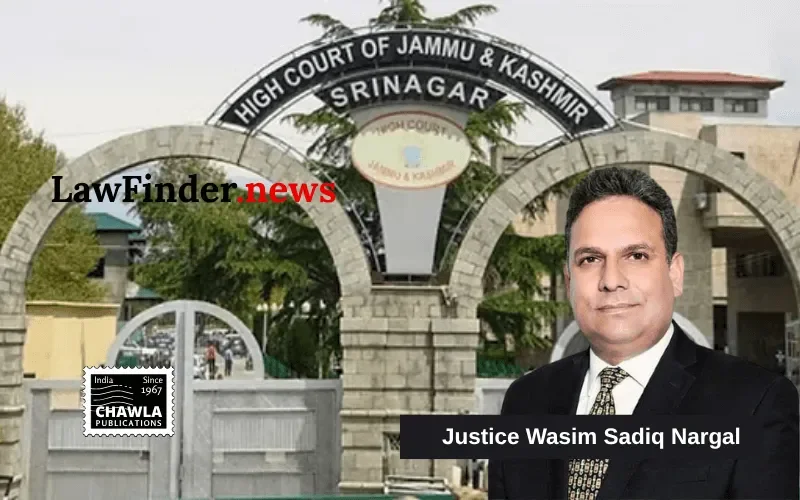
In a significant ruling, the Jammu & Kashmir and Ladakh High Court has upheld the decision of the Financial Commissioner (Revenue) concerning a contentious land dispute in Estate Channi Kamala, Tehsil Bahu, District Jammu. The petitioner, Mohd. Yaqoob, challenged the order dated February 27, 2023, which upheld Mutation No. 39 dated March 10, 1959, favoring Abdul Rahim and Mohd. Hussain. The High Court, presided over by Justice Wasim Sadiq Nargal, dismissed the petition by Mohd. Yaqoob, affirming the legality of the Financial Commissioner's decision.
The case revolved around complex issues of land ownership and procedural lapses, with the petitioner asserting that the earlier mutation was fraught with irregularities, including alleged forgery and errors in the revenue records. The petitioner's father had previously succeeded in overturning the mutation through an appeal in 1991, but this order was later challenged and set aside by the Financial Commissioner in 2023 due to procedural oversights, including the non-impleadment of necessary parties and the issue of limitation.
The High Court meticulously examined the legal questions surrounding the jurisdictional errors and material irregularities alleged by both parties. It concluded that the Additional Deputy Commissioner had erred by not addressing the question of limitation before deciding on the merits of the case, which was a critical jurisdictional oversight. The Financial Commissioner’s decision to condone the delay in the revision petition and uphold the mutation was deemed appropriate, as the delay was satisfactorily explained.
Additionally, the High Court upheld the Financial Commissioner’s findings that the principles of natural justice were violated when the purchasers, who were directly affected by the 1991 order, were not made parties to the proceedings. This omission warranted the setting aside of the Additional Deputy Commissioner's order on grounds of denying a fair hearing to all affected parties.
The judgment underscores the importance of adhering to procedural laws and the principles of natural justice, particularly in cases involving long-standing disputes and substantial civil rights. It also reiterates the limited scope of supervisory jurisdiction under Article 227 of the Constitution, emphasizing that such jurisdiction is not appellate in nature and should only address jurisdictional errors, patent perversity, or manifest illegality.
Bottom line:-
Supervisory jurisdiction under Article 227 of the Constitution of India cannot be exercised merely because another view is possible on the facts. Interference is warranted only when there is jurisdictional error, patent perversity, manifest illegality, or gross failure of justice.
Statutory provision(s): Article 227 of the Constitution of India, Principles of Natural Justice, Law of Limitation, Jammu and Kashmir Big Landed Estates Abolition Act.