Court orders disclosure of adverse material to petitioner, ensuring compliance with principles of natural justice.
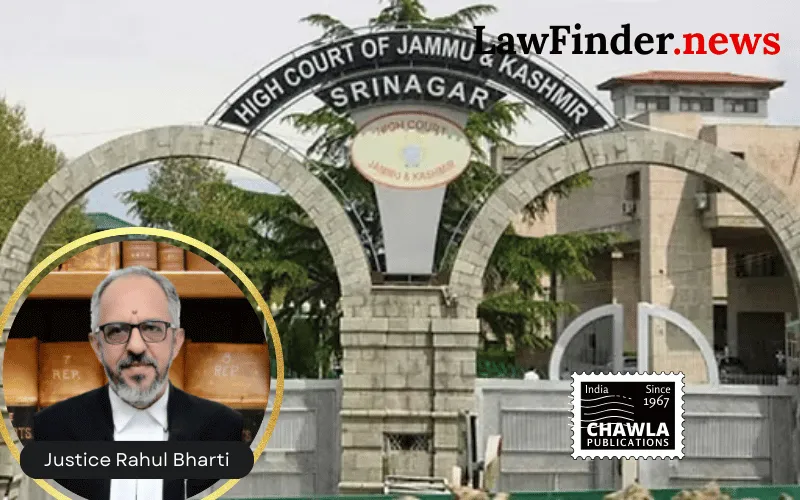
In a significant ruling, the Jammu & Kashmir and Ladakh High Court has reinforced the principles of natural justice, emphasizing the necessity of fair administrative action in the context of passport issuance. The court, presided over by Justice Rahul Bharti, addressed the grievance of Naeem Akhter Andrabi, whose passport application had been stalled due to adverse police verification reports. However, crucially, the petitioner was never informed of the contents of these reports, thus violating his right to fair administrative action as guaranteed under Article 21 of the Indian Constitution.
The case arose when the Regional Passport Officer, Srinagar, issued a communication to Andrabi, requiring him to provide an explanation for the adverse reports within thirty days. The court highlighted that without disclosure of the adverse material, the petitioner was deprived of a meaningful opportunity to defend himself, contravening the rule of law and the essence of fair administrative action.
Justice Bharti noted that the petitioner's inability to access the material used against him rendered the administrative process opaque and unjust. The court held that the presumption of innocence, a fundamental tenet of Indian law, mandates that an individual must be informed of allegations against them to adequately respond.
The judgment underscored that administrative bodies are bound by the rule of reason, which necessitates transparency and fairness. The court found that the impugned communication lacked these qualities, and thus failed to meet the standards of a lawful administrative procedure.
The court directed the Regional Passport Officer to disclose the adverse material to Andrabi and ordered the officer to appear in court to address further queries. This step aims to ensure that the writ petition can be disposed of fairly, potentially without necessitating a full adjudication on its merits.
This decision reaffirms the judiciary's role in safeguarding individual rights against arbitrary administrative actions and reinforces the need for transparency and accountability in government procedures.
The matter is scheduled for further hearing on August 21, 2026, where the court expects compliance with its directions and a fair resolution of the petitioner's application.
Bottom Line :
The denial of a fair opportunity to the petitioner to respond to adverse police verification reports due to non-disclosure of their contents violates principles of natural justice and the rule of law.
Statutory provision(s): Article 21 of the Constitution of India, principles of natural justice, rule of law in administrative actions.
Naeem Akhter Andrabi v. Union of India, (J&K and Ladakh) : Law Finder Doc id # 2964169