Court holds that GST liability is statutory but right to recover tax depends on contractual terms; petitioner cannot charge artists Rs. 50 plus 18% GST when tender fixed fee inclusive of taxes.
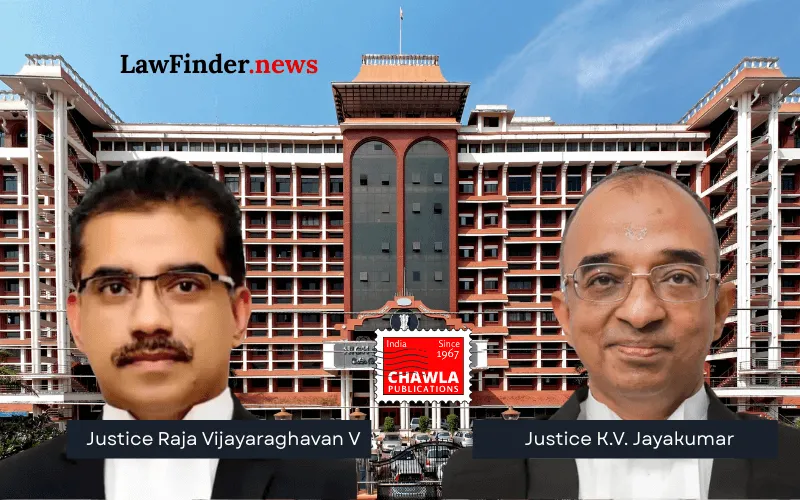
In a significant judgment delivered on October 8, 2026, the Kerala High Court (Division Bench comprising Justices Raja Vijayaraghavan V and K.V. Jayakumar) dismissed the writ petition filed by V.P. Sugathan, the successful bidder in the auction conducted by the Travancore Devaswom Board for collecting fees from artists performing Chendamelam during the Pettathullal festival at Erumeli.
The petitioner had won the tender for collecting Rs. 50 per performance from Melakkars (artists) and had paid the tender amount along with GST at 18% to the Devaswom Board. Subsequently, he sought to collect Rs. 59 (Rs. 50 plus Rs. 9 GST) from the artists, claiming that he was entitled to pass on the GST burden to the ultimate recipients of the service under applicable tax laws.
However, the Devaswom Board intervened after receiving complaints and issued a notice stating that the fee of Rs. 50 was inclusive of all taxes, and no additional amount could be collected from the artists. The petitioner challenged this restriction before the High Court, contending that the artists were the recipients of his service and he had a right to recover the GST separately.
The Court, after detailed examination of the tender conditions and submissions, clarified the distinction between the statutory liability to pay GST and the contractual right to recover the tax from the recipients. While the supplier of a taxable service is statutorily liable to pay GST irrespective of collection from the recipient, the right to pass on or separately collect GST depends solely on the terms of the contract between the parties.
The Court found that the tender documents (Ext.P1) clearly stipulated that the fee of Rs. 50 per performance was inclusive of all taxes, and no clause authorized the petitioner to collect GST separately from the artists. Having voluntarily participated in the tender and secured the contract on those terms, the petitioner was bound by the contract and could not claim an independent right to collect an additional tax amount.
Further, the Court rejected the petitioner's claim for refund or reimbursement of GST paid to the Board, holding there was no statutory or contractual provision imposing such liability on the Devaswom Board.
In conclusion, the Kerala High Court held that the petitioner had no enforceable legal or contractual right to collect Rs. 50 plus 18% GST from the artists and dismissed the writ petition with no order as to costs.
This judgment underscores the principle that statutory tax liability does not automatically confer a right to recover tax separately unless expressly provided in the contractual terms. It also highlights the importance of clear tender terms concerning tax inclusion and recovery rights.
Bottom Line:
Tender/Kuthaka conditions govern the amount recoverable from pilgrims/artists; GST liability of the contractor is statutory, but the right to pass on or separately recover GST is contractual. Where tender terms fix Rs. 50/- per performance as inclusive of all taxes and do not authorize separate GST collection, the successful bidder cannot collect Rs. 50/- plus 18% GST, nor seek reimbursement from the Devaswom Board.
Statutory provision(s): Goods and Services Tax Act (GST provisions), Tender Conditions of Travancore Devaswom Board (Ext.P1)
V.P. Sugathan v. Travancore Devaswom Board, (Kerala)(DB) : Law Finder Doc Id # 2993183