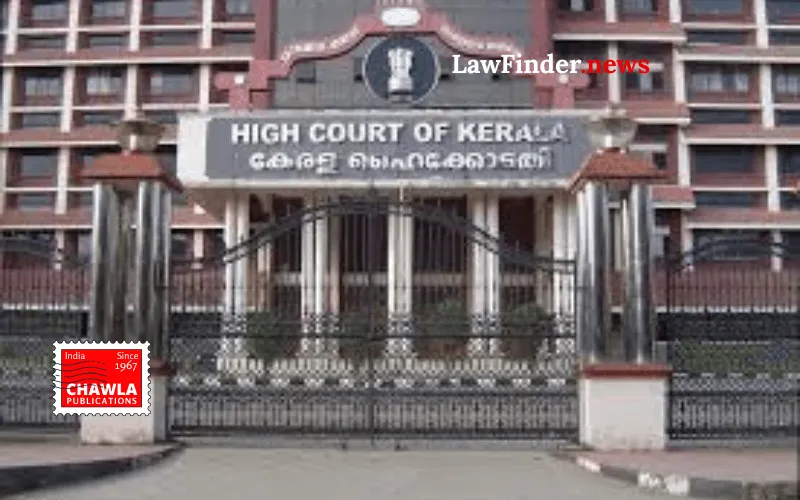
Court Emphasizes Media's Duty to Verify Judicial Oral Observations and Urges Judges to Exercise Restraint in Public Remarks
In a significant judgment delivered on September 18, 2026, the Division Bench of the Kerala High Court, comprising Justices Dr. A.K. Jayasankaran Nambiar and Mohammed Nias C.P., quashed the sanction order that authorized contempt proceedings against Mr. Kochouseph Chittilappilly. The case arose from a complaint made by the respondent, Mr. Chittilappilly, against alleged oral observations attributed to a learned Single Judge of the Kerala High Court during the hearing of a compensation claim case (W.P.(C) No.1107/2007).
Mr. Chittilappilly's complaint, addressed to the Honourable Chief Justice of Kerala and the Chief Justice of India, relied solely on newspaper reports that quoted the Judge making personal remarks perceived as derogatory and unnecessary to the adjudication. These remarks included statements questioning Mr. Chittilappilly's character and the worth of his company. The Advocate General of Kerala had granted sanction for contempt proceedings against Mr. Chittilappilly on the ground that he made reckless imputations against the sitting Judge, thereby undermining the dignity of the Court.
However, the Kerala High Court bench meticulously examined the facts and found that the complaint was based entirely on unverified media reports from multiple news outlets such as Deshabhimani, The Times of India, Marunadan Malayali, and others. Notably, these media houses were never impleaded or examined in the sanction proceedings. Furthermore, an affidavit from the advocate who appeared in the underlying case affirmed that the Judge had not made the alleged remarks in court.
The Court underscored the critical distinction between oral observations and the official judicial record. Oral remarks made during hearings do not constitute considered findings and, unlike judgments or recorded orders, may not be relied upon as authoritative. Reporting such remarks without proper context or verification risks distortion and can cause irreparable reputational harm. The judgment reaffirmed the media's responsibility to verify the accuracy of judicial reporting, particularly when remarks relate to personal character or reputation.
Simultaneously, the Court issued a strong directive to the judiciary, emphasizing the need for judges to exercise judicial restraint in making oral observations-especially those that touch upon the character, conduct, or reputation of parties or non-parties. The judgment highlighted that remarks not necessary for adjudication or unsupported by pleadings or evidence should be avoided. The Court referred to the Bangalore Principles of Judicial Conduct, 2002, and the Restatement of Values of Judicial Life, 1999, emphasizing that judges, particularly those in higher offices, must refrain from making publicity-attracting comments in open court.
The judgment also recognized the contemporary challenges posed by live-streaming and instantaneous digital media reporting, which can amplify and distort oral remarks beyond the courtroom context. Therefore, the Court stated that the only authorised and accountable judicial voice is that expressed through judgments or orders.
On the facts, the Court concluded that no case was made out to initiate contempt proceedings against Mr. Chittilappilly. The sanction order granted by the Advocate General was set aside due to the absence of any factual foundation and the failure to implead the original sources of the news reports.
This ruling serves as a crucial reminder of the complementary roles of the media and judiciary in preserving the dignity of the court and safeguarding the reputational rights of individuals.
Bottom Line:
Contempt of court - Complaint made to Chief Justice on basis of unverified newspaper reports regarding alleged oral observations of Judge - Sanction granted by Advocate General without impleading authors of news reports - No case made out to initiate contempt proceedings - Sanction order set aside - Court also reiterated duty of media to verify reporting of oral observations and need for judicial restraint in making unnecessary oral remarks in open court.
Statutory provision(s):
Contempt of Courts Act, 1971 Section 15(2)
S. Aswakumar v. Kochouseph Chittilappilly, (Kerala)(DB) : Law Finder Doc Id # 2991125



