Pramod Bariha and Abhilash Bariha remain sentenced to 20 years RI for gang rape; conviction under Section 376(2)(n) set aside due to insufficient evidence analysis.
In a pivotal judgment, the Orissa High Court has upheld the conviction of Pramod Bariha and Abhilash Bariha under multiple charges, including gang rape, while setting aside their conviction under Section 376(2)(n) of the Indian Penal Code due to insufficient independent analysis of the evidence establishing repeated acts of rape by individual accused.
The appellants, Pramod Bariha and Abhilash Bariha, were convicted by the Special Judge, Bolangir, under Sections 363, 366, 376(D), and 376(2)(n) of the IPC, along with Sections 6 and 10 of the Protection of Children from Sexual Offences (POCSO) Act, 2012. They were sentenced to 20 years of rigorous imprisonment with a fine of Rs. 10,000 each under Section 376D IPC.
The case stems from an incident on the night of April 3, 2016, where the victim, a minor, was abducted from her home, confined, and repeatedly raped by the two accused over two nights and one day at a secluded hillock. The victim was eventually abandoned near her house, leading to the filing of an FIR by her father, which triggered the subsequent police investigation and trial.
The appellants challenged the evidence of the victim’s age, as recorded in the school admission register, and argued against the applicability of the POCSO Act due to doubts over the victim's minority. They also questioned the credibility of the victim's testimony and pointed to a lack of independent eyewitnesses.
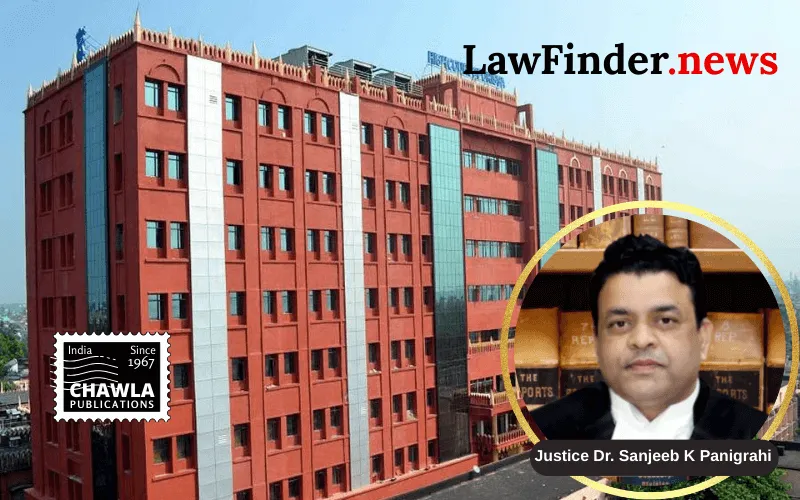
However, the High Court, presided by Dr. Sanjeeb K Panigrahi, J., dismissed these contentions, affirming that the victim was indeed a minor based on the school records and corroborative evidence, including medical opinion. The Court emphasized the reliability of the victim's testimony, which was consistent, credible, and adequately supported by medical findings.
The Court underscored the principle that the testimony of a prosecutrix in sexual assault cases is akin to that of an injured witness and does not require corroboration unless compelling reasons exist. The Court also clarified that medical findings regarding the victim's prior sexual experience were irrelevant to the rape charge, in line with statutory provisions under the Indian Evidence Act.
While the conviction under Section 376D IPC for gang rape was upheld, the Court found the trial court had not sufficiently analyzed evidence specific to repeated acts of rape by each accused, leading to the setting aside of the conviction under Section 376(2)(n) IPC. Nonetheless, this did not affect the overall sentence, as the substantive sentence under Section 376D IPC remained unchanged.
The judgment reflects a comprehensive approach to victim-centric justice, emphasizing the protection of child victims under the POCSO Act and the necessity of a rigorous evidentiary standard in sexual assault cases.
Bottom line:-
Conviction under Sections 363, 366, 376(D) IPC and Sections 6, 10 of the POCSO Act confirmed; Conviction under Section 376(2)(n) IPC set aside due to insufficient independent analysis of repeated acts by individual accused. Sentencing under Section 376D IPC upheld, with 20 years rigorous imprisonment and fine of Rs. 10,000/-.
Statutory provision(s): Sections 363, 366, 376(D), 376(2)(n) IPC, Sections 6, 10 of the POCSO Act, Sections 6, 53A, 146 Evidence Act, Section 428 Cr.P.C, Section 357 Cr.P.C, Section 34 POCSO Act
Pramod Bariha v. State of Odisha, (Orissa) : Law Finder Doc id # 2941350