Court Holds General Directions for Facility Upgrades Not Maintainable Without Specific Challenge or Fundamental Rights Violation
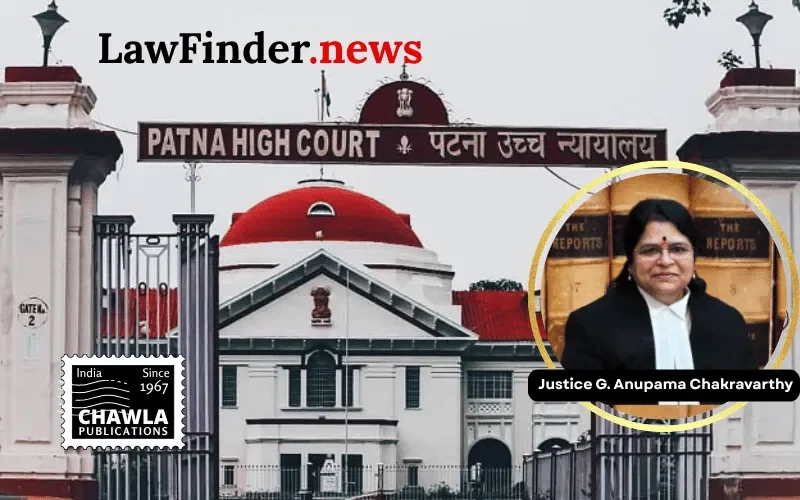
In a significant ruling on October 8, 2026, the Patna High Court, presided over by Justice G. Anupama Chakravarthy, dismissed a writ petition filed by M/s Ganpati Traders and others seeking general directions for improvement of infrastructure and amenities at the Hasanpur Railway siding in Samastipur Division. The petitioners, wholesale traders dealing mainly in food grains such as maize, had sought the court's intervention to compel the Union of India and associated railway authorities to provide basic facilities including proper sheds, platforms, adequate lighting, godowns, and security arrangements at the railway siding.
The petitioners argued that the lack of basic infrastructure was causing severe difficulties in the loading and unloading of consignments, especially during adverse weather conditions and night hours. They also challenged the imposition of demurrage and wharfage charges by the railway authorities, claiming that these penal charges were unfairly levied despite infrastructural deficiencies beyond their control. The traders contended that the absence of facilities disrupted their business operations and violated their fundamental right to carry on trade under Article 19(1)(g) of the Constitution of India.
However, the respondents, representing the Union of India, countered that the demurrage and wharfage charges were imposed strictly as per applicable railway rules and regulations for detention beyond permissible free time. They further contended that the petitioners had alternate remedies under the railway rules to seek waiver or reduction of such charges and that no fundamental rights were infringed warranting judicial intervention.
The Court carefully examined the submissions and the scope of the petition. It observed that the petitioners had not challenged any specific order or action of the railway authorities but were essentially seeking general directions for improving the state of infrastructure. The Court held that such reliefs, based on broad assertions of infrastructural inadequacies, are not maintainable in writ jurisdiction without demonstrating a clear violation of fundamental rights or a specific arbitrary action by authorities. The petitioners had also not filed the petition as a Public Interest Litigation nor provided sufficient material to establish any fundamental rights infringement.
Consequently, the Court concluded that no ground existed for entertaining the writ petition and dismissed it. The judgment underscores the principle that writ jurisdiction is not intended to address general grievances or policy matters but is a remedy for specific legal wrongs or fundamental rights violations. The decision also reaffirms the availability of alternate remedies under statutory rules for grievances related to railway charges.
This ruling serves as a precedent for cases where litigants seek judicial directions for general administrative improvements without challenging a particular order or demonstrating a fundamental rights breach.
Bottom Line:
Writ petition seeking general directions for improvement of infrastructure and amenities at railway siding, without challenging any specific order/action and without sufficient material showing infringement of fundamental rights, is not maintainable in writ jurisdiction and is liable to be dismissed.
Statutory provision(s):
Article 19(1)(g) of the Constitution of India, Article 226 of the Constitution of India
Ganpati Traders v. Union of India, (Patna) : Law Finder Doc Id # 2993789