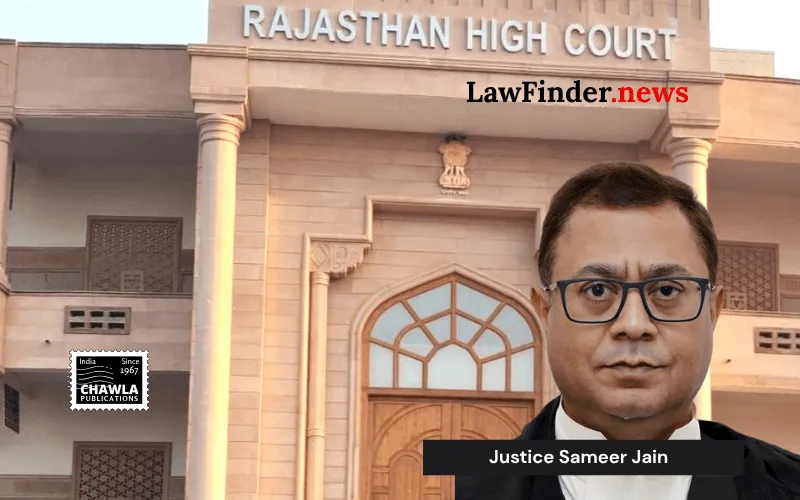
Court Orders Scrutiny of Hill Policies, Cites Violation of Public Trust Doctrine and Constitutional Rights
In a significant judgment delivered on July 24, 2026, the Rajasthan High Court, under the stewardship of Justice Sameer Jain, addressed the contentious issue of environmental degradation in Udaipur, a city revered for its natural beauty and ecological significance. The case, Basant Hotels Private Limited v. State of Rajasthan, highlighted the unchecked proliferation of commercial establishments in ecologically sensitive areas, prompting the court to demand a detailed examination of the policies governing such developments.
The petitioner, Basant Hotels Private Limited, challenged the arbitrary enforcement of a hill policy that, according to them, was discriminatorily applied. The petitioner argued that their construction complied with earlier regulations and sustainable development principles. However, they claimed that newer policies, formulated without consulting relevant statutory bodies, targeted their establishment unfairly.
The court’s ruling underscored the Public Trust Doctrine, emphasizing the state's duty to protect ecologically sensitive areas. Justice Jain criticized the state’s failure to involve statutory agencies such as the Ministry of Environment, Climate, Wildlife, and Pollution Control Boards in drafting the hill policies. The court noted that policies crafted by private agencies without expert consultation had led to the destruction of hills and ecosystems, violating Articles 14, 19, and 21 of the Constitution, which guarantee equality, freedom to conduct business, and the right to quality of life, respectively.
During the proceedings, the court examined an interim report submitted by court-appointed commissioners, which included aerial photography revealing extensive construction on hills. The report highlighted the lack of awareness among local authorities about the existing policies and laws governing hill construction.
The court expressed grave concern over the state of Udaipur’s environment, indicating that under the guise of sustainable development, numerous hotels and resorts had been constructed in protected areas, jeopardizing the city’s ecological survival. This prompted the court to consider registering a suo moto Public Interest Litigation to address the broader public interest.
Justice Jain directed the state and relevant authorities to present comprehensive details of all permissions granted for constructions in the area and to provide the rationale behind the hill policies. The court also mandated the presence of competent authorities and the submission of original records in the next hearing scheduled for July 28, 2026.
This judgment serves as a critical reminder of the balance needed between development and ecological preservation and underscores the judiciary's role in safeguarding environmental and constitutional rights.
Bottom Line:
Public Trust Doctrine - Court emphasizes ecological concerns and the importance of sustainable development - Arbitrary policies drafted without consulting relevant statutory bodies violate constitutional rights under Articles 14, 19, and 21.
Statutory provision(s): Articles 14, 19, and 21 of the Constitution of India
Basant Hotels Private Limited v. State of Rajasthan, (Rajasthan) : Law Finder Doc id # 2950760