Court dismisses petitions challenging qualifications for Assistant Professor posts, reinforcing statutory rules and employer discretion.
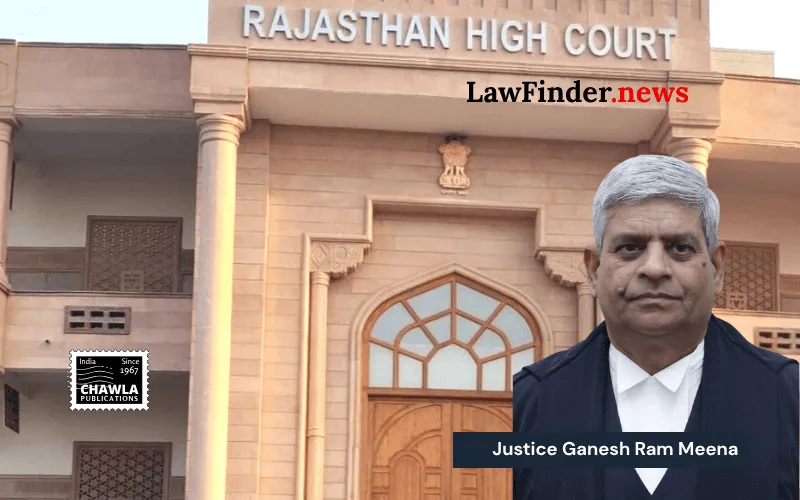
In a significant ruling, the Rajasthan High Court has reaffirmed the authority of employers to prescribe minimum qualifications for recruitment, dismissing a series of petitions challenging the qualifications for Assistant Professor positions in the subjects of Vyakaran, Sahitya, and Samanya Sanskrit. The court, under the bench of Justice Ganesh Ram Meena, delivered its verdict on July 15, 2026, upholding the statutory qualifications as laid out in the Rajasthan Sanskrit Education (Collegiate Branch) Service Rules, 2022.
The petitions, led by Vinod Kumar Sharma and others, argued against the exclusion of candidates who possessed the UGC NET or SET in Sanskrit but not in the specific subjects advertised. The petitioners contended that their prior experience as guest faculty should render them eligible for permanent positions. However, the court found that such prior appointments, if not in compliance with statutory qualifications, could not justify eligibility for regular recruitment.
Justice Meena emphasized that the authority to set qualifications rests solely with the employer, guided by the requirements of the job. The court highlighted the principle that judicial intervention in academic qualifications is unwarranted unless there is a clear statutory breach. The court cited precedents from both the Supreme Court and other High Courts, reiterating that academic matters should be left to the discretion of experts and statutory authorities.
The judgment referenced several landmark cases, including the Supreme Court's ruling in "Sanjay Kumar Manjul v. Chairman, U.P. S.C.," which reinforced the prerogative of statutory authorities to determine qualifications. The court also noted the Division Bench's observations in "Vishnu Bawaree v. State of Rajasthan," which asserted that eligibility qualifications must align with statutory prescriptions without judicial interference.
The court's order stressed that qualifications prescribed in the recruitment advertisement were consistent with the 2022 Rules, which mandate specific educational credentials such as a relevant Master's degree and NET/SET in the concerned subject. The exemption provisions for candidates with a Ph.D. were also detailed, underscoring the rigor of the prescribed criteria.
Ultimately, the court dismissed all petitions, underscoring that the petitioners lacked the requisite qualifications as defined by the statutory rules. This decision reinforces the principle that recruitment qualifications are a domain of the employer's expertise, not subject to judicial alteration.
Bottom line:-
Recruitment qualifications - The employer holds the exclusive prerogative to prescribe minimum requisite qualifications for recruitment to specific posts, and courts cannot substitute or supplement such prescribed qualifications.
Statutory provision(s): Rajasthan Sanskrit Education (Collegiate Branch) Service Rules, 2022
Vinod Kumar Sharma v. State of Rajasthan, (Rajasthan)(Jaipur Bench) : Law Finder Doc id # 2944652