Court says Section 43D(5) of UAPA does not bar constitutional courts from intervening where an undertrial has spent over four years in jail and the trial shows no meaningful progress.
The Supreme Court on November 25, 2026, granted bail to Pawankumar Fakirchand Uike, a doctor accused in a UAPA case in Maharashtra, holding that prolonged incarceration and inordinate delay in trial justified his release despite the statutory restrictions under Section 43D(5) of the Unlawful Activities (Prevention) Act, 1967.
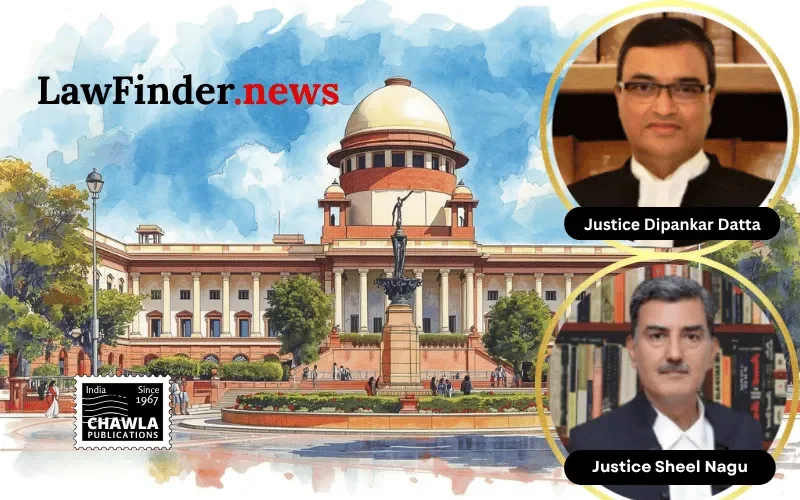
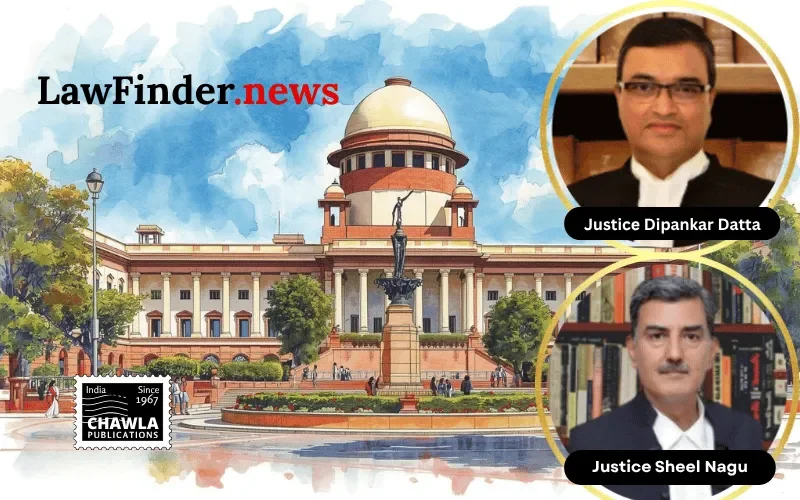
A Bench of Justice Dipankar Datta and Justice Sheel Nagu overturned the Bombay High Court’s Nagpur Bench order that had rejected the appellant’s bail plea. The Court said that constitutional courts retain the power to grant bail in appropriate cases even where the UAPA imposes a stricter standard, especially when an accused has remained in custody for an unreasonably long period and the trial is not likely to conclude soon.
The appellant was arrested on July 28, 2022, after police claimed to have found him and two co-accused in suspicious circumstances in a Naxal-affected forest area in Gadchiroli. The prosecution alleged that a banner supporting the Naxal movement was recovered and that a disclosure statement led to further recovery from his residence. He was subsequently charged under several provisions of the UAPA, the Indian Penal Code, the Arms Act, and the Bombay Police Act.
According to the Court, the appellant had already spent more than four years in custody. Although the case was committed to the Sessions Court in January 2023, charges were framed only in July 2026, with no satisfactory explanation for the delay. The Bench noted that none of the 39 listed prosecution witnesses had been examined, making it clear that the trial would take considerable time to finish.
The Supreme Court also found that the High Court had erred in holding that the appellant was responsible for delaying the trial because he allegedly surrendered late after temporary bail. On examining the custody certificate, the Court concluded that he had surrendered within the stipulated time and had not absconded, contrary to the High Court’s view.
The Bench further observed that the co-accused arrested with the appellant had already been granted bail in 2024, and the principle of parity also supported the appellant’s case. It noted that the appellant was a doctor in public service, and his alleged association with the insurgent group could not, at this stage, be conclusively treated as wholly unrelated to his professional duties.
Relying on the precedent in Union of India v. K.A. Najeeb, the Court reiterated that statutory restrictions on bail under the UAPA cannot override the constitutional mandate where continued detention becomes unjustified due to delay and prolonged incarceration. The Court therefore allowed the appeal and directed that the appellant be released on bail, subject to conditions imposed by the trial court.
The Court clarified that its observations were limited to the bail issue and would not affect the merits of the trial, which must proceed in accordance with law. It also empowered the trial court to cancel bail if the appellant violates conditions or tampers with evidence or witnesses.
Statutory provision(s): Sections 10, 13, 18, 20, 39 of the Unlawful Activities (Prevention) Act, 1967, Section 120B read with Section 34 of the Indian Penal Code, 1860, Sections 3 and 25 of the Arms Act, 1959, Section 135 of the Bombay Police Act, 1951, Section 43D(5) of the Unlawful Activities (Prevention) Act, 1967
Pawankumar Fakirchand Uike v. State of Maharashtra, (SC) : Law Finder Doc id # 3273782