Invoking Article 142, the Court balances statutory insurance limits with victim hardship and allows United India Insurance to recover the amount from the vehicle owner
The Supreme Court has held that gratuitous occupants of private vehicles and pillion riders on two-wheelers are not automatically covered under compulsory third-party insurance when the vehicle is insured under an Act Only Policy and no additional premium has been paid. At the same time, the Court used its extraordinary powers under Article 142 of the Constitution to direct United India Insurance Company Ltd. to satisfy the compensation award in the present case, while preserving its right to recover the amount from the vehicle owner.
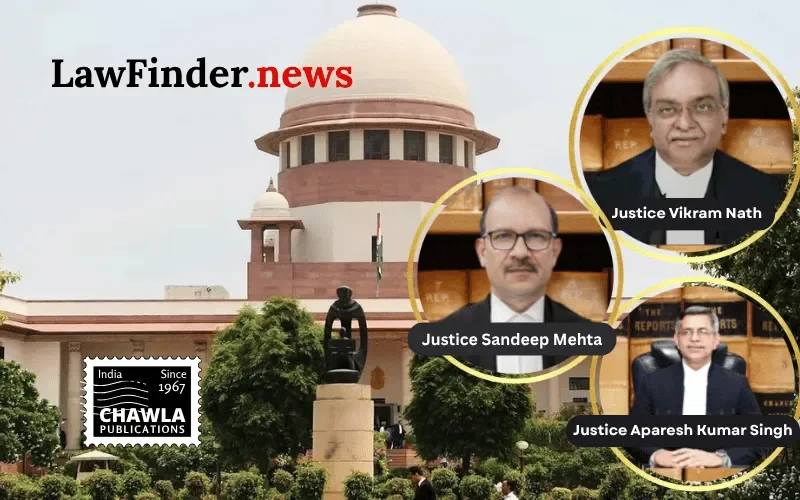
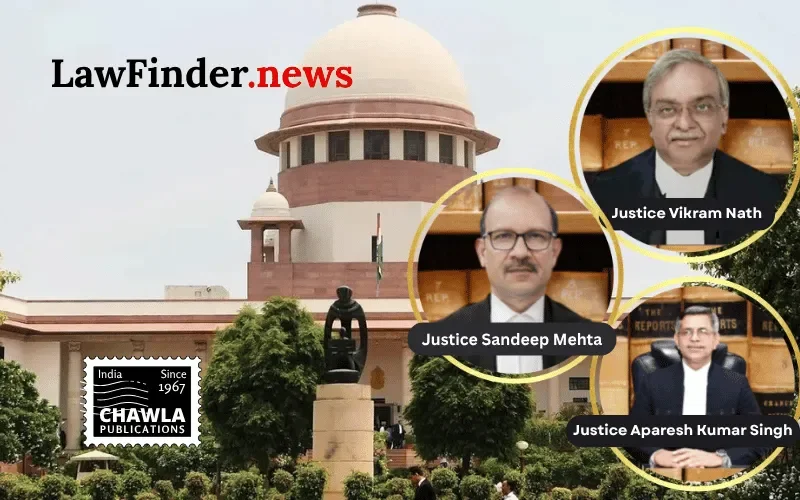
A Bench of Justices Vikram Nath, Sandeep Mehta and Aparesh Kumar Singh delivered the ruling in an appeal filed by the legal heirs of a man who died in a road accident in 2012. The deceased was travelling in a Tata Sumo jeep after attending a marriage ceremony when the vehicle allegedly overturned due to rash and negligent driving by its owner. The Motor Accident Claims Tribunal had awarded compensation of Rs. 7,79,800 with 7.5% interest and had directed the insurer to pay first and recover later from the owner. The Bombay High Court later set aside that direction, holding that the insurer had no liability because the deceased was travelling in a private vehicle covered only by an Act Only Policy.
The Supreme Court agreed with the High Court on the legal position that the insurer had no statutory or contractual liability for the deceased’s risk. The Bench explained that Section 147 of the Motor Vehicles Act does not automatically extend compulsory insurance coverage to every occupant of a private vehicle. The Court relied on earlier decisions, including New India Assurance Co. Ltd. v. Asha Rani, National Insurance Co. Ltd. v. Baljit Kaur, United India Insurance Co. Ltd. v. Tilak Singh and Oriental Insurance Co. Ltd. v. Sudhakaran K.V., to reaffirm that the scope of compulsory insurance depends on the statutory scheme and the terms of the policy.
However, the Court also examined whether it could still grant relief under Article 142. It held that the absence of statutory or contractual liability is not an absolute bar to such intervention. The Bench laid down four conditions for invoking Article 142 in such cases: there must be an established liability; exceptional necessity must exist to prevent substantial injustice; the direction must be necessary and proportionate; and procedural fairness with recovery safeguards must be ensured.
Applying these principles, the Court noted that the liability of the vehicle owner had already been determined, the litigation had dragged on for more than 14 years, and the widow and sons of the deceased had not received compensation. In these circumstances, the Court held that exceptional relief was justified.
Accordingly, the Supreme Court modified the High Court’s order and directed the insurance company to pay the outstanding compensation along with interest, after adjusting any amount already paid. It further directed the Tribunal to calculate the outstanding amount within four weeks, and ordered the insurer to deposit the amount within eight weeks thereafter. The insurer was given the right to recover the amount from the vehicle owner through execution proceedings before the Tribunal, without filing a separate suit.
The judgment is significant for clarifying both the limits of compulsory insurance under the Motor Vehicles Act and the scope of the Supreme Court’s extraordinary powers to do complete justice in motor accident compensation cases.
Bottom Line:
Gratuitous occupants of private vehicles or pillion riders under an Act Only Policy are not automatically covered under compulsory insurance. However, the Supreme Court under Article 142 of the Constitution can direct an insurer to satisfy a compensation award in exceptional cases, while preserving the insurer's right to recover the amount from the vehicle owner
Statutory provision(s): Section 145(g) of the Motor Vehicles Act, 1988, Section 146(1) of the Motor Vehicles Act, 1988, Section 147 of the Motor Vehicles Act, 1988, Section 149 of the Motor Vehicles Act, 1988, Section 166 of the Motor Vehicles Act, 1988, Section 173 of the Motor Vehicles Act, 1988, Article 142 of the Constitution of India, Section 69 of the Indian Contract Act, 1872
Sukumarbai v. United India Insurance Company Ltd., (SC) : Law Finder Doc id # 3275074