Court clarifies its March 11 judgment is limited to parties before it and intervenors, but directs that pending Civil Services Examination 2025 service allocation must follow the new interpretation
The Supreme Court has clarified that its March 11, 2026 ruling on the determination of “creamy layer” status for Other Backward Classes (OBC) candidates will not trigger a retrospective reopening of past selections, appointments, service allocations, cadre allotments or seniority positions already concluded under the earlier understanding of the law.
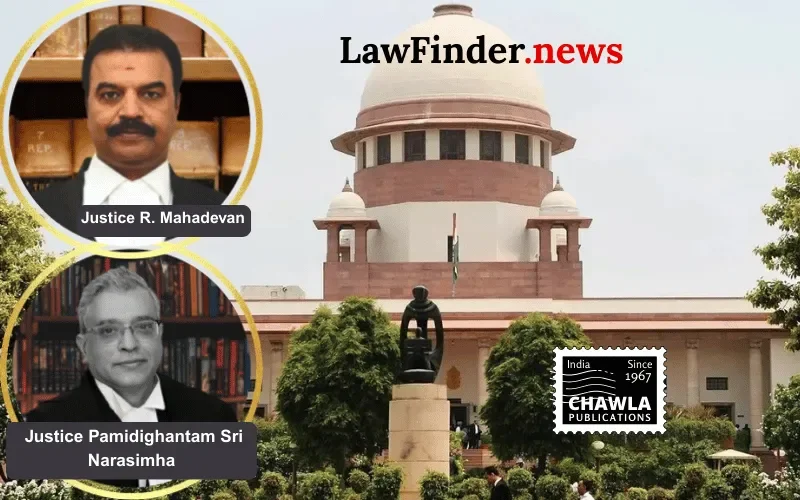
A Bench of Justices Pamidighantam Sri Narasimha and R. Mahadevan passed the order while disposing of miscellaneous applications filed by the Union of India in the Rohith Nathan case. The Centre had sought clarification on whether the earlier judgment would apply retrospectively and had also requested permission to complete Civil Services Examination (CSE) 2025 service allocation using the pre-existing criteria.
Rejecting the government’s plea on CSE-2025, the Court held that although the UPSC result for the examination had been declared on March 6, 2026, the process of service allocation was still pending. Since no convincing reason was shown for postponing implementation of the March 11 ruling, the Bench directed that service allocation for OBC candidates selected through CSE-2025 must be carried out in accordance with the interpretation laid down in the earlier judgment.
The dispute arose from the Centre’s practice of treating the children of employees in Public Sector Undertakings, banks and similar organisations as falling within the OBC creamy layer by mechanically applying the income test under the 1993 Office Memorandum and the 2004 clarificatory letter. In its March 11 judgment, the Supreme Court had rejected that interpretation and held in favour of candidates who had been denied OBC reservation benefits in civil services recruitment.
In the present order, the Court drew a clear distinction between the binding legal principle declared under Article 141 of the Constitution and the actual relief granted to the litigants before it. It said the March 11 judgment determined the rights of the respondent candidates and intervenors and did not direct the Union Government to revisit completed appointments, revise seniority or reopen old recruitment exercises across the board.
The Bench noted that reopening concluded selections after a substantial lapse of time could prejudice many others and disrupt service administration, including promotions, cadre strength and seniority. It therefore clarified that the ratio of the March 11 judgment “shall not, by itself, furnish a ground” for reopening selections or appointments already concluded before that date.
At the same time, the Court said all selections, appointments and allotments against roster points made after March 11, 2026, insofar as they involve reservation and creamy layer exclusion, must be governed by the 1993 Office Memorandum as interpreted in the earlier ruling.
The Court also confined the benefit of supernumerary posts to the parties and intervenors covered by the original judgment. It explained that references in the earlier ruling to accommodating “candidates” through supernumerary posts were meant only for those intervenors whose claims were already pending before courts, tribunals or authorities and who had been allowed to participate in the Supreme Court proceedings.
On the Centre’s request for two years to establish equivalence between posts and frame a uniform creamy layer policy after consulting states and other stakeholders, the Court declined to issue any such timeline. It said these matters fall within the executive and legislative domain, though the government remains free to formulate an appropriate policy consistent with the Constitution and the principles laid down by the Court.
The Bench further reiterated that miscellaneous applications in disposed matters cannot be used to seek a rehearing or reopen issues already settled by a judgment. Such applications are maintainable only for correcting clerical or arithmetical errors or for resolving genuine implementation difficulties. In this case, the Court entertained the applications only to clarify the scope and temporal operation of its earlier directions.
Importantly, the Court left the door open for similarly placed persons whose cases are still pending before courts, tribunals or competent authorities. It said such claims may be considered on their own merits in accordance with law, keeping in view the interpretation of the 1993 Office Memorandum and the 2004 letter laid down in the March 11 judgment. However, the Court expressly refrained from commenting on the merits of those claims.
The Supreme Court ultimately disposed of the miscellaneous applications and extended the time for compliance with the March 11 judgment by two months from November 6, 2026.
The ruling is significant because it protects past service arrangements from large-scale disruption while ensuring that future recruitment and the still-pending CSE-2025 service allocation follow the Court’s interpretation of OBC creamy layer rules.
Bottom Line:
Judgment interpreting 1993 Office Memorandum and 2004 Letter held not to require retrospective reopening of concluded selections, appointments, service allocations or seniority - Relief in earlier judgment confined to parties and intervenors before Court - However, selections/appointments/allotments made after 11.03.2026 to be governed by said interpretation - Civil Services Examination, 2025 service allocation, being pending, directed to be made in accordance with judgment dated 11.03.2026.
Statutory provision(s): Constitution of India, Article 141, Article 142, Office Memorandum No. 36012/22/93-Estt (SCT) dated 08.09.1993, Clarificatory Letter No. 36033/5/2004-Estt. (Res.) dated 14.10.2004
Union of India v. Rohith Nathan, (SC) : Law Finder Doc id # 3014532