Supreme Court Acquits Maharashtra Woman in 2005 Bride Burning Case, Restores Trial Court Verdict, Court says High Court wrongly convicted sole accused without a separate murder charge, and relied on one uncorroborated dying declaration despite major inconsistencies
The Supreme Court has acquitted Sau. Kamalbai Waman Patil in a 2005 burn death case from Maharashtra, setting aside a Bombay High Court judgment that had reversed her acquittal and sentenced her to life imprisonment for murder.
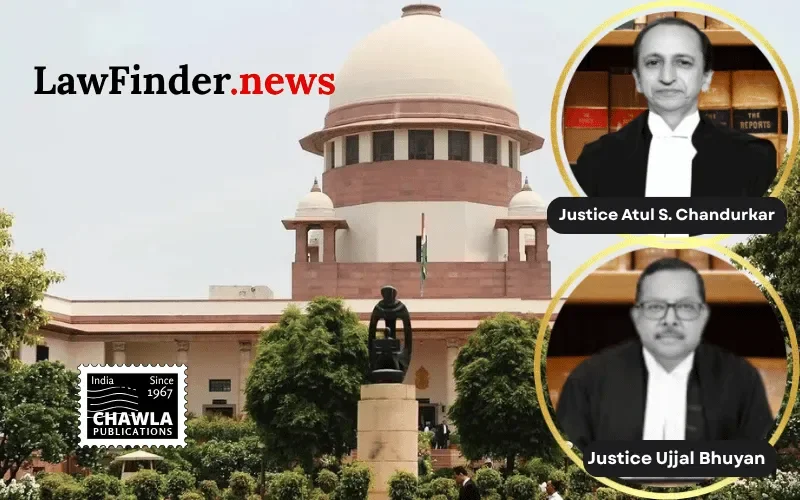
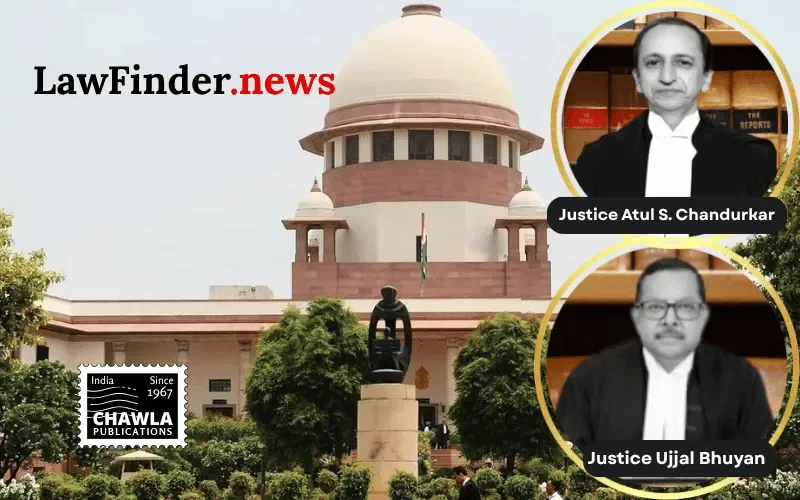
A Bench of Justices Ujjal Bhuyan and Atul S. Chandurkar, in its judgment dated 5 November 2026, held that the High Court committed a legal error in convicting Kamalbai alone under Section 302 of the Indian Penal Code after all four accused had originally been tried only on a charge of murder read with common intention under Section 302 read with Section 34 IPC.
The case concerned the death of Sunitabai, wife of Kamalbai’s son, who suffered severe burn injuries on 10 April 2005 and died five days later. The prosecution alleged that Sunitabai was being harassed by her husband and in-laws over childlessness and dowry demands, and that all the accused, acting with common intention, set her on fire.
At trial, four family members — the husband, father-in-law, mother-in-law Kamalbai, and brother-in-law — were charged under Sections 498A, 342, 406 and 302 read with Section 34 IPC. However, the Sessions Court acquitted all of them after finding serious inconsistencies in the prosecution case, especially in three separate dying declarations made by the victim.
The High Court later overturned the acquittal only in respect of Kamalbai. It accepted the earliest statement recorded in the medico-legal case papers by the treating doctor, in which the victim allegedly said Kamalbai poured kerosene on her and set her ablaze. At the same time, the High Court rejected two later dying declarations that attributed different roles to other family members. Based on this, the High Court convicted Kamalbai under Section 302 IPC and sentenced her to life imprisonment, while maintaining the acquittal of the other three accused.
The Supreme Court found this approach unsustainable on multiple grounds.
First, the Court said the original charge against all accused was only that they acted together in furtherance of common intention. Since there was no separate charge against Kamalbai alone for murder under Section 302 simpliciter, the High Court could not legally convict her alone under that substantive provision after maintaining the acquittal of the co-accused. Doing so, the Bench said, amounted to “making out a new accusation” and caused prejudice to the appellant.
Relying on the earlier ruling in Krishna Govind Patil v. State of Maharashtra, the Court held that where accused are tried on a common intention charge, and the acquittal of the others is maintained, convicting one person alone without an independent charge is impermissible unless the case and evidence support such a course
Bottom Line:
Where charge was framed only under Section 302 read with Section 34 IPC against all accused, and acquittal of co-accused was maintained, sole accused could not be convicted under substantive Section 302 IPC without an independent charge - In case of multiple inconsistent dying declarations, conviction cannot be based on one dying declaration alone without corroboration, particularly while reversing acquittal - Section 106 of Evidence Act cannot relieve prosecution of its initial burden.
Kamalbai Waman Patil v. State of Maharashtra, (SC) : Law Finder Doc id # 3012890