Court affirms Goa Government's exclusive authority under Section 44 of the Goa Municipalities Act, 1968, to remove councillors for misconduct.
In a significant judgment, the Bombay High Court's Goa Bench has clarified the limitations on delegating quasi-judicial powers under the Goa Municipalities Act, 1968. The court ruled that the Director of Municipal Administration (DMA) does not have the authority to remove a councillor from office under Section 44 of the Act, as these powers are exclusively vested in the Government of Goa.
The case involved a petition filed by Mr. Jervis Fernandes challenging the jurisdiction of the DMA in a complaint against Councillor Rumaldo Judas Agnelo Fernandes. The petitioner alleged misconduct and irregularities by the councillor, including fraudulent acquisition of a construction license and corrupt practices during elections. The complaint was initially dismissed by the DMA on the grounds of lacking jurisdiction, prompting Mr. Fernandes to seek redress from the High Court.
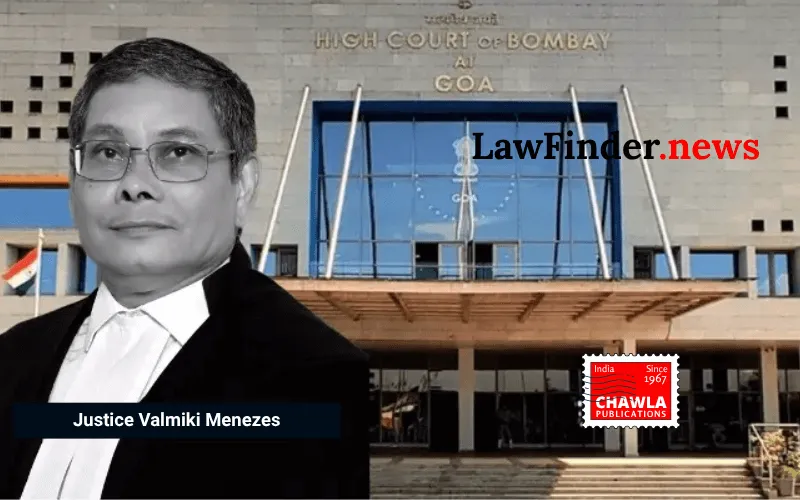
Justice Valmiki Menezes, presiding over the case, emphasized that the power to remove a councillor for misconduct is a serious quasi-judicial function, and the statutory framework of the Goa Municipalities Act does not permit delegation of this power to any authority other than the Government. The judgment underscored the legal principle of "Delegatus Non Potest Delegare"—a delegate cannot further delegate powers—highlighting that judicial or quasi-judicial powers must be exercised by the authority to which they are conferred.
The court examined the statutory provisions and previous judgments, establishing that the DMA’s role is limited to administrative functions and does not extend to making decisions on councillor removal. The judgment further noted that the Government of Goa, defined specifically in the Act, retains exclusive rights to exercise these powers without any provision for delegation.
The petitioner’s reliance on a 1996 Gazette Notification, which appointed various government officials as Ex-officio Secretaries, was rejected by the court. The notification was deemed insufficient to confer quasi-judicial powers of councillor removal upon the DMA.
The ruling reaffirms the necessity of maintaining a clear demarcation of powers between administrative and quasi-judicial functions within municipal governance, ensuring that elected officials are only subject to removal by the designated government authority. The High Court's decision highlights the importance of adhering to statutory provisions to prevent the misuse of delegated authority and protect the integrity of local governance structures.
Bottom line:-
Delegation of quasi-judicial powers under Section 44 of the Goa Municipalities Act, 1968 is impermissible in the absence of express statutory provision permitting such delegation. DMA cannot exercise jurisdiction for removal of a Councillor as this power exclusively vests with the Government.
Statutory provision(s):
Section 44 of the Goa Municipalities Act, 1968