Court rules impossible payment deadline in revised Form-3 invalid; petitioner's payment within statutory period upheld, mandating closure of tax dispute by authorities
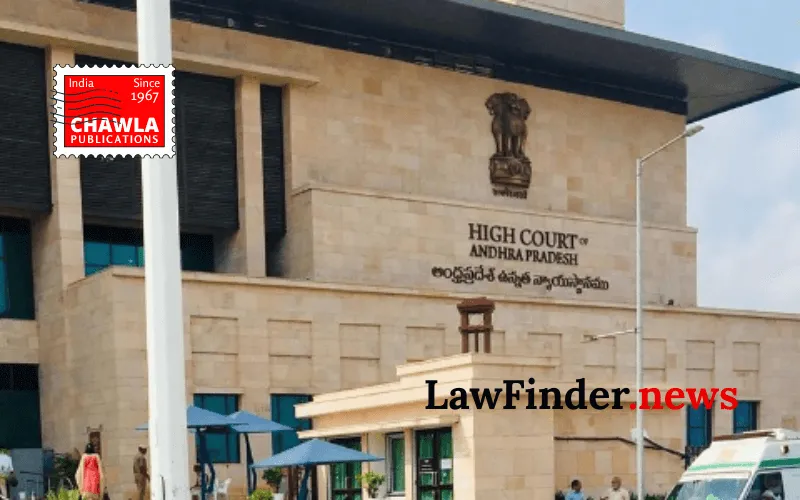
In a significant judgment dated August 24, 2026, the Andhra Pradesh High Court (Division Bench comprising Justices Ninala Jayasurya and T.C.D. Sekhar) ruled in favor of petitioner N. Venu Gopal Reddy concerning a dispute under the Direct Tax Vivad se Vishwas Act, 2020 (DTVSV Act). The Court set aside the demand notice and interest order issued by the Income Tax authorities, directing them to issue Form-5 to the petitioner and close the tax dispute.
The petitioner, engaged in works contracts and a registered taxpayer under the Income Tax Act, faced an assessment order dated March 28, 2014, demanding Rs. 29,60,420. Following the introduction of the DTVSV scheme-a government initiative aimed at expeditiously resolving pending direct tax disputes-the petitioner withdrew his appeal and opted for settlement under the scheme by filing a declaration in December 2020.
The Income Tax authorities initially issued Form-3 indicating the payable amount and payment deadlines. However, upon discovering computational errors, they issued a revised Form-3 on October 29, 2021, which erroneously required the petitioner to pay the tax amount on or before September 30, 2021-an impossible condition given the issuance date postdated the deadline.
The petitioner paid the full amount on October 30, 2021, within the statutory time limit prescribed under Section 5(2) of the DTVSV Act, and intimated the authorities via Form-4. Despite this, the tax authorities issued a demand notice on April 12, 2023, seeking an additional Rs. 6,23,708 on grounds of delayed payment and levied interest through an order dated September 15, 2023.
Challenging these actions, the petitioner filed a writ petition. The High Court observed that the condition imposed in the revised Form-3 was inherently impossible and that the petitioner's payment complied with the statutory timeline under the DTVSV Act. The Court held that the authorities could not impose such an impossible condition to deny benefits under the scheme.
Consequently, the Court quashed the demand notice and interest order, directing the authorities to issue Form-5-a certificate confirming full payment and closure of the dispute-within six weeks from receipt of the judgment. The ruling underscores the judiciary's commitment to uphold statutory provisions and prevent arbitrary or erroneous administrative actions that undermine taxpayer rights.
This judgment provides clarity on procedural compliance under the DTVSV Act and reaffirms that statutory timelines cannot be circumvented by issuing contradictory or impossible conditions. Taxpayers opting for dispute resolution under this scheme can take solace in the Court's protective stance against such administrative lapses.
Bottom Line:
Direct Tax Vivad se Vishwas Act, 2020 - Revised Form-3 issued with an impossible condition requiring payment before the date of issuance - Payment made by the petitioner within the statutory time limit under Section 5(2) of the Act - Respondent authorities directed to issue Form-5 and close the matter.
Statutory provision(s): Direct Tax Vivad se Vishwas Act, 2020 Sections 5(1), 5(2), Income Tax Act 1961 Sections 143(3), 254, 220(2)(A)
N. Venu Gopal Reddy v. Union of India, (Andhra Pradesh)(DB) : Law Finder Doc Id # 2979283