Court Rejects Plea to Read Down Section 16(2)(c), Directs Exhaustion of Statutory Appellate Remedies in Dispute over Wrongful Input Tax Credit Claims
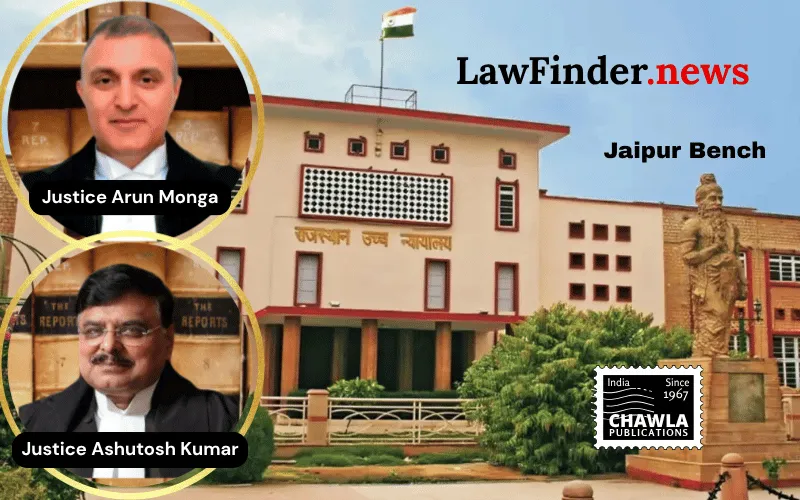
In a significant ruling dated August 13, 2026, the Rajasthan High Court (Division Bench, Jaipur Bench) delivered its judgment in the case of Sumetco Alloys Private Limited v. Union of India and Ors., affirming the constitutional validity of Section 16(2)(c) of the Central Goods and Services Tax (CGST) Act, 2017. The petitioner, Sumetco Alloys Pvt. Ltd., a manufacturer of pure lead and lead ingots, had challenged the provision and subsequent orders demanding Rs. 56.44 crore on grounds of alleged wrongful availment of input tax credit (ITC).
The provision under scrutiny, Section 16(2)(c), mandates that a registered person cannot claim ITC unless the tax charged on the supply has been actually paid to the government by the supplier. The petitioner contended that this clause was arbitrary, unconstitutional, and violated Article 14 of the Indian Constitution. They also sought to have the provision read down to protect bona fide purchasers like themselves, relying on judgments from other High Courts.
After thorough examination, the Court upheld the provision's constitutionality, emphasizing that the entitlement to ITC is a conditional statutory one, not a vested or constitutional right. The Court clarified that Section 16(2)(c) is mandatory and that all conditions under Section 16(2) must be cumulatively satisfied for claiming ITC, including the actual payment of tax by the supplier. The Court noted the existence of a reversal and re-availment mechanism under Section 41, which allows the recipient to reclaim ITC once the supplier discharges the tax liability, underscoring the provision's balanced approach.
The Court took note of the Supreme Court's recent dismissal of special leave petitions challenging the same provision, which affirmed the High Court of Gujarat's decision upholding Section 16(2)(c). This precedent was pivotal in rejecting the petitioner's plea for reading down the provision.
Furthermore, the Court addressed allegations of fraud and bogus transactions against the petitioner. The show cause notice under Section 74 of the CGST Act alleged that ITC was wrongly availed through fake invoices and paper transactions involving multi-layered bogus suppliers. The Court held that such allegations, if proven, justify invoking Section 74, which deals with tax evasion involving fraud or willful misstatement. It rejected the contention that the show cause notice lacked jurisdiction or was issued without proper procedural compliance, including the issuance of pre-notice intimation (Form GST DRC-01A), which is now an enabling provision rather than mandatory.
On the issue of natural justice and the rule against bias, the Court clarified that under the CGST Act, the same "proper officer" may conduct investigation and adjudication, and mere performance of both functions by the same officer does not amount to bias unless there is material evidence to suggest personal interest or animus.
The Court also dismissed the petitioner's claim that their detailed reply to the show cause notice was not adequately considered, stating that such grievances are matters of appeal and cannot justify bypassing statutory appellate remedies. It directed the petitioner to exhaust the remedy of appeal under Section 107 of the CGST Act within 30 days, allowing adjustment of the Rs. 50 lakh already deposited towards the pre-deposit.
In conclusion, the Rajasthan High Court's judgment clarifies that:
- - Section 16(2)(c) of the CGST Act is constitutionally valid and mandatory.
- - The burden of proving eligibility for ITC lies with the claimant.
- - Allegations of fraudulent ITC claims warrant the invocation of Section 74.
- - Procedural requirements such as pre-notice intimation are enabling, not mandatory.
- - The statutory scheme vests investigative and adjudicative powers in the same proper officer.
- - Statutory appellate remedies must be exhausted before approaching the Court.
This ruling reinforces the strict regulatory framework governing ITC claims under GST law and signals the judiciary's support for robust revenue protection mechanisms against tax evasion.
Bottom Line:
The constitutional validity of Section 16(2)(c) of the Central Goods and Services Tax Act, 2017, upheld. The plea of reading down the provision was rejected. The petitioner was directed to exhaust the statutory appellate remedy before approaching the Court.
Statutory provision(s):
Section 16(2)(c), Section 41, Section 73, Section 74, Section 107 of the Central Goods and Services Tax Act, 2017; Rule 142(1A) of the Central Goods and Services Tax Rules, 2017