Court condemns automatic alteration of digital court records without orders, stresses adherence to legal safeguards under Section 13B of Hindu Marriage Act to ensure fairness and justice
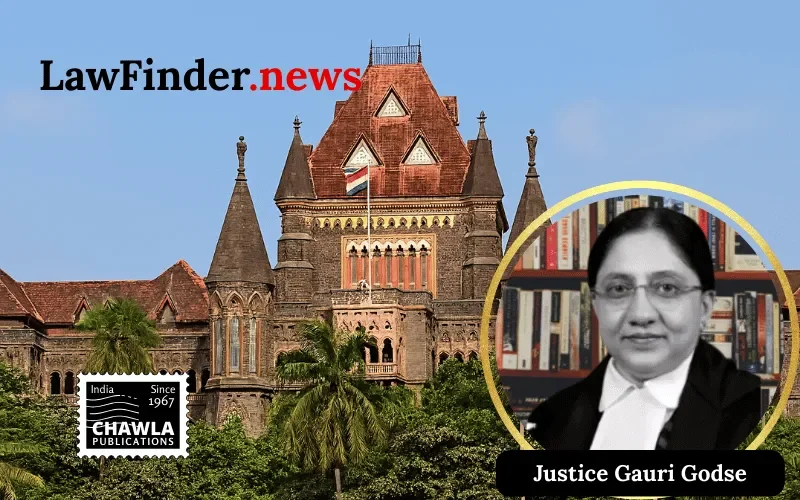
In a significant ruling dated October 29, 2026, the Bombay High Court under Justice Gauri Godse addressed serious procedural irregularities in the handling of a divorce petition filed under Section 13B of the Hindu Marriage Act, 1955. The matter involved Akshata Anant Rane (alias Akshata Aditya Todankar) and Aditya Umesh Todankar, where the petitioner sought transfer of the pending divorce petition due to undue delay.
The Court unearthed that the concerned trial court at Kalyan had preponed the scheduled hearing date without informing the parties or their advocates and granted the decree of divorce in their absence. This was contrary to the principles of natural justice and the established procedure mandated for divorce by mutual consent cases. The judgment emphasized that such preponement and disposal without notice not only violates legal norms but also causes serious prejudice to the litigants.
Further, the Court scrutinized the operation of the e-roznama (digital court diary) system. It found that the court's computer system automatically updated and removed the originally scheduled hearing date from the digital records without any court order or recorded reasons. This automatic alteration led to an erroneous display on the official website that the matter was "allowed after full hearing," which was factually incorrect. The Court observed that such system-generated changes without judicial oversight amount to tampering with court records, thereby undermining the integrity and objectives of court digitization.
The Court reiterated settled legal principles from the Supreme Court's landmark judgment in Amardeep Singh v. Harveen Kaur (2017) and its own prior ruling in Ayushi Doshi (2024), emphasizing the protective purpose of the statutory waiting period under Section 13B(2) of the Hindu Marriage Act. This waiting period prevents hasty divorces and provides an opportunity for reconciliation and settlement of ancillary issues like alimony and child custody. The Court underscored that the trial judge must be satisfied that all issues are resolved and reconciliation is not possible before granting divorce, and must record reasons before waiving the waiting period.
In light of these findings, the Bombay High Court issued detailed directions to the Central Project Coordinator and the Registrar to ensure that the e-roznama system cannot automatically alter hearing dates or case status without a court order duly recorded in the system and accessible to parties and advocates. Until such systemic improvements are implemented, any alteration in digital records must be accompanied by a formal judicial order explaining the reasons, which must also be uploaded on the court website.
Although the original petition for transfer was rendered infructuous due to the disposal of the divorce petition, the Court's order serves as a stern reminder to courts across Maharashtra and beyond to strictly comply with procedural safeguards in matrimonial cases and to enhance transparency and accuracy in digital court records.
The ruling highlights the delicate balance courts must maintain between embracing technological advancements and upholding the fundamental principles of justice, fairness, and due process.
Bottom Line:
Courts must strictly adhere to the prescribed procedure in proceedings under Section 13B of the Hindu Marriage Act, 1955, ensuring fairness in the justice delivery system. Automatic changes in e-roznama without court orders or reasons amount to tampering with court records and undermine the objectives of digitalisation.
Statutory provision(s):
Code of Civil Procedure, 1908 Section 24, Hindu Marriage Act, 1955 Section 13B