Court says no substantial material was produced beyond hearsay and media reports; reiterates that judges should speak through judgments, while lawyers and the Bench must maintain mutual dignity.
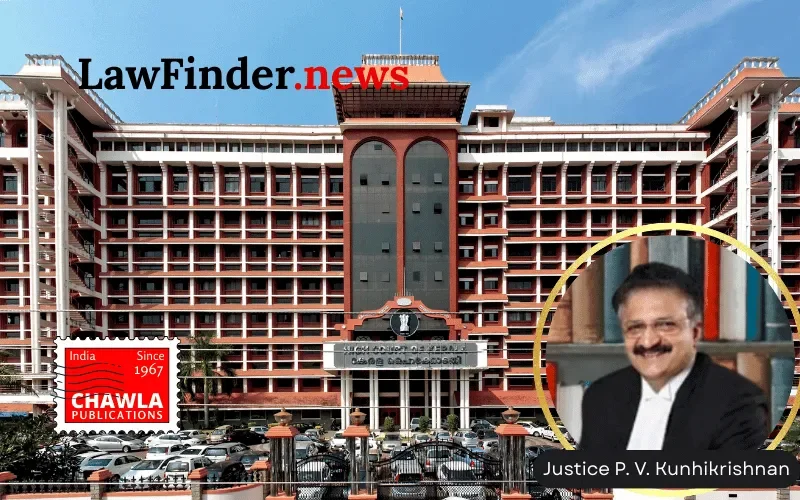
The Kerala High Court has dismissed a writ petition filed by advocate T.B. Mini seeking initiation of contempt proceedings against the then Principal District and Sessions Judge, Ernakulam, over alleged derogatory remarks made in open court.
Justice P.V. Kunhikrishnan held that the petition was not supported by adequate material and that hearsay statements, unsupported by an affidavit from the petitioner’s junior who was allegedly present in court, could not form the basis for contempt action against a judicial officer. The Court also declined to issue notice to the judge merely to verify whether the alleged remarks were made.
According to the petitioner, the judge had allegedly remarked that she was “sleeping in court” and treating the courtroom as a “resting place.” The petitioner claimed that the remarks were false, humiliating, and damaging to her reputation and professional standing, and that they were widely circulated by media and social media platforms, leading to online abuse and professional embarrassment.
The Court, however, noted that the petitioner herself was not present when the alleged statement was made and relied only on what her junior allegedly told her. Though an affidavit of the junior was said to have been annexed to a prior sanction petition, the High Court said a photocopy of that affidavit could not be treated as reliable material in the present proceedings. Since the media reports were not backed by the media houses being impleaded as parties, the Court said it would not base any finding on them.
The petitioner had sought multiple reliefs, including a direction to place the matter before the Chief Justice for suo motu contempt proceedings, expunction of the alleged remarks, a press clarification by the High Court, and directions to media platforms to remove the related reports. The Court rejected all such prayers.
In its judgment, the Court made broader observations on the relationship between judges, lawyers, and the media. It said courtroom remarks may sometimes be momentary or even intended in good faith, but their circulation on social media can cause unnecessary harm to reputations. The Bench stressed that judges and lawyers are “officers of the court” and should treat each other with dignity and respect. It also cautioned the media against sensationalising courtroom exchanges and said that judges should ordinarily speak through their judgments.
The Court referred to earlier decisions, including State of Uttar Pradesh v. Mohammed Naim, Neeraj Garg v. Sarita Rani, Yatin Narendra Oza v. Suo Motu, High Court of Gujarat, and Berely v. Xavier, while noting the settled principle that excessive or extravagant language is not necessarily contempt.
Justice Kunhikrishnan also agreed with the Advocate General’s view in the matter, observing that even if the alleged remarks were assumed to have been made, they would not necessarily amount to criminal contempt under the Contempt of Courts Act, 1971. The Court held that such comments, at worst, may amount to excessive language and not contempt.
Ultimately, the writ petition was dismissed for want of merit. The Court also rejected two interlocutory applications filed later, one seeking impleadment of news channels and YouTube channels and another seeking records from the trial court, holding that no roving inquiry was warranted in the absence of basic material.
Bottom Line:
Judges and lawyers are integral to the administration of justice, and courtroom remarks, especially in the era of social media, should be approached with caution to avoid unnecessary damage to reputations. Allegations of contempt against judicial officers require substantial evidence beyond hearsay or media reports for initiation of proceedings.
Statutory provision(s): Contempt of Courts Act, 1971, Section 16, Contempt of Courts Act, 1971, Section 15(2), Contempt of Courts Act, 1971, Section 2(c), Contempt of Courts (High Court of Kerala) Rules, 1988, Rule 7, Bharatiya Nagarik Suraksha Sanhita, 2023, Section 218
T.B. Mini v. Hon'ble Registrar General, High Court of Kerala, (Kerala) : Law Finder Doc id # 3122931