Despite Serious Charges and Multiple Deaths, Court Emphasizes Bail as the Rule and Jail as the Exception, Imposes Stringent Conditions to Safeguard Trial Integrity
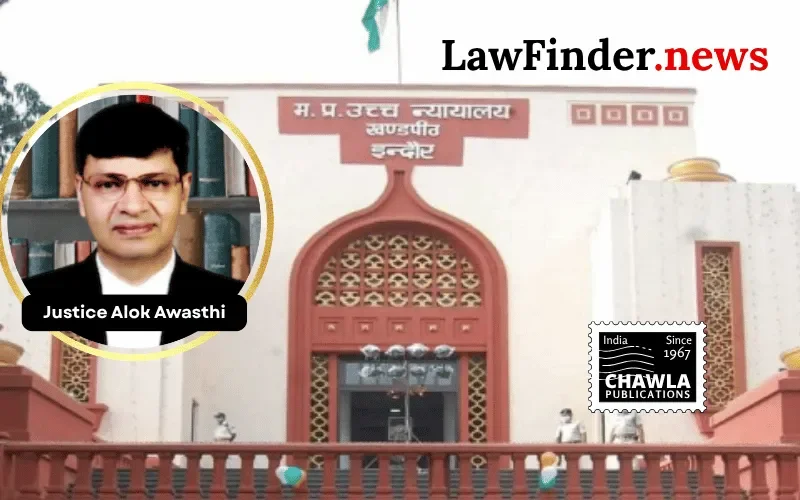
In a significant judgment delivered on October 26, 2026, the Madhya Pradesh High Court, Indore Bench, presided over by Justice Alok Awasthi, allowed bail to Mukesh Vij and Anil Malviya, accused in connection with a tragic explosion at an illegal fireworks factory in Dewas district. The explosion, which occurred on May 14, 2026, led to the death of 12 workers and serious injuries to 19 others, highlighting grave lapses in safety protocols and regulatory compliance.
The appellants, Mukesh Vij and Anil Malviya, were initially denied bail by the 1st Additional Sessions Judge/Special Judge, Dewas, due to the gravity of the offence and the nature of evidence against them. They were charged under multiple provisions, including Sections 105, 110, and 3(5) of the Bharatiya Nyaya Sanhita (BNS), the Explosive Substances Act, the Explosives Act, the Scheduled Castes and Scheduled Tribes (Prevention of Atrocities) Act, the Arms Act, the Child Labour (Prohibition and Regulation) Act, and the Juvenile Justice (Care and Protection of Children) Act.
The prosecution alleged that Mukesh Vij, through his firms Vij Technology & Consultants and S.K. Enterprises, acted as the main financial controller and partner, facilitating illegal operations by funding and supplying chemicals and fireworks materials. Anil Malviya was identified as the ostensible operator of the factory. Investigations revealed illegal storage of large quantities of explosives beyond permissible limits, lack of fire safety measures, and operation without required licenses or NOCs.
The appellants contended that they were innocent and had been falsely implicated. They argued that their roles were limited to financial and commercial transactions and that there was no direct evidence linking them to the management or operational control of the factory, nor to the explosion itself. They highlighted that no minors were employed at the factory, challenging the applicability of child labour and juvenile justice charges. They also submitted that they had no criminal antecedents and that the investigation was complete with a charge-sheet filed.
The Court undertook a detailed examination of the facts and legal principles governing bail. Acknowledging the tragic loss of life and serious nature of the offences, Justice Awasthi emphasized the constitutional right to personal liberty and the principle that "bail is the rule and jail is the exception." The Court observed that continued detention is justified only if indispensable for investigation or to prevent interference with the trial.
Since the investigation was complete, the charge-sheet filed, and no further custodial interrogation required, the Court concluded that detention was not necessary. The Court also noted the absence of evidence indicating the appellants' involvement in day-to-day factory operations or direct causation of the explosion. It clarified that the bail order does not express any opinion on the merits of the case, which will be determined by the trial court independently.
The bail was granted subject to stringent conditions, including furnishing personal bonds of Rs. 10 lakhs each with solvent sureties, prohibition on leaving India without prior permission, furnishing updated contact details, refraining from any activities related to manufacture or handling of explosives, and not influencing witnesses or committing similar offences during the trial. The Court also warned that violation of bail conditions would result in cancellation of bail.
This judgment highlights the delicate balance courts must maintain between safeguarding public safety and protecting individual liberty. It underscores that serious allegations do not automatically justify denial of bail where investigation is complete and further detention is unwarranted.
The trial court has been directed to ensure compliance with the bail conditions and to proceed with the trial impartially.
Bottom Line:
In considering bail applications, the gravity of the offence and the accused's right to personal liberty must be balanced. Detention during trial is justified only if indispensable for investigation or trial, and bail conditions can safeguard the prosecution's interests.
Statutory provision(s):
Section 14A(2) of the Scheduled Castes and Scheduled Tribes (Prevention of Atrocities) Act, 1989, Sections 105, 110, 3(5) of the Bharatiya Nyaya Sanhita, 2023, Sections 3, 4, 5, 6 of the Explosive Substances Act, 1908, Sections 5, 9(b) of the Explosives Act, 1884, Sections 3(1)(h), 3(2)(v) of the SC/ST Act, Section 25(1)(b) of the Arms Act, 1959, Section 14(1) of the Child Labour (Prohibition and Regulation) Act, 1986, Sections 79, 87 of the Juvenile Justice (Care and Protection of Children) Act, 2015, Section 483 of the Bharatiya Nagarik Suraksha Sanhita, 2023
Mukesh Vij v. State of M.P., (Madhya Pradesh)(Indore) : Law Finder Doc Id # 3023076