Court holds that Competition Commission of India must independently form prima facie satisfaction under Section 26(1) before directing investigation; procedural irregularities in including Rungta Mines as Opposite Party also noted.
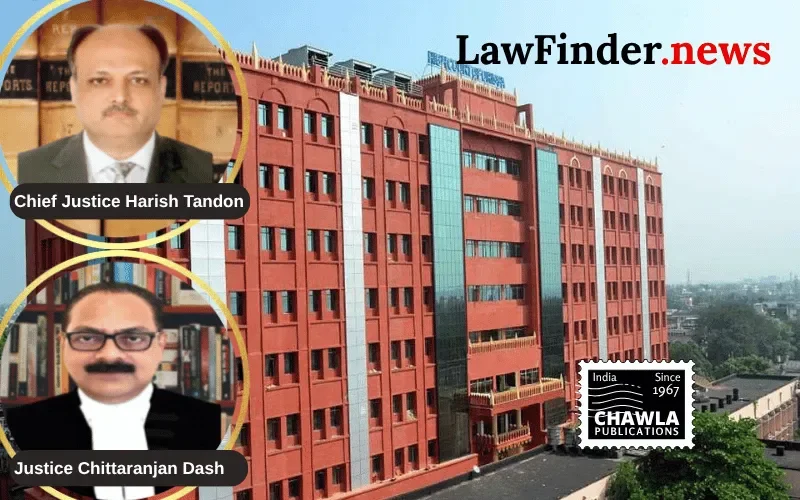
The Orissa High Court recently upheld a crucial judgment quashing the investigation against M/s Rungta Mines Limited and its Whole-Time Director arising from Suo Motu Case No. 02 of 2021 registered by the Competition Commission of India (CCI). The Division Bench comprising Chief Justice Harish Tandon and Justice Chittaranjan Dash dismissed the intra-court appeal filed by the CCI and the Director General (DG), affirming the earlier Single Judge's order dated 22.05.2026.
Background:
The investigation originated from a complaint dated 06.03.2021 by the Coimbatore Corporation Contractors Welfare Association alleging cartelization and price-fixing by certain steel manufacturers. Rungta Mines was not named in this complaint. Following a directive from the Madras High Court on 29.07.2021, the CCI registered a suo motu case on 23.08.2021 and directed the DG to investigate.
During investigation, search and seizure operations were conducted at Rungta Mines' Kolkata office, and summons were issued to its employees. However, Rungta Mines came to know about its status as an Opposite Party only upon inspection of the investigation records in August 2025. Subsequently, Rungta Mines filed a writ petition challenging the jurisdictional validity of the investigation against it.
Key Legal Issues and Findings:
1. Requirement of Prima Facie Opinion under Section 26(1) of the Competition Act, 2002:
The Court emphasized the statutory mandate that the CCI must independently form a prima facie opinion that a case exists before directing the DG to investigate. The CCI's decision dated 23.08.2021 merely recorded "detailed deliberations" and referred to the Madras High Court's earlier order, which directed action in accordance with law but did not itself constitute the statutory satisfaction needed under Section 26(1). The Court held this insufficient to demonstrate an independent application of mind by the CCI.
2. Effect of Madras High Court's Direction:
The Court clarified that the Madras High Court's order to "take necessary and appropriate action in accordance with law" does not dispense with the CCI's statutory duty to form a prima facie opinion before investigation. The judicial direction cannot substitute or override the statutory framework.
3. Scope of Investigation and Inclusion of Enterprises Not Named in Original Complaint:
While recognizing the DG's power to investigate entities beyond those named in the original complaint if their involvement emerges during investigation, the Court held that such extension presupposes a validly initiated inquiry. Since the foundational direction under Section 26(1) was absent or flawed, the expansion of the investigation to Rungta Mines was invalid.
4. Procedural Fairness and Status as Opposite Party:
Rungta Mines was treated as an Opposite Party without adherence to the procedure prescribed under Regulation 24 of the CCI (General) Regulations, 2009, which mandates notice and opportunity before being so designated. This procedural irregularity compounded the jurisdictional infirmity.
5. Maintainability of Writ Petition:
Despite the availability of alternative statutory remedies, the Court held that the writ petition was maintainable under Article 226, since the challenge was to the very jurisdictional foundation of the investigation and alleged violation of natural justice. The petition was filed promptly upon discovery of material showing jurisdictional defect.
6. Territorial Jurisdiction of Orissa High Court:
The Court found that since Rungta Mines had substantial manufacturing and sales operations in Odisha, a significant part of the cause of action arose within its territorial jurisdiction, justifying the maintainability of the writ petition in Orissa.
Outcome:
The Orissa High Court affirmed the quashing of the investigation and all consequential proceedings against Rungta Mines Limited and its Whole-Time Director. However, the relief granted is confined to the writ petitioners and does not affect the merits or proceedings against other entities involved in the case.
Significance:
This judgment underscores the mandatory nature of the CCI's independent satisfaction under Section 26(1) before commencing investigations. It highlights the limits on investigative overreach, especially the need for procedural fairness when designating parties as Opposite Parties. The ruling serves as a precedent ensuring that the CCI cannot proceed on mere judicial directions without fulfilling statutory preconditions, thereby reinforcing the rule of law and principles of natural justice in competition law enforcement.
Bottom Line:
Competition Law - CCI must independently form a prima facie opinion under Section 26(1) of the Competition Act, 2002 before directing an investigation. The absence of a valid jurisdictional foundation under Section 26(1) invalidates subsequent investigations and proceedings. The investigative powers of the Director General under the Competition Act can extend to entities not named in the original complaint if their involvement emerges during a validly initiated investigation.
Statutory provision(s): Competition Act, 2002 Section 19, Section 20, Section 26(1), Section 26(2), Section 26(3), Section 26(7); Competition Commission of India (General) Regulations, 2009 Regulation 24